13 min read


Running a hair salon is a relationship business first and foremost. Clients trust you with their appearance, something personal, and that trust takes real time to build. The problem is that trust alone won't keep your chair full. Hair salon clients visit every six to ten weeks on average, and a lot can go wrong in that gap. A new salon opens nearby, a friend recommends someone cheaper, or they simply forget to rebook before life swallows the reminder whole.
A well-built hair salon loyalty program closes that gap. It gives clients a real reason to come back to you specifically, not just any salon that's convenient that week. Done right, it also shows you who your best clients are, what they spend, and when they tend to go quiet. This guide covers the full picture, from a single-chair setup to a multi-stylist operation, so you can build a salon loyalty program that actually earns repeat appointments rather than just taking up space in someone's wallet.
Why Most Hair Salons Struggle to Retain Clients
The retention problem in a hair salon isn't like other service businesses. A coffee shop sees the same customer three or four times a week. Your clients work on a six-to-ten-week cycle, and that's a long window for doubt to creep in.
The numbers aren't comforting. One of the recent studies found that a 5% improvement in client retention can lift profits by anywhere between 25% and 95%. Acquiring a new salon client costs 5 to 25 times more than keeping one you already have. If you're losing ten or fifteen first-time clients a month without realising it, that compounds quietly into a serious gap over a year.
The other issue is that most loyalty programs aren't built around how clients actually behave. A salon punch card sitting at the bottom of someone's bag won't remind them to rebook when they're eight weeks out from their last appointment. It just sits there, getting bent and eventually thrown away. A program that doesn't actively follow up isn't really a retention strategy; it's a passive card hoping for the best.
How Does a Hair Salon Loyalty Program Actually Work?
A hair salon loyalty program gives clients a structured reward for returning to you rather than going somewhere else. The mechanics vary from stamps per visit, points per amount spent, and tiered membership, but the goal is the same every time. You want the next appointment to feel like the obvious choice, not a fresh decision they have to make from scratch six weeks after the last one.
The programs that work best combine two things: a reward that genuinely means something, and a follow-up system that pings clients before they drift. Without the follow-up, even a generous reward structure struggles to bridge that gap. Hair salon clients forget, and it's the reality. The program has to do some of the remembering for them.
Types of Salon Loyalty Programs: Which One Fits Your Salon?
There's no universally right answer here. The structure that works depends on your client base, your service menu, and how much time you can realistically put into managing the thing.
1: Visit-Based Stamp Cards
The simplest format is: clients earn a stamp per visit and unlock a free service or meaningful perk after a set number, usually seven to ten. A digital version stored in a phone wallet takes the "I lost my card" problem off the table entirely.
These work well for independent stylists and smaller salons because you can explain them in thirty seconds at checkout. The main limitation is that they don't account for spending. The client who books a full balayage every visit earns the same stamp as someone coming in for a quick trim. If spend variation is wide across your client base, this might not be the right fit.
2: Points-Based Salon Rewards Programs
Points programs are more flexible. Clients earn points for every rupee or dollar spent on services and products, and those points accumulate toward rewards. Bigger spenders earn faster, which creates a quiet incentive to add a treatment or pick up a product at the end of a visit.
The catch is complexity because a salon customer rewards program built on points needs clear, consistent communication. Clients will lose track of where they stand and stop engaging with it altogether. If you go this route, make it genuinely easy for clients to check their balance. An app, a quick text message and a printed summary at checkout works.
3: Tiered Salon Membership Programs
A tiered salon membership program moves clients through levels based on cumulative spending or visit count. Silver clients might get a retail discount; Gold clients get priority booking and complimentary add-ons; Platinum clients get exclusive time with a senior stylist or early access to new treatments.
These work best in larger multi-stylist salons with a broad service offering. The setup takes more effort, but it builds the kind of long-term engagement where clients feel genuinely recognised rather than just rewarded. There's a meaningful difference between those two things, and clients notice it.
4: Referral-Based Beauty Loyalty Programs
Some salons add a referral layer on top of their main program. An existing client brings in someone new, and both get a reward, i.e, bonus stamps, a complimentary treatment, or a product. It works because it turns your most loyal clients into active advocates, bringing in warm referrals who already come with a personal recommendation attached. That's a very different quality of a new client than someone who found you through a Google search.
What Rewards Actually Work for Salon Clients?
This is where a lot of hair salon rewards programs go sideways. Discounting your core service, i.e., a cut or colour treatment, sounds generous, but it quietly trains clients to think those services are overpriced at the full rate. Give a free haircut enough times, and you've created a client who expects a free haircut. That perception costs more over time than the loyalty it buys.
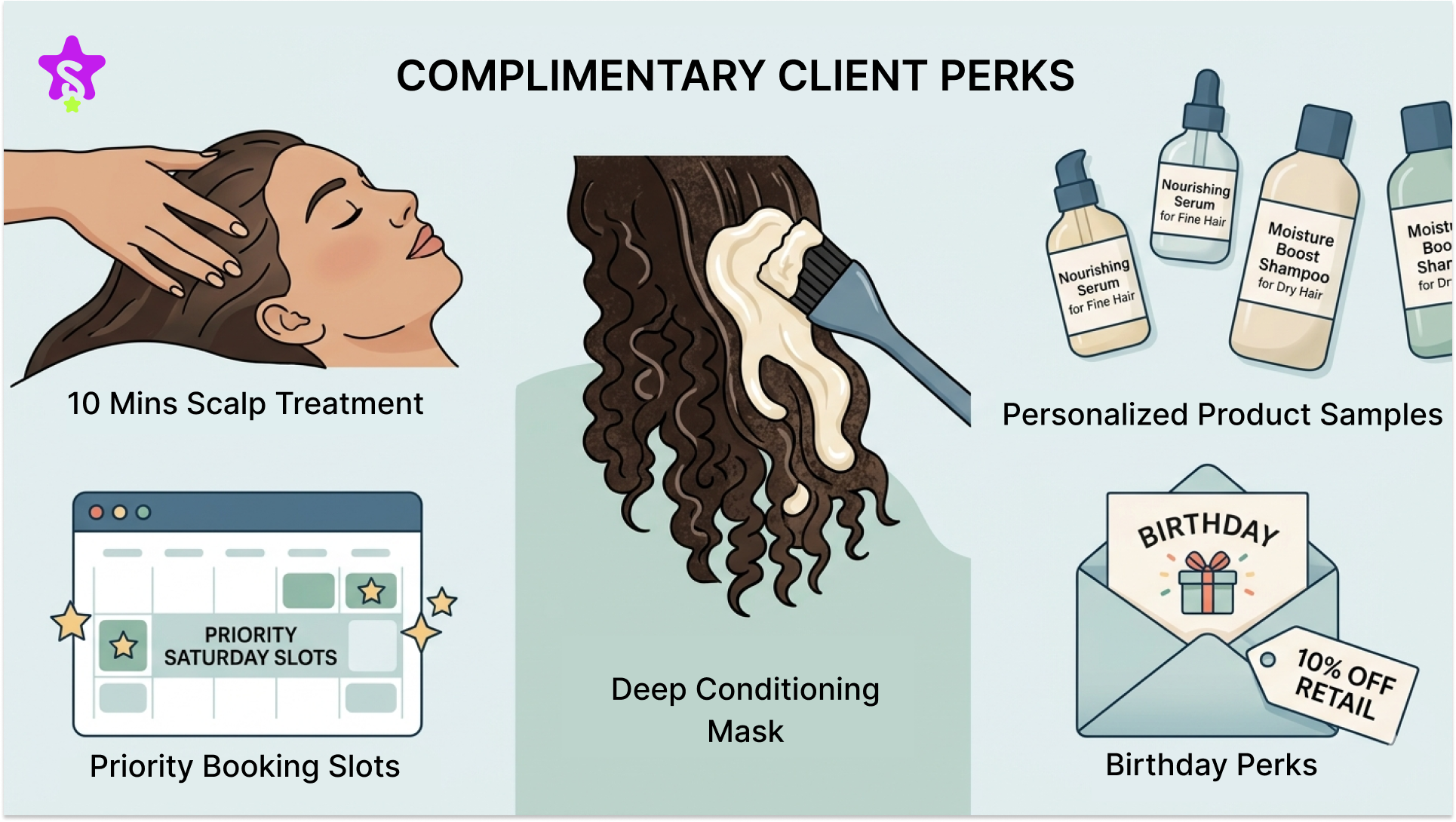
The better move is to reward with add-ons that feel special without touching your main pricing. Here's what actually works well:
- A complimentary scalp treatment (takes 10 minutes, costs almost nothing in product, feels premium)
- A free deep conditioning mask added to a colour appointment
- A product sample of something you'd genuinely recommend, and tying the reward to a retail product you carry is smart because it also drives future product sales
- Priority booking for peak Saturday slots, which costs you nothing but is genuinely valued by busy clients
- A birthday message with a small perk attached. It can even be a 10% retail discount that feels personal when it lands on the right day
Structure matters as much as the reward itself. Waiting until stamp ten for a payoff is a long time. An interim reward at stamp three or four, a complimentary blow-dry and a small product keeps clients engaged through the middle of the program rather than letting their interest flatten out halfway through. The halfway slump is where most stamp cards lose people.
Physical Salon Punch Card or Digital App: Which Should You Use?
The beauty salon loyalty card has been around for decades, and it has earned that longevity. For the right salon, it still works fine. But it works better in some situations than others.
Paper cards make sense if your clients skew older and want something they can hold, or if you're running a very small operation without the budget or bandwidth for software. The downside is well-known: cards get lost, forgotten, crumpled, or left in an old jacket. And you get nothing back from them; no data, no visibility, no idea which clients are close to a reward or which ones haven't come back in three months.
Digital programs solve both problems. When a client's stamps live in an app or phone wallet, there's nothing to lose, and you get a real view of the entire client base. You can see who's one stamp away from a reward and drop them a message. You can spot clients who've gone quiet and trigger a re-engagement offer before they're gone for good. That's the difference between a passive salon punch card and an active salon retention program; one waits, the other works.
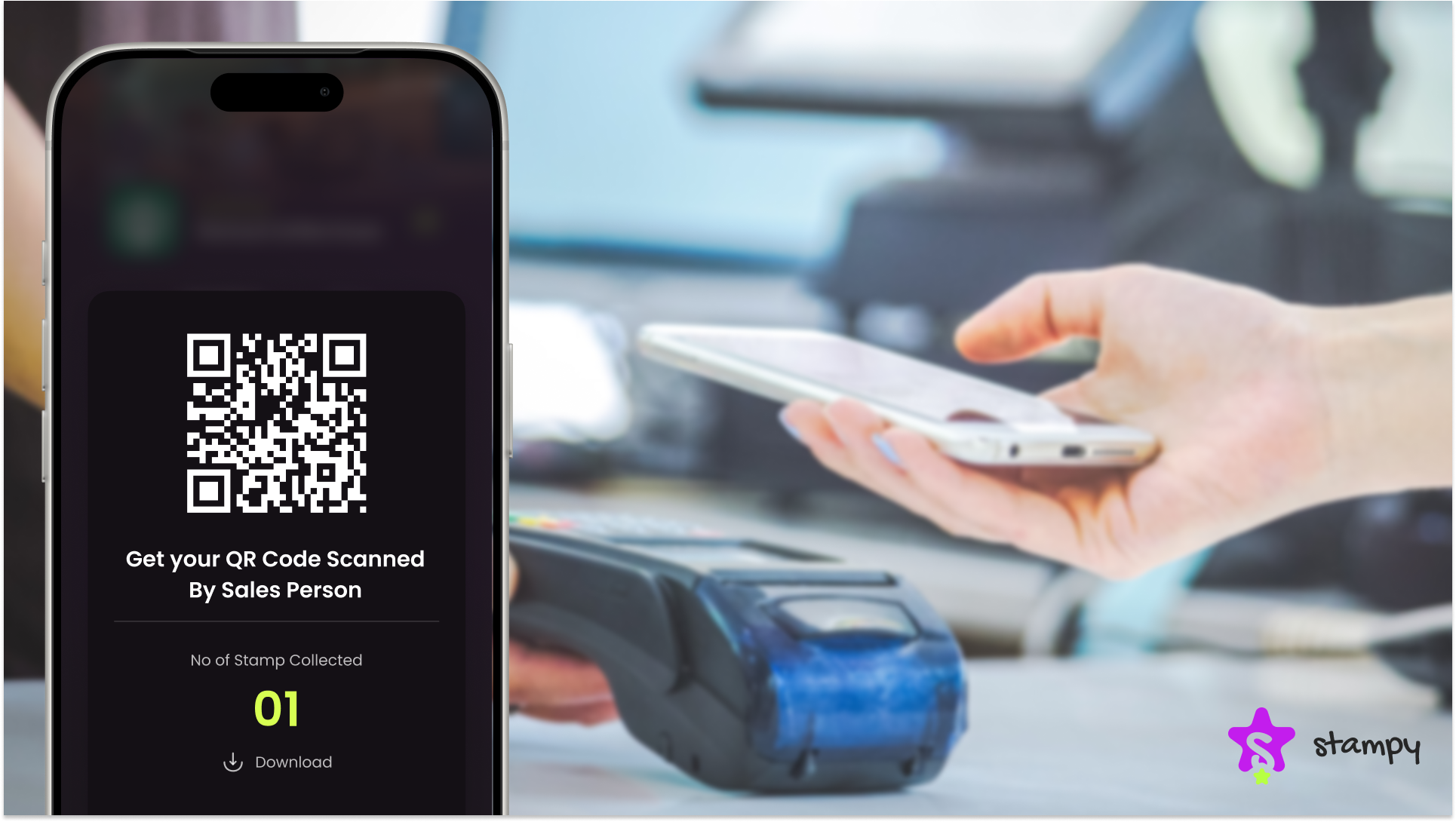
A digital program you actually use is better than a paper system you've set up but rarely think about. Start with what you'll commit to, and build from there.
How to Build a Hair Salon Loyalty Program: Step by Step
1: Know What Problem You're Actually Solving
Before you choose stamps or points or tiers, get clear on what's broken. Are first-time clients not coming back? A stamp card with an early reward at visit three addresses directly. A points-based program that counts product purchases changes that dynamic. The structure should follow the problem, not the other way around.
A quick diagnostic: look at your client list and count how many clients visited once in the last six months and never returned. If that number is above 20% of your total new clients, your first-visit conversion is the priority. If your regulars are coming back but their average spend is flat, your program should be built to encourage add-ons and retail, not just visits.
2: Set a Reward That Makes Sense
A ten-stamp card takes roughly a year and a half to fill at average visit frequency. That's a long time to wait for anything. A seven-stamp program with a small bonus at stamp three or four moves at a pace that feels rewarding rather than exhausting. Clients should feel like they're making progress, not running a marathon.
Imagine your local coffee shop had a stamp card that required thirty purchases before you got a free coffee. You'd probably lose the card and interest long before you got there. Your salon's program should feel achievable at a natural visit pace, not like a challenge.
3: Get Your Team Enrolling Every Single Client
Inconsistent enrollment is the quiet killer of most salon loyalty programs. If your stylists mention the program when they remember to, most clients will never join. Enrollment needs to be part of the checkout conversation every time, as standard as confirming the next appointment date or recommending a product. Every client who leaves without joining is a future visit you probably won't get back.
A simple script your team can use at checkout: "We have a loyalty program where you earn stamps with every visit and get a free treatment after your seventh appointment. Do you want me to send you the link right now?" That's it. Fifteen seconds and the ones who say yes are the ones who will come back.
4: Follow Up Before Clients Drift
A loyalty program paired with automated rebooking reminders dramatically outperforms one standing alone. Sending a message four to five weeks after the last appointment or right when clients are starting to notice their roots growing out or their ends getting dry puts you back in front of them at exactly the right moment. This is the gap that most salon retention strategies miss entirely. The program runs in the background; the reminder is what actually drives the rebook.
5: Make the Program Visible Everywhere
Clients should encounter your loyalty program before they even sit in the chair. Booking confirmation emails, social media posts, a sign in the waiting area, a mention at checkout, all of it adds up. The more visible the program, the higher the enrollment rate, and the stronger the habit of rebooking becomes over time.
On Instagram, a post showing your loyalty card with a caption like "Did you know? Book seven times with us and your eighth blow-dry is on the house" will reach clients who are already following you and the exact audience most likely to be current or lapsed regulars. That single post, boosted for Rs. 500 over two days, costs less than a single walk-in client and can trigger multiple rebookings from people who'd forgotten to come back.
Mistakes That Actually Sink Salon Loyalty Programs
1: Overcomplicating the reward structure. If you can't explain the program in twenty seconds at checkout, most clients won't engage with it. Complexity isn't sophistication, it's friction. Simpler programs get used; complicated ones get ignored.
2: Discounting core services as the reward. This trains clients to wait for the discount instead of booking at the full rate. Reward with add-ons and upgrades instead. Your margins stay healthy, and clients still feel genuinely appreciated.
3: Ignoring clients who go quiet. A loyalty program should also be an early-warning system. Someone who hasn't visited in fourteen or sixteen weeks has stamps they haven't redeemed. A re-engagement message that mentions this can pull them back before they become a permanent absence.
4: Leaving retail out of the equation. Salons that run services-only loyalty programs miss a real opportunity. Including retail purchases in the points or stamp system gives clients one more reason to buy the product you've just recommended rather than ordering it online on the way home.
Stampy: Built for Salons in Pakistan
If you're running a salon in Pakistan and still tracking loyalty through paper cards and WhatsApp messages, Stampy is worth a look. It's a digital loyalty platform being adopted by salons across Pakistan to do exactly this: tracking visits, managing rewards, and keeping clients engaged between appointments without adding another manual task to your day.
You can set up a digital stamp card or points program quickly, without new hardware or a booking system overhaul. Clients track their progress on their phone. You get a clear, live picture of who your most loyal clients are and how often they're actually coming back.
We are developing Stampy for salons in Pakistan to handle exactly this. Apply for early access.
Final Thought
A hair salon loyalty program isn't a marketing trick. It's a system that closes the gap between appointments, gives you data about your best clients, and makes coming back feel like the obvious choice. Start simple, run it consistently, and the results compound. The salons that get retention right aren't the ones with the flashiest reward structure. They're the ones where clients never really feel tempted to go anywhere else.
Frequently Asked Questions
How do hair salon loyalty programs work?
Clients earn stamps, points, or tier progress each time they visit or spend. Once they reach a threshold, they unlock a free service, a perk, or a discount. Programs that include automated rebooking reminders between visits retain clients far more effectively than passive ones.
What's the best loyalty program for a salon?
It depends on the salon. Stamp cards suit smaller operations that want something easy to run. Points programs work better when retail sales are a meaningful part of the business. Tiered memberships make sense in larger salons where building long-term client relationships is the main goal.
How do salons keep clients coming back?
The combination that works is a clear loyalty structure plus consistent follow-up communication. Clients drift because they forget the automated reminders, and personalised reward milestones address both sides of that problem.
Loyalty cards or memberships, which is better?
Cards are easier to launch and easier to explain. In the Memberships case, clients pay upfront for guaranteed perks, give you predictable recurring revenue and tend to attract your most committed clients. A lot of salons run both, using a stamp card for general clients and a membership tier for their regulars.