10 min read



Most business owners launch a loyalty program expecting it to build itself. The logic is hard to argue with: reward customers for coming back, and they will. But the numbers tell a different story because most loyalty programs bleed members quietly, with customers drifting away long before they ever redeem anything. Understanding why customers stop using loyalty cards is not a nice-to-have exercise. It is the only way to build something that holds.
Paper stamp cards have been the default for coffee shops, salons, and local restaurants for as long as anyone can remember. The cycle is predictable: customer gets a card, collects a few stamps, loses the card, stops coming back. Stampy was built to break that cycle with a digital experience tied to the customer's phone. But even the best platform cannot save a loyalty program that has not dealt with its underlying problems.
Why Do Customers Stop Using Loyalty Cards?
Loyalty cards get issued by the millions every year across retail stores, restaurants, and service businesses worldwide. A large chunk of those cardholders go quiet within a few months of signing up, not because they had a bad experience, but because the program stopped feeling worth their attention. The question worth asking is not just why customers leave but why they were never really in it to begin with.
1. The Rewards Are Not Worth the Effort
This is the most common cause of loyalty card abandonment, and honestly, the most avoidable one. Customers will carry a card, track purchases, and scan a QR code, but only when the payoff feels like it justifies the routine. Collecting stamps for months to receive a minor discount does not feel like being rewarded. It feels like being strung along, and people eventually stop agreeing to it.
The math has to make sense for the actual customer. A free coffee after ten visits works fine for someone stopping in every weekday morning. For someone who comes in twice a month, that same offer is so far away it barely registers. The reward timeline has to reflect how customers actually visit the business, not how the business hopes they will. When the gap between effort and payoff is obvious, customers stop carrying the card.
2. The Process Has Too Many Steps
A lot of loyalty program drop-off is just friction: the customer forgot the card, the cashier did not ask, and the app crashed. Any one of these moments is enough for someone to decide the program is not worth the hassle, and once they have made that decision, they rarely revisit it. Programs that keep adding requirements without asking what they can remove will keep losing members they should be retaining.
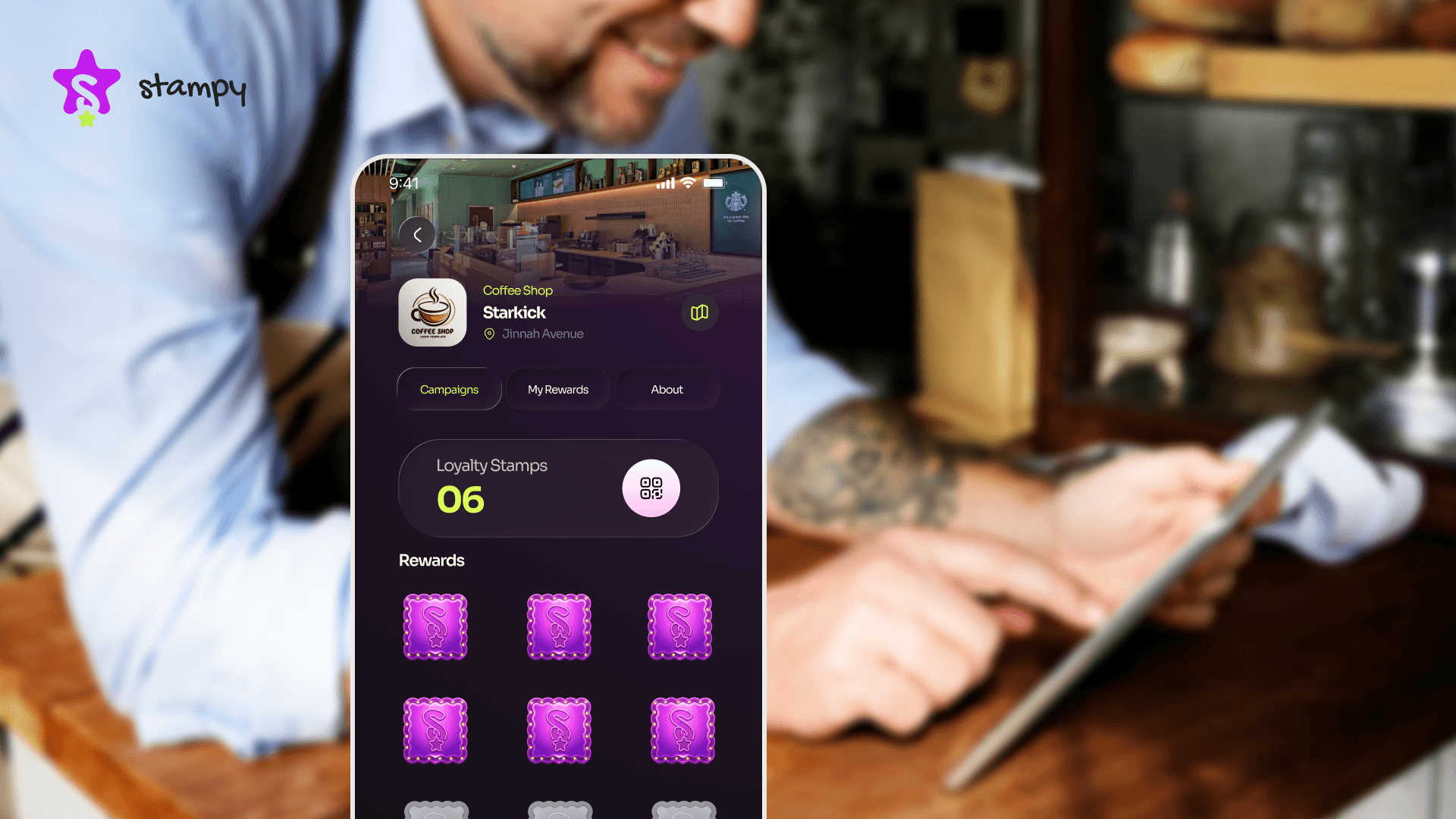
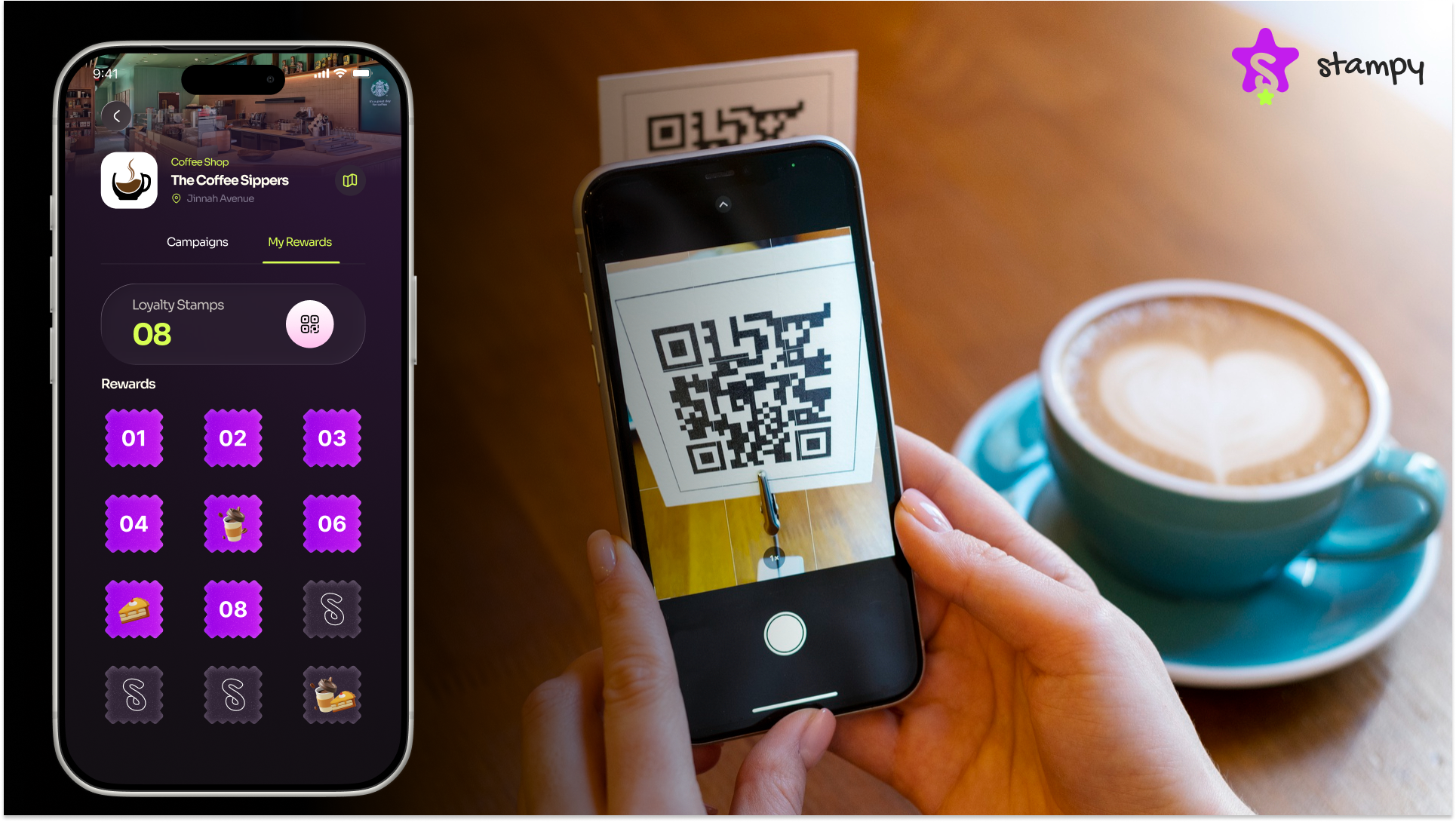
Digital loyalty addresses this by tying stamps to a QR code on the customer's phone, no card to carry, no progress to lose, no separate device needed. A salesperson scans the code, stamps are added automatically, and the customer can check their count in the app at any time. That kind of setup does not just reduce inconvenience; it removes the reasons people quietly stop showing up. Less friction means fewer excuses to quit.
3. Customers Simply Forget the Program Exists
A paper card sitting at the bottom of a bag has no way of reminding anyone it is there. Without something bringing customers back into the loop, even members who genuinely liked the program at sign-up will drift away over time. Low engagement is often a visibility failure, not proof that customers stopped caring, but proof that the program stopped showing up in their daily lives.
Digital Loyalty keeps the program on the same device that customers check throughout the day. They can see nearby stores, view active campaigns, and watch their stamp count move up after every visit. When someone can glance at an app and see they are two stamps from a free meal, they think about stopping in. That simple visibility loop is what keeps members from forgetting the program exists between visits.
4. Too Many Programs, Not Enough Reason to Stay
The average shopper is technically enrolled in several loyalty programs. Most of those programs see almost no activity. When wallets are full of cards and phones are full of apps, customers gravitate toward one or two that feel worth their time, and everything else becomes background noise. Loyalty program churn is often a forgettability problem wearing the mask of a retention problem.
Standing out in a crowded field takes more than a decent reward structure. Digital loyalty helps businesses surface their campaigns to customers who are already physically nearby, a natural and well-timed nudge that generic email blasts simply cannot replicate.
5. Rewards Expire Before Customers Get to Them
Losing accumulated stamps to a quiet expiry is one of the fastest ways to permanently damage how a customer feels about a business. Short expiry windows feel arbitrary, like the program is designed to benefit the business rather than the customer. Someone who loses rewards they worked to earn rarely starts over with any real enthusiasm. This problem alone accounts for a meaningful portion of loyalty card disengagement, and most of it is completely avoidable.
Redemption timelines should reflect how real customers behave, not how businesses would prefer them to behave on a neat monthly schedule. Giving people enough runway to actually use their rewards signals that the relationship matters more than the accounting. Being upfront about expiry dates also helps customers can handle a deadline they know about; they cannot handle one that blindsides them. Extending expiry windows is a low-cost change with an outsized effect on member trust.
6. Nobody Can Figure Out How the Program Works
A confusing loyalty program is one that customers stop using, regardless of how good the underlying rewards might be. If someone cannot quickly work out how many stamps they need, what they can get for them, and when things expire, they disengage rather than try to figure it out. Loyalty card disengagement is frequently a clarity problem that gets misread as customer indifference. Simple, transparent rules outperform complex tier structures with fine print nearly every time.
Digital loyalty shows customers exactly which product earns stamps and how many they get per purchase, with counts updated in real time after every scan. There is no guesswork about where someone stands or what they need to do next. That kind of straightforwardness builds the trust that keeps customers participating past their first redemption and the second, and the third.
What Percentage of Loyalty Cards Go Unused?
The number is uncomfortable: studies suggest more than half of all loyalty memberships are inactive at any given point. Members sign up, collect a few stamps, and then go silent without formally quitting. Businesses look at enrollment numbers and feel good about their reach, while the actual active user count tells a far less flattering story.
Total sign-ups are a vanity metric. Active monthly participants, the people earning and redeeming, are the number that tells you whether the program is working. The gap between those two numbers is where all the loyalty program churn lives. Closing that gap means fixing the structural problems that are driving people out, not celebrating how many people once said yes.
How Do You Keep Customers Engaged With a Loyalty Program?
Long-term engagement is not something a good launch offer can sustain on its own. It comes from building a program that fits into how customers already live, spend and then staying consistent about delivering on the promise.
Here is what actually moves the needle.
1: Keep the next reward within reach. Customers stay in when they can see a realistic path to something worth having. Short-term wins alongside longer goals give members something to work toward on every visit, not just occasionally.
2: Show progress in real time. Watching a number go up after each visit is a simple thing that carries real psychological weight. Customers should always know exactly where they stand without asking. That transparency reduces the uncertainty that causes people to disengage and lose track.
3: Use time-limited campaigns to pull inactive members back. Businesses that run seasonal or event-tied promotions see genuine spikes from members who had gone quiet. A well-timed campaign does more for re-engagement than a series of generic check-in reminders telling customers to come back.
4: Communicate with a reason, not just a schedule. Too many messages and customers tune everything out. Too few, and the program disappears from their mind entirely. The messages that work are specific: a milestone the customer hit, a campaign starting nearby, a reward that is almost within reach. Generic blasts get ignored. Messages tied to what that specific customer is actually doing get read.
You can also read our guide on how to get more customers to join your loyalty program.
Why Don't Customers Redeem Rewards?
Earning without redeeming is a warning sign that businesses rarely take seriously enough. Customers who collect but never claim usually run into a confusing redemption process. The reward has to feel as good to claim as it did to earn, otherwise the whole loyalty cycle collapses at its most important moment. Unredeemed rewards are not just a missed opportunity; they are a sign that the program let the customer down at the finish line.
Final Thoughts
Most loyalty programs do not fail spectacularly. They just slowly lose the customers they worked to attract, one forgettable interaction at a time. Weak rewards, friction, poor visibility, and confusing rules are each fixable on their own. The businesses that take those problems seriously and use tools that give them real data to act on end up running programs that customers actually stay in.
Getting it right is less about having the biggest reward budget and more about respecting the customer's time. Stampy's platform handles the infrastructure so businesses can focus on what actually builds loyalty: making showing up feel consistently worthwhile. The best loyalty programs are not complicated. They are just honest, convenient, and worth the customer's continued attention.
Frequently Asked Questions
Why do customers stop using loyalty cards?
Most often, the rewards are not worth the effort, the process is too complicated, or the program becomes invisible in daily life. Loyalty fatigue, unnecessary friction, and poor communication all contribute to card abandonment, and any one of them is enough to push a member out.
Why do loyalty programs fail?
Programs fail when they measure success by sign-ups rather than active engagement, and consistently fail to deliver real value to the members they already have. When earning is hard, redemption is confusing, or the rules read like fine print, customers stop participating without ever formally leaving.
What percentage of loyalty cards go unused?
Studies suggest more than half of loyalty memberships are inactive at any given time. That gap between enrolled members and active participants is the most honest measure of how a program is actually performing, and most programs would rather not look at it closely.
How do you keep customers engaged with a loyalty program?
Attainable rewards, real-time progress, purposeful communication, and a simple redemption process are what keep members active over time. Businesses that treat engagement as an ongoing design problem, not a one-time launch decision, hold onto members far longer than those that do not.
What makes a loyalty program successful?
Successful programs are easy to join, clear about how they work, and genuinely rewarding in ways that match how customers actually shop. Digital tools that combine QR-based earning, real-time tracking, and in-app redemption give businesses the strongest foundation for building something that lasts past the first promotional push.