13 min read




Your product arrived on time and worked exactly as advertised, but you still feel nothing special about that brand. Satisfaction keeps a customer from writing a bad review, but it never makes them tell their friends. Fast shipping and smooth checkout have become the bare minimum that customers expect before they even consider buying. Functional excellence is no longer a competitive edge when every competitor in your space can offer the same thing. Emotional connection is the one territory that is genuinely difficult to copy, undercut on price, or replicate overnight.
This is where the surprise-and-delight strategy earns its place in any serious conversation about customer retention. It is built around delivering unexpected rewards and recognition at moments when customers have absolutely no reason to anticipate them. Most businesses either skip it entirely or reduce it to an automated campaign that looks like a surprise but feels like a coupon. This blog covers what the strategy actually involves, backs it with real data, and explains how any business can start building these moments today.
What Is Surprise and Delight Marketing?
The surprise-and-delight marketing delivers unexpected value to customers at moments when they have no reason to anticipate anything special. The word that matters most in that definition is unexpected, because a reward someone is already counting toward is just a loyalty program. A loyalty program is useful, but it does not create the emotional memory that surprise and delight consistently does.
What surprise and delight is not:
- An automated birthday discount is sent to your entire mailing list on the same date each year
- A punch card where the customer already knows exactly which visit earns the free item
- A gift explicitly attached to a minimum spend that was advertised at the checkout counter
- Any gesture followed immediately by a request to post about it and tag your brand account
What surprise and delight actually look like in practice:
- A bonus stamp quietly added to a loyal customer's account on a completely ordinary Tuesday
- A handwritten note in a package because someone on staff noticed something personal in the order
- A free upgrade given to a long-term customer with no announcement and no reason beyond loyalty
- A reward notification was pushed to engaged customers a few days before a holiday, with no prior hint
- A personal message from a founder to a subscriber who just hit a real milestone with the product
Every one of these works because the customer did not see it coming, and that unpredictability is what burns the moment into memory.
Why the Surprise and Delight Strategy Works: What the Data Shows
The business case for the power of surprise and delight is backed by a consistent body of data that most businesses overlook when they are still focused almost entirely on acquisition.
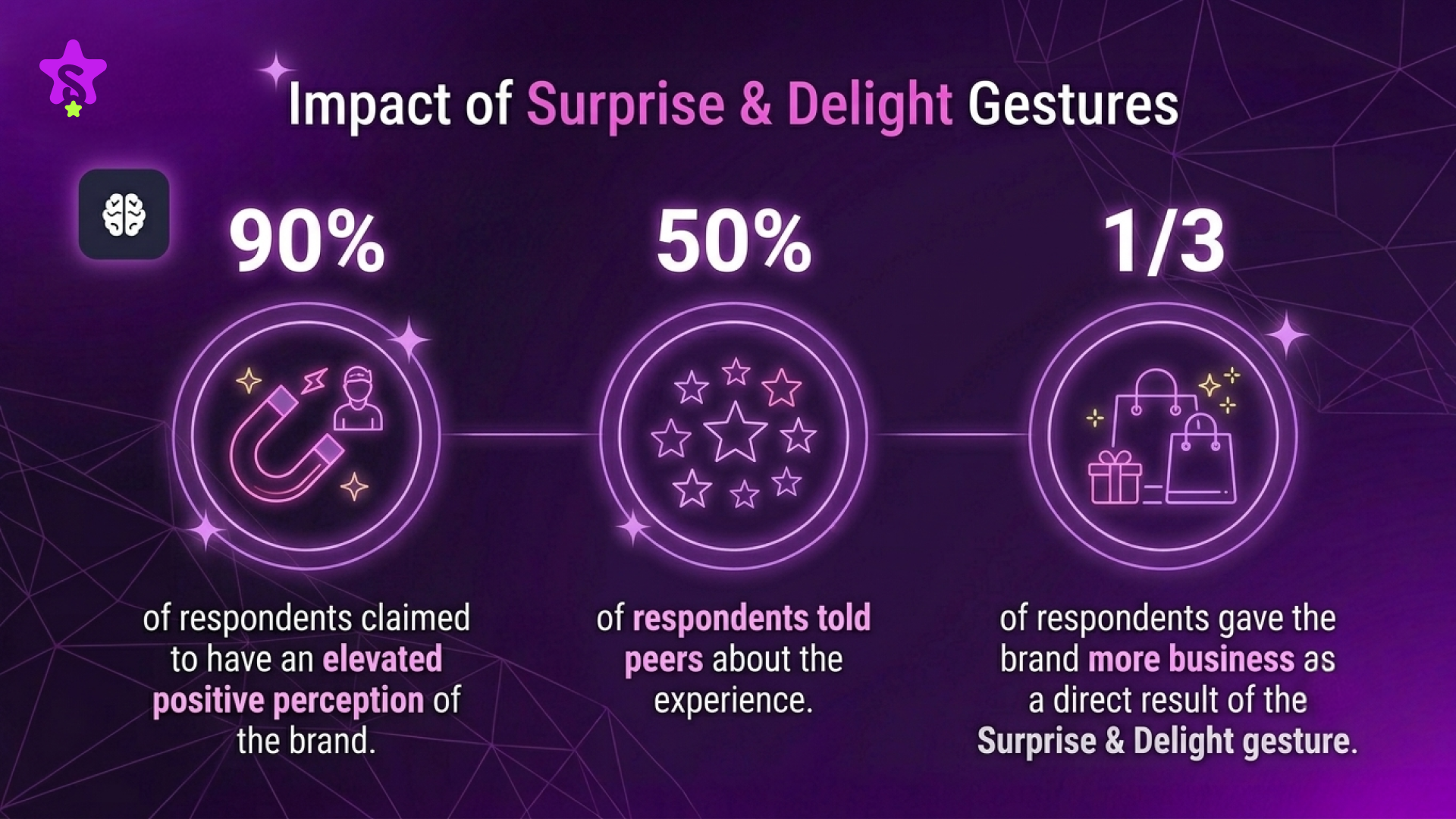
These numbers all point toward the same uncomfortable truth for most marketing teams. The customers already inside your business are far more valuable than most loyalty programs treat them.
The 4 Things That Separate Real Delight From a Promotion With Better Packaging
The surprise and delight strategy fails when businesses treat it as a freebie program rather than a deliberate customer experience decision. Every gesture that builds real loyalty sits on at least one of four foundations.
1. Personalization That Actually Fits the Specific Person Receiving It. A generic surprise is still just a promotion wearing a friendlier label on top. If you reward a customer for the exact product they order every single week, the message underneath is clear. Your business actually pays attention to them, and that acknowledgment often means more than the reward itself does. People recognize immediately when they have been seen versus when they were simply CCed on a mass email campaign.
2. Timing That Genuinely Catches the Customer Off Guard. Reward a customer already knew was coming functions as a benefit, not a surprise in any emotional sense. That same reward delivered with no warning on a random day lands completely differently in the brain. Neuroscience backs this up consistently: the unexpected reward activates a stronger response than the predicted one does every single time. Timing is often the entire difference between a delightful moment and a redeemed promotion that customers forget by the next morning.
3. Turning a Service Problem Into a Better Story Than No Problem. This one surprises most people when they first hear it explained properly. When a mistake happens, and you fix it well and then go one step further, customers frequently end up more loyal than they were before anything went wrong. The Service Recovery Paradox is documented and real, and most businesses leave this opportunity completely untouched. Treating a complaint as a delight opportunity requires a team empowered to act without waiting for approval from three managers.
4. Letting Your Team Respond as Actual Human Beings. Customers connect with people, not with brand voice guidelines written in a Google Doc. Businesses that give staff the freedom to make small real-time decisions, to acknowledge when something is funny, to use warm language without corporate approval, create moments no competitor can replicate just by copying a product feature. The simplest version of this is giving frontline team members the authority to do something kind without asking permission first.
Ways to Surprise and Delight Your customers
Some of the greatest surprise and delight campaigns are built around moments that already carry emotional weight for your customers specifically. Generic holiday promotions that every brand runs at the same time with the same message do not create delight moments for anyone.
Occasion-based ideas that work across different business types:
- Pre-Holiday Surprise: Push an unexpected bonus reward to loyal customers two days before a major holiday with absolutely no prior announcement or campaign messaging
- Consistency Recognition: When a customer completes five visits in a single month, trigger an unrequested upgrade as a quiet acknowledgment that the business noticed their pattern
- Customer Anniversary: Mark the exact date a customer made their first purchase with something personal that proves your system actually remembered when they likely did not
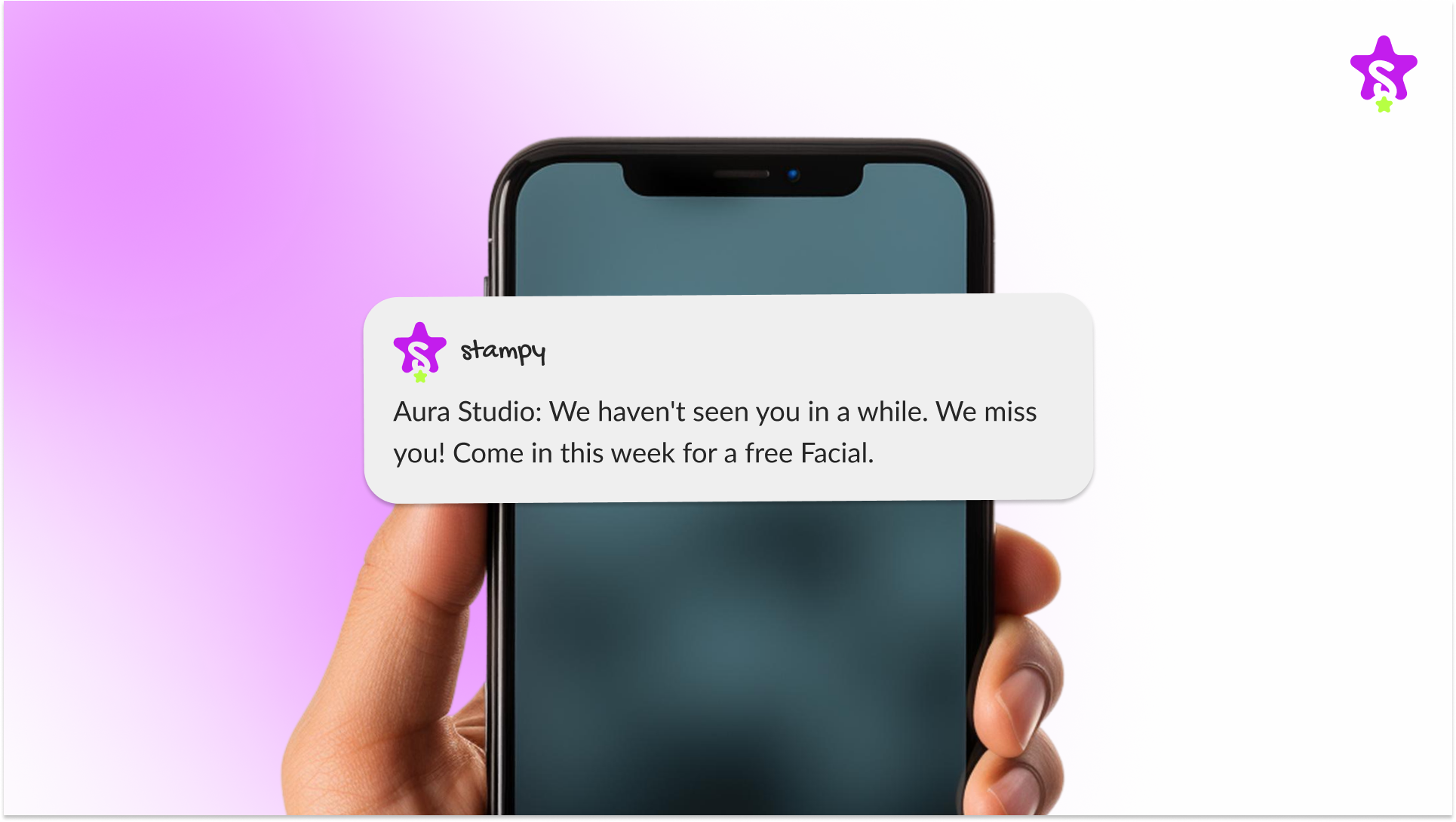
- Re-Engagement That Feels Like a Check-In: When a regular has not visited in three weeks, a surprise bonus lands very differently than a generic win-back discount code
- Community Moment: When something relevant happens locally, reaching out with a small tied gesture feels personal and noticed rather than scheduled and automated
None of these requires a significant budget allocation or a dedicated customer experience team. They require knowing your customers well enough to identify what the right moment actually is for each of them.
How Small Businesses Run This Strategy Without Enterprise-Level Resources
Most articles about surprise marketing make it sound like you need a full CRM team and a dedicated gifting budget before you can start doing anything meaningful. That is not accurate. The customer delight tactics that create the strongest loyalty moments are often the simplest and least expensive ones available to any business.
Practical starting points that require more attention than the budget:
- Bonus Stamp With No Explanation: Award an extra stamp to a regular customer on a slow afternoon and give no reason for it, because the mystery actually adds something to the moment
- First Visit Head Start: When a new customer scans their QR code for the first time, quietly give them a small bonus toward their first reward without any prior announcement at all
- Absence Acknowledgment: When a regular has not visited in three weeks, a surprise bonus notification is a far warmer signal than a generic promotional push
- Top-Five Monthly Recognition: Identify your five most consistent monthly visitors and give each one a complimentary product or upgrade with no strings and no announcement attached
- Personal Memory From Staff: Train your front-of-house team to remember and reference one specific detail per regular customer, because that recognition does more work than any reward point ever could
The businesses that do this well are not spending more than their competitors. They are paying closer attention to the people who are already choosing them.
How Stampy Makes the Surprise and Delight Strategy Operationally Possible
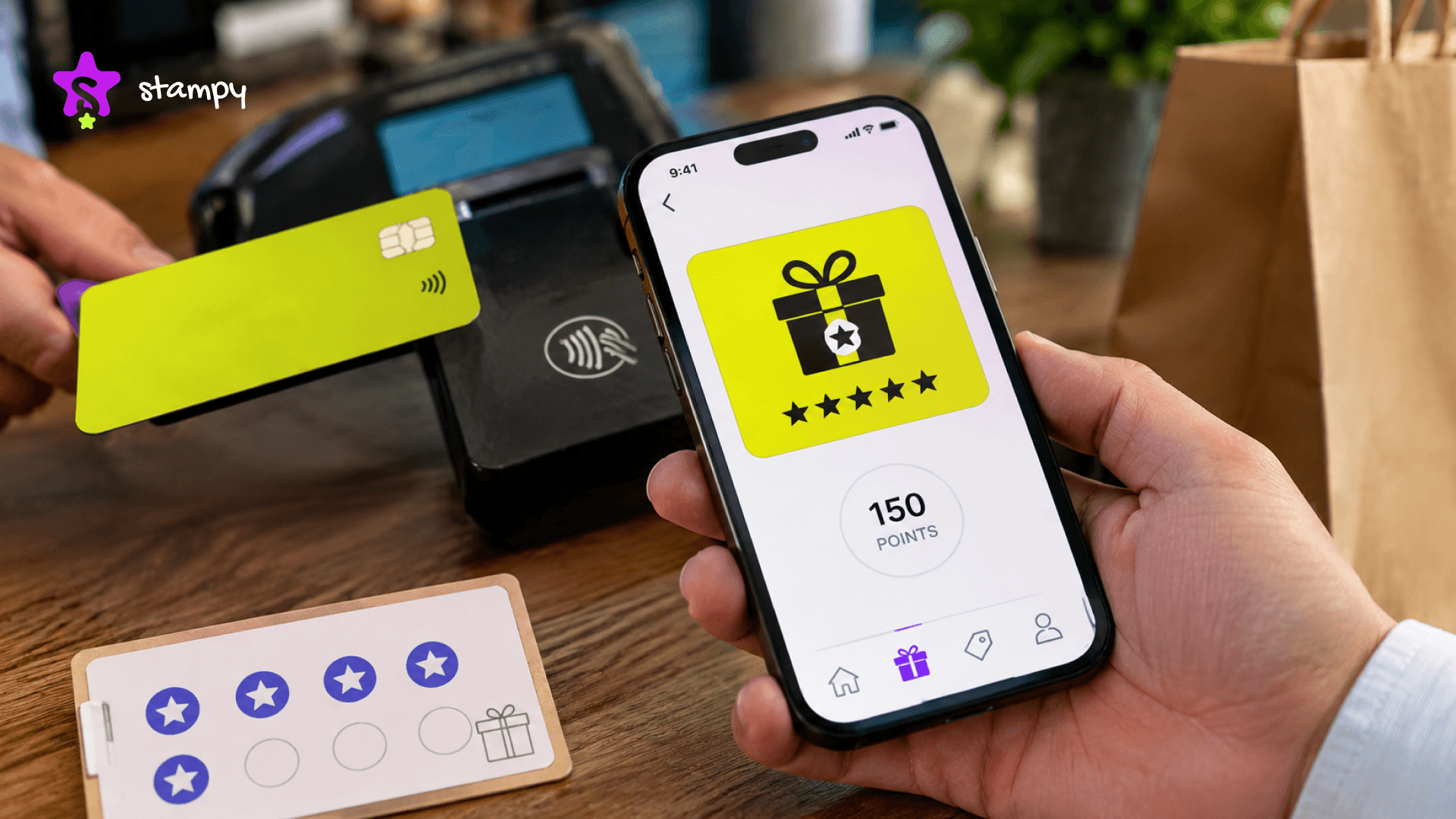
Paper stamp cards never gave businesses the information they needed to run surprise and delight properly at any real scale. There was no way to see who was close to a milestone or spot a customer who had not visited in several weeks. Stampy was built to close exactly that operational gap for local and chain businesses.
Stampy is a mobile-based digital loyalty and rewards platform connecting customers with businesses through QR-code-enabled campaigns and location-based store discovery. Business owners configure product-specific campaigns from a web portal, assigning unique reward structures to individual branches across multiple locations. Branch managers track real-time customer participation and redemption data to see exactly where engagement is strongest across their active campaigns. Salespersons scan customer QR codes at the point of purchase, with a manual ID entry option when a scan does not go through cleanly.
What Stampy makes possible for surprise and delight specifically:
- Business owners configure bonus stamp triggers that activate automatically when a customer hits a specific visit count within a campaign period
- Branch managers can see which customers are approaching a campaign milestone and acknowledge them personally before the reward even officially arrives
- Location-based discovery means customers can open the app, find a nearby active campaign, and walk in for a reward experience they had no idea existed until that moment
- Every stamp update happens in real time, so customers watch their progress build without ever relying on a paper card they might lose
- Redemption history is stored, so the loyalty relationship feels like it has a real and trackable record behind it
For a coffee shop owner, this means a customer hitting their sixth visit in a single month gets an unexpected bonus notification delivered before they even reach the counter. For a multi-branch salon, it means each location manager can see a returning client is two visits from a reward and make sure that visit feels personally acknowledged.
Stampy lets businesses of any size build surprise rewards directly into their loyalty system. Apply for early access today.
How to Measure Whether the Surprise and Delight Strategy Is Actually Working
Because surprise and delight campaigns target how people feel rather than whether they clicked on a banner, standard short-term campaign metrics will not capture their true value. The metrics that matter are longer-term ones that most dashboards do not surface automatically.
Track these over a 6 to 12-month window:
- NPS Movement: Compare Net Promoter Scores between customers who received an unexpected gesture and those who did not, and watch the gap build consistently over several measurement periods
- Retention and Churn Rate: A two to three percent churn improvement across a real customer base is not a small number when compounded across a full year of retained revenue
- Organic Mentions and UGC: Count unprompted posts, tagged stories, and brand mentions from customers who shared without being asked or incentivized to do so
- Repeat Visit Frequency: Delighted customers return more often because the experience is worth repeating, not because a scheduled discount cycle brought them back in
- Campaign Completion Rate: High completion rates on Stampy campaigns indicate customers are emotionally invested enough in the journey to actually follow it all the way through
- Referral Source Tracking: Ask new customers how they found the business, and measure how many cite a specific positive experience that a friend described to them directly
Three Ways Businesses Consistently Get This Wrong
1. Using gestures to cover up a broken core experience. A handwritten note does not save a business whose fundamental product or service is consistently unreliable. Customers appreciate the gesture and still decide not to come back, because the underlying problem was not actually addressed. Fix the core experience first, and then build delight on top of something people want to return to.
2. Giving a gift and then attaching an immediate expectation to it. When you send an unexpected reward and follow it with a message asking the customer to post about it and tag your account, the goodwill disappears in the same moment the message arrives. The customer felt the transaction hiding underneath the gift, and that feeling erases whatever warm response the surprise had created. Let people choose to share naturally, because an organic post from a genuinely surprised customer carries far more trust than a prompted one.
3. Running the same surprise until customers can predict it precisely. Once customers figure out that scanning their QR code on their fifth visit in a month always triggers a bonus reward, you have a known loyalty benefit again. The element of shock is gone entirely, and what remains is just another tier structure with friendlier language attached to it. Vary the triggers, change the timing, and keep the pattern impossible to reverse-engineer.
Final Thoughts
Products get copied, prices get undercut by someone with deeper margins and a longer runway. Features get replicated in a weekend by a competitor who decided they wanted the same customer. What nobody can easily copy is the specific way a customer feels about a brand that once did something for them, they did not expect and did not ask for. That feeling shows up in retention numbers, referral rates, and lifetime value data in ways that are genuinely hard to argue with when you track them over a full year. Businesses that take this seriously end up with something their competitors cannot simply acquire through a bigger ad spend.
Start with one customer this week. Find the right moment in their specific journey with your brand. Do something they will not see coming, with no expectation of anything in return. That is where this strategy begins, and platforms like Stampy exist to help you execute it consistently at scale without relying on memory or manual guesswork.
Frequently Asked Questions
What is surprise and delight marketing, and how does it differ from a loyalty program?
Surprise and delight marketing delivers unexpected value to customers at moments they had no reason to anticipate anything coming. A loyalty program tells the customer exactly what they will earn and when they will earn it.
Why is the surprise and delight strategy more effective than standard discounting?
Discounts train customers to wait for the next deal before they spend money with your business. Surprise and delight build an emotional connection that makes customers choose you over a cheaper competitor because the relationship itself has real value to them.
What are some realistic surprise and delight examples for small businesses?
A coffee shop can quietly add a bonus stamp to a regular customer's account on an ordinary visit with no explanation given. A salon can send a surprise reward notification to a client who has not visited in three weeks as a warm acknowledgment rather than a win-back coupon.
How can a platform like Stampy help businesses run surprise and delight campaigns?
Stampy gives business owners real-time visibility into customer participation, visit frequency, and campaign progress across all their branches and active promotions. This data makes it possible to identify the right moment for a surprise reward rather than guessing or relying on staff memory alone.
What mistakes should businesses avoid when running surprise and delight campaigns?
The three most common mistakes are using gestures to cover up a product or service that is consistently unreliable, attaching an expectation like a social media post request to every reward you send, and repeating the same surprise on such a predictable schedule that customers start anticipating it.