8 min read




For years, loyalty programs have been treated as little more than a way to hand out discounts. Spend a certain amount, collect a few points, and eventually earn money off your next purchase. It sounds like loyalty, but in many cases it's just another promotion.
The problem is that discounts are easy to copy. If the only reason customers come back is to save a little money, they'll leave just as quickly when another business offers a better deal.
Digital loyalty changes that equation. Instead of simply rewarding transactions, it helps businesses understand customer behaviour, personalise experiences, strengthen retention, and build relationships that go far beyond price. The discount may still have a place, but it becomes just one part of a much bigger strategy.
Why "Discount-Only" Loyalty Falls Apart
A discount gets someone to buy once. It rarely gets them to come back for the right reasons.
Think about what happens when your loyalty program is purely points-for-percentage-off. Customers start shopping around for whoever's offering the biggest cut that week. You've trained them to chase the deal, not the brand. And the moment a competitor undercuts you, that "loyal" customer is gone. I've seen this play out in retail, in food delivery apps, in subscription boxes the pattern doesn't care about industry.
There's also a margin problem nobody likes to talk about. Every discount you hand out is money you're not making. Stack enough of them and your loyalty program starts eating the profit it was supposed to protect. So if discounts alone don't build loyalty, what does?
The Data You're Actually Sitting On
Every scan, tap, or login through a digital loyalty program hands you a small piece of information. On its own, one data point means nothing. Thousands of them, aggregated over months, tell you things a survey never could.
You start seeing which products get bought together. Which customers are drifting toward churn before they even realize it themselves. Which time of day, which store location, which weather pattern even, drives spikes in behavior. I find this part genuinely underrated. Most businesses collect this data and let it sit in a dashboard nobody opens. The ones who win actually act on it: adjusting inventory, timing promotions, personalizing offers based on real purchase history instead of guesswork.
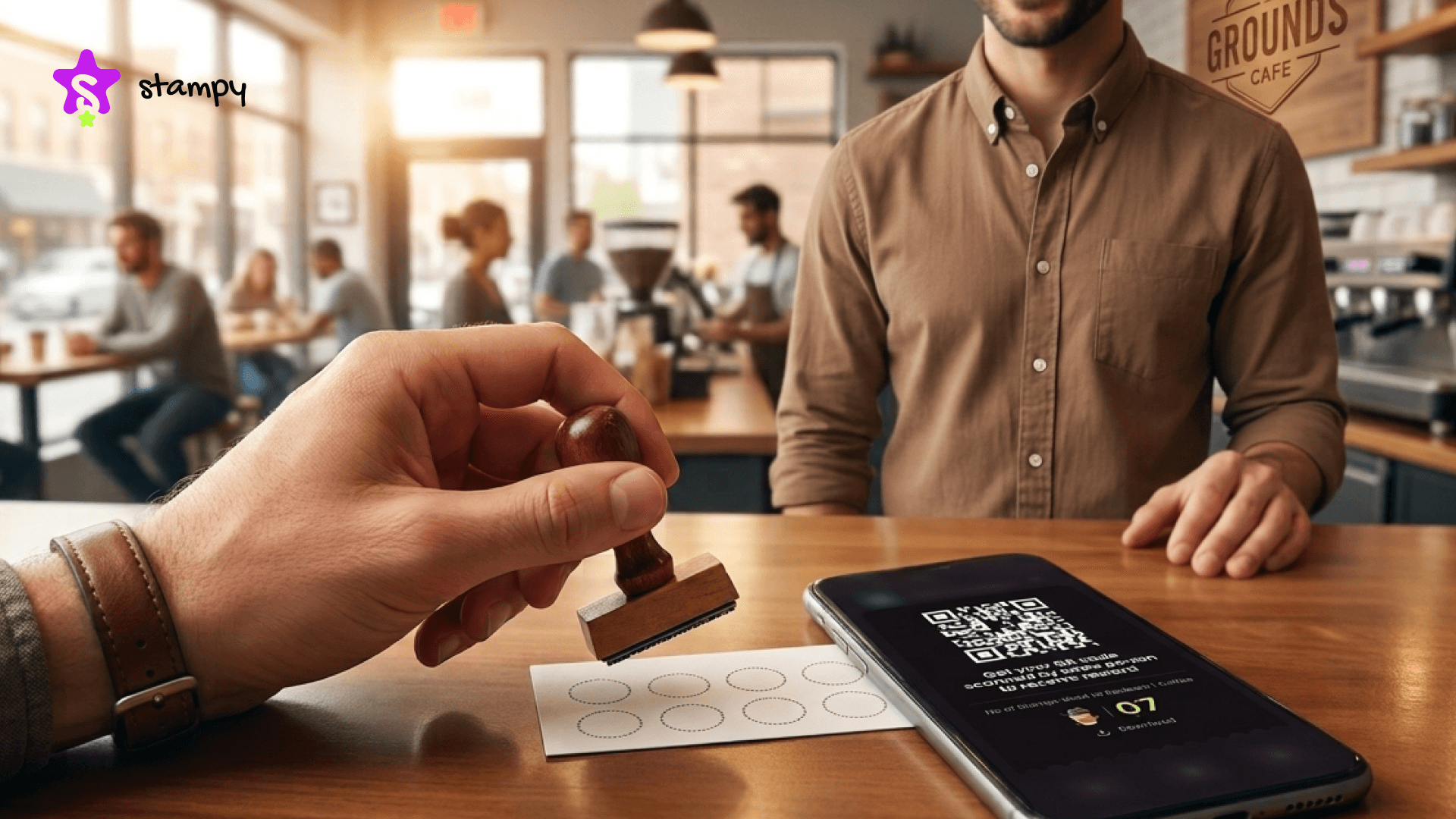
This is where digital beats physical stamp cards by a mile. A paper punch card tells you nothing except that someone bought ten coffees. A digital program tells you what else they bought, how often, and what might get them to buy more.
Personalization That Doesn't Feel Creepy
There's a fine line between "this brand gets me" and "this brand is watching me too closely." Good loyalty programs walk that line by using data for relevance, not surveillance.
I mean things like: recommending a product based on past purchases instead of blasting the same generic email to your entire list. Sending a birthday offer that actually reflects what someone buys, not a random 15% off code. Recognizing when a regular customer hasn't shown up in six weeks and reaching out before they've fully checked out mentally.
Retention Costs Less Than Acquisition
This stat gets repeated so often it's practically a cliché at this point, but I'll say it anyway because businesses keep acting like they haven't heard it: acquiring a new customer costs significantly more than keeping an existing one. Depending on the industry, estimates put it anywhere from five to twenty-five times more expensive.

A well-built loyalty program is one of the cheapest retention tools available, dollar for dollar. You're not paying for ad impressions or influencer partnerships. You're investing in people who already chose you once. The return on that investment tends to be higher, faster, and more predictable than most acquisition channels because you're not trying to convince a stranger, you're trying to keep a relationship going.
And retained customers don't just buy more. They talk. Referrals from loyal customers convert better than cold leads because trust is already baked in. That's a value a discount code will never generate on its own.
Building a Community, Not Just a Customer Base
The strongest loyalty programs I've studied stop feeling transactional at some point. They start feeling like membership.
Sephora's Beauty Insider program is the textbook example people cite for a reason; it's not just points for purchases. It's early access to product launches, community forums, personalized beauty recommendations, tiered status that people genuinely want to reach. Customers aren't chasing a 10% discount there. They're chasing status, access, and belonging.
That's a completely different psychological driver than "buy more, save more." Status and belonging create emotional attachment. Emotional attachment survives a competitor's sale. A pure discount-chaser does not.
What Digital Loyalty Should Actually Include
If I were building this from scratch today, I wouldn't start with "what discount can we offer." I'd start with "what does a customer actually want from us beyond the transaction."
A few things worth building toward:
1: Tiered recognition: Where customers can see a clear path from casual buyer to VIP status, with real perks attached to each level, not just bigger discounts.
2: Behavioral triggers: Automated but relevant touchpoints based on what someone actually does, not generic blasts to everyone on the list.
3: Cross-channel consistency: A loyalty program that works the same whether someone's shopping online, in an app, or in a physical store. Fragmented experiences kill trust fast.
4: Feedback loops: Giving loyal customers a way to actually influence the business, whether that's product input, early beta access, or community voting on new features.
5: Non-monetary rewards: Early access, exclusive content, surprise-and-delight moments that cost you little but mean a lot because they feel personal.

None of this replaces a good discount entirely. People still like saving money, and there's nothing wrong with that. But when the discount is one tool among several instead of the entire strategy, the program becomes something customers actually want to be part of, not something they tolerate until a better deal shows up elsewhere.
The Real Return on Loyalty
Here's my honest take: the businesses treating loyalty programs as pure cost centers, line items for handing out coupons are the ones missing the point entirely. The ones treating loyalty programs as data infrastructure, relationship engines, and community builders are the ones seeing customer lifetime value actually climb.
The discount gets someone in the door. What happens after that determines whether they stay. Digital loyalty, done right, is the thing that happens after.
If your program's success metric is still "redemption rate on discount codes," it might be time to ask what else that data could be telling you and what your most loyal customers actually want that has nothing to do with price at all.
Conclusion
Discounts will always have a place in loyalty programs customers like saving money, and there's no getting around that. But a program built entirely on price cuts is a program with no real defense the moment a competitor offers a better deal. The businesses that get the most out of digital loyalty are the ones that treat it as more than a coupon delivery system: a source of customer data, a way to personalize without feeling invasive, a retention tool that costs less than chasing new customers, and, when done well, a genuine sense of community around the brand.
Frequently Asked Questions
What is digital loyalty, and how is it different from a traditional loyalty program?
Digital loyalty runs through an app, website, or connected point-of-sale system instead of a paper punch card. The real difference isn't the format, though; it's what you can do with it. A physical card just tracks visits. A digital program tracks behavior, preferences, and timing, which means you can act on that information instead of just collecting stamps.
Do customers actually care about anything beyond the discount?
Yes, more than most businesses assume. Customers stick around for early access, personalized recommendations, status, and being recognized as a repeat buyer rather than a stranger. Discounts get attention. Recognition and relevance keep people coming back.
How much data does a small business actually need to make loyalty personalization work?
Less than you'd think. Purchase frequency, average order size, and product categories someone buys are usually enough to start sending relevant offers instead of generic ones. You don't need a data science team, you need to actually look at what you're already collecting.
Isn't personalization just going to feel invasive to customers?
It can, if it's done badly. The line is usually about relevance versus surveillance. A birthday discount on something someone regularly buys feels thoughtful. An email that references browsing behavior in a way that feels tracked feels unsettling. Use the data to be useful, not to prove you're watching.
What's a realistic first step for a business that only has a basic points system right now?
Start by adding one non-monetary reward, early access to a new product, a small tier system, or a simple "we noticed you haven't been in" message triggered by inactivity. You don't need to rebuild the whole program at once. Small additions to the existing points system usually move the needle faster than a full overhaul.