10 min read



Key Takeaways
- Stamp cards suit businesses with frequent, similar purchases, such as coffee shops, bakeries, barbers, and car washes.
- Points and cashback work better when order values vary widely, because rewards grow in line with spending.
- Tiers, referrals, and memberships suit businesses that want deeper commitment, new customers, or steady recurring income.
- Start with one simple program, track it digitally, and add extra mechanics only once customers use it regularly.
Small business loyalty programs come in many forms, such as digital stamps, points, cashback, tiers, referrals, memberships, gamification, and hybrid models. Which is right depends on how your customers shop and what you’re trying to achieve, as each one encourages different customer behaviour.
A coffee shop with frequent, similar purchases may benefit from a simple stamp program, while a boutique with higher and more varied order values may need points or cashback. Choosing a model that fits your customers makes the program easier to understand and more practical to manage.
The right loyalty program should also make sense for your margins, staff, and day-to-day operations. This guide breaks down the main types of loyalty programs for small businesses, how each works, and which business models they generally suit.
What Is a Customer Loyalty Program?
A customer loyalty program rewards people for returning to your business instead of choosing a nearby competitor. These small business rewards programs can give customers incentives based on visits, spending, referrals, or other actions. Their main purpose is to encourage repeat customers to return more often and continue buying from the business.
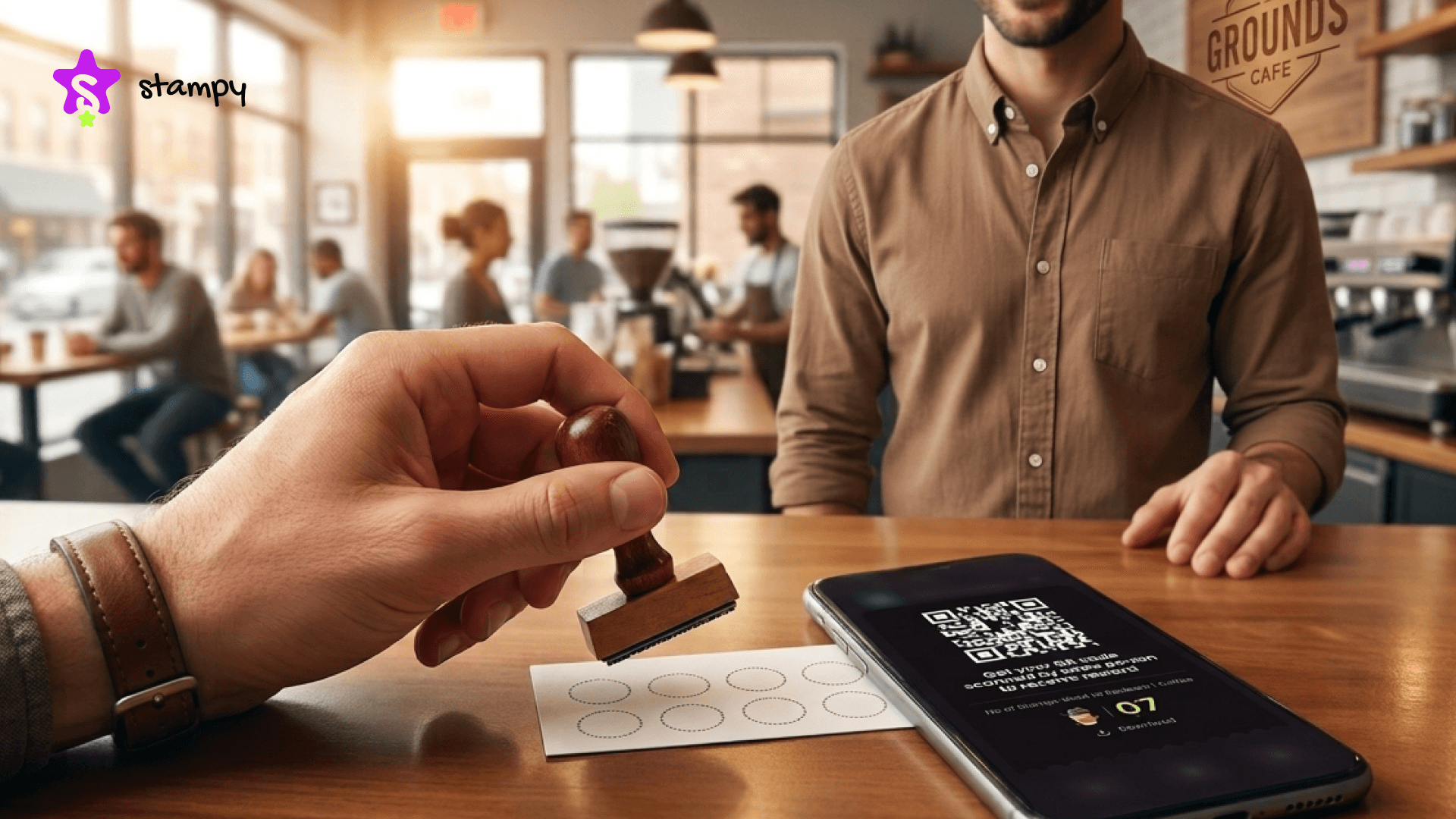
Customer rewards programs can base rewards on visits, spending, referrals, paid membership, or engagement, such as completing small challenges. Traditional programs often use paper cards stamped at the counter, which customers carry in wallets or lose.
A digital loyalty program tracks the same rewards electronically, usually through a phone, app, or scanned QR code. Both approaches share one goal, which is turning a first visit into a lasting habit.
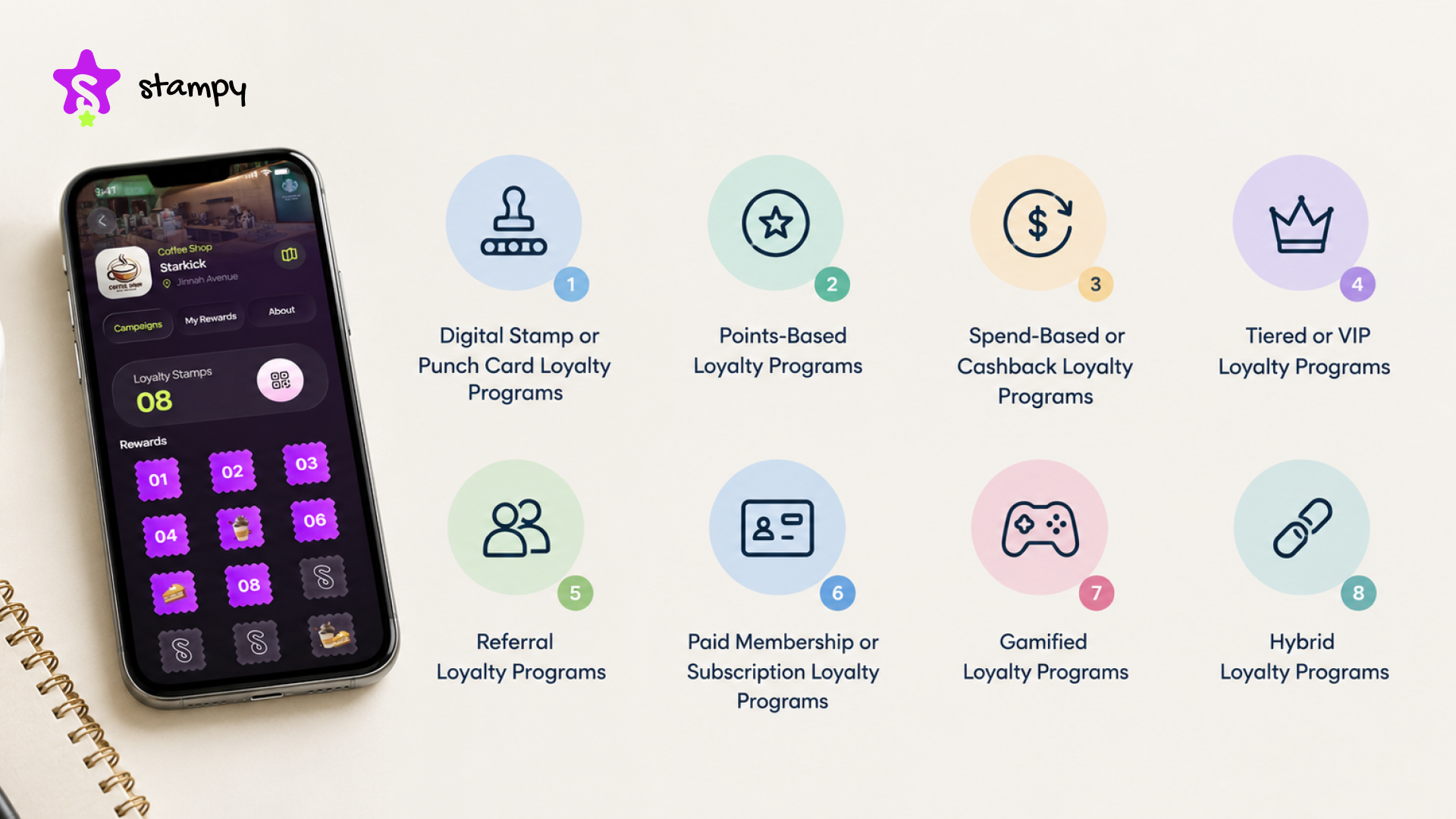
8 Loyalty Program Types Compared
The table below compares the main customer loyalty program types, how they work, who they suit, and how difficult they are to manage.
Loyalty Program Type | How It Works | Best For | Complexity |
Digital stamp or punch card | Reward after a set number of visits or purchases | Coffee shops, bakeries, salons, car washes | Low |
Points based | Earn points based on spending or actions | Retail, restaurants, ecommerce | Low to Medium |
Spend-based or cashback | Return part of spending as store credit | Retail, varied basket sizes | Low to Medium |
Tiered or VIP | Better perks at higher levels | Salons, boutiques, premium businesses | Medium |
Referral | Reward customers for bringing new customers | Salons, gyms, service businesses | Low |
Paid membership | Pay for ongoing benefits | High frequency businesses | Medium to High |
Gamified | Challenges, bonuses, and milestones | Gyms, restaurants, younger audiences | Medium |
Hybrid | Combines multiple loyalty mechanics | Growing businesses | Medium to High |
8 Types of Loyalty Programs Small Businesses Can Use
The loyalty program types below reward different customer behaviors, so consider how each one fits the way your customers already buy.
1. Digital Stamp or Punch Card Loyalty Programs
Customers earn a stamp per visit, and eight stamps might earn a free coffee on the next visit. Digital punch cards make the same reward structure easier to manage without relying on paper cards that customers can lose. They suit coffee shops, bakeries, salons, barbers, and quick-service restaurants. A coffee shop loyalty program makes repeat visits easy to reward.
If you're considering this model, digital punch cards offer a simple starting point for frequent-visit businesses.
2. Points-Based Loyalty Programs
Customers earn points for every dollar spent, such as one point per dollar, with 100 points worth $10. Points suit retail, ecommerce, beauty and restaurants where order values vary, while stamps work better when customers make frequent purchases of similar value.
Comparing points vs stamps can help small businesses choose a reward structure without making the program unnecessarily complicated
3. Spend-Based or Cashback Loyalty Programs
Customers receive a portion of their spending back as store credit. So spending $100 could give back $5 for later. It works for retailers, boutiques, and grocery-style stores, but you need to set the percentages carefully to protect your profit margins.
4. Tiered or VIP Loyalty Programs
Customers climb levels like Member, Regular, and VIP through spending or visits, earning perks like priority appointments and early access. Tiers suit salons, boutiques, and gyms, but very small businesses should wait until they have enough active members.
5. Referral Loyalty Programs
Customers earn a reward for introducing someone new, and often both the existing customer and the friend benefit. Referrals reward acquisition rather than retention, making them ideal for salons, gyms, and services customers use less often.
6. Paid Membership or Subscription Loyalty Programs
Customers pay monthly or yearly for benefits like free delivery, exclusive prices, priority booking, and members-only products. This works when customers buy often enough to feel the value, but it struggles with infrequent or low-margin sales.
7. Gamified Loyalty Programs
Gamification adds challenges, streaks, milestones, and surprise bonuses, such as getting extra rewards for three visits this month. It’s perfect for coffee shops, restaurants and fitness businesses, where customers come often and enjoy chasing a clear goal.
8. Hybrid Loyalty Programs
A hybrid programme is a combination of two or more models. For example, stamps and referrals, or points and VIP tiers. Growing businesses benefit most, so add more mechanics after customers know and use the base programme on a regular basis.
Which Type of Loyalty Program Is Best for Your Small Business?
The best type of loyalty program for small business depends mainly on your industry and how customers buy. Use the table below as a starting point, then adjust it based on what your regulars actually value.
Business Type | Loyalty Model to Consider | Example |
Coffee shop or café | Digital stamp card | Buy 8 coffees, get a free drink |
Bakery | Stamp card | Reward after a set number of purchases |
Restaurant | Stamps or points | Earn progress with every visit or order |
Hair salon or barber | Visit-based or points | Reward repeat appointments |
Nail or beauty salon | Visits and referrals | Reward appointments and referrals |
Boutique or retail | Points or tiers | Earn points based on spend |
Gym or fitness studio | Membership or gamification | Reward attendance milestones |
Car wash | Digital stamps | Reward repeated washes |
High ticket service | Referral program | Reward successful introductions |
How to Choose the Right Loyalty Program Type
These six factors will help you narrow your options and choose a rewards program for small business confidently.
Consider How Often Customers Buy
Frequent, similar purchases suit stamp cards, because every visit moves the customer one clear step closer to a reward. Less frequent visits or varied transaction sizes usually work better with points or spending-based rewards.
Look at Your Average Transaction Value
If one customer spends $5 and another spends $80, giving both the same single stamp may feel unfair. When purchase values vary significantly, points or cashback reward bigger spenders more fairly while still protecting your costs.
Decide What Behavior You Want to Encourage
Choose stamps for more visits, points or cashback for higher spending, and referral rewards for bringing in new customers. Tiers build lasting commitment, while gamification keeps frequent customers engaged and interested between their regular purchases.
Keep the Program Easy to Understand
Customers should understand how to earn and redeem rewards within a few seconds of hearing about the program. If staff need a long explanation at the counter, the program is probably too complicated for most people.
Protect Your Margins
Rewards should encourage profitable repeat business, not turn into a permanent discount that quietly eats into every sale. Work out the true cost of each reward before launch, and check redemption rates once customers start using it.
Consider How You'll Track the Program
Paper cards are cheap to start but easy to lose, and they tell you almost nothing about customers. Digital tracking records customer activity electronically, while paper cards rely on customers and staff to keep track of each visit. See our comparison of paper punch cards vs digital loyalty for a closer look at the differences.
Digital vs Traditional Loyalty Programs
Traditional loyalty relies on paper, while digital loyalty lives on the customer's phone and updates with every scan. The differences below explain why many small businesses are switching to a digital loyalty program today.
Traditional Loyalty | Digital Loyalty |
Paper cards | Phone-based loyalty |
Easy to lose | Stored digitally |
Limited customer data | Tracks activity |
No communication between visits | Offers and campaigns possible |
Manual tracking | Automated records |
How to Start the Loyalty Program You Choose
Once you pick a model, these seven steps turn the idea into a working program customers actually use.
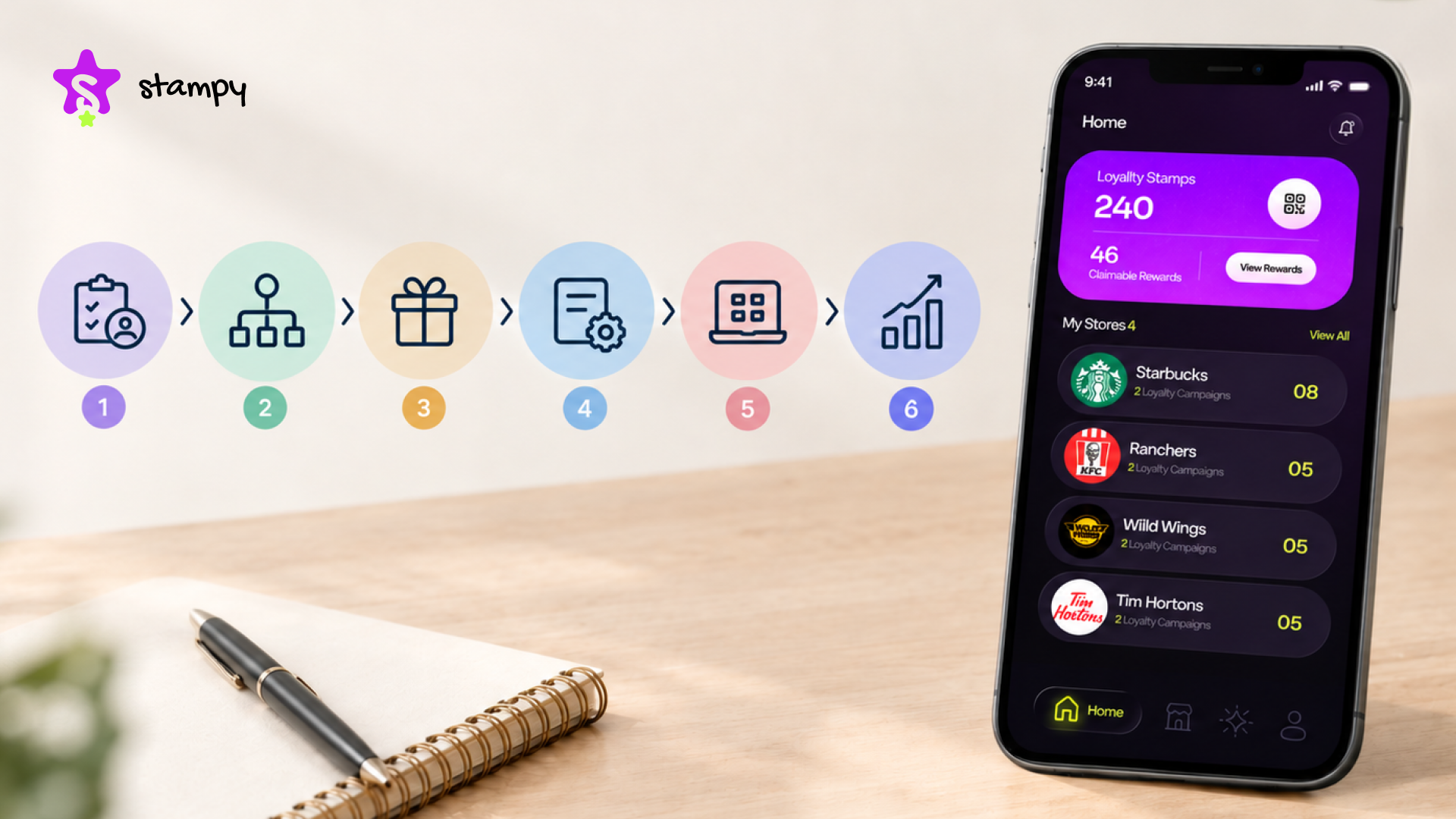
- Define behavior: Decide whether you mainly want more visits, bigger baskets, more referrals, or stronger loyalty over time.
- Pick model: Match that behavior to the loyalty model from the table above that fits your business best.
- Choose rewards: Give customers something they really want, like a free product, a helpful upgrade, or a hefty discount.
- Set rules: Decide clearly how customers earn progress and redeem rewards, then write it in one short sentence
- Pick a platform: Select a system that reliably tracks rewards and is quick for staff to use during busy times.
- Track results: Monitor sign-ups, repeat visits, redemption rates, and be willing to adjust rewards if participation starts to wane.
Once you've chosen the right model, our guide on how to launch a loyalty program for a small business walks through the setup process in more detail.
How Stampy Helps Small Businesses Run Digital Loyalty Programs
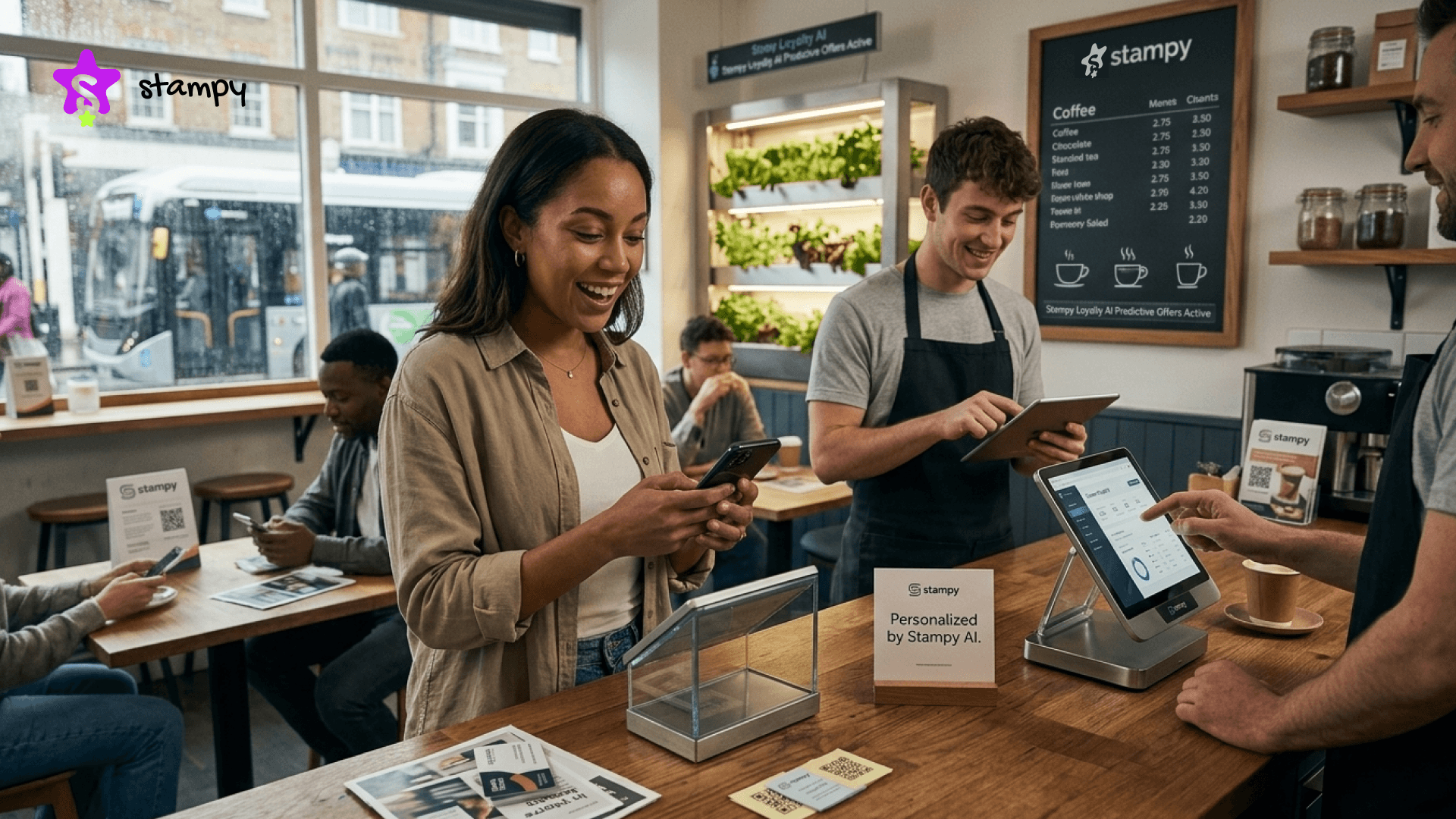
Stampy allows small businesses to run a digital loyalty programme without any paper cards or fancy loyalty software. Customers can collect stamps, redeem rewards and get offers from their phones, while businesses can manage customer activity from one place.
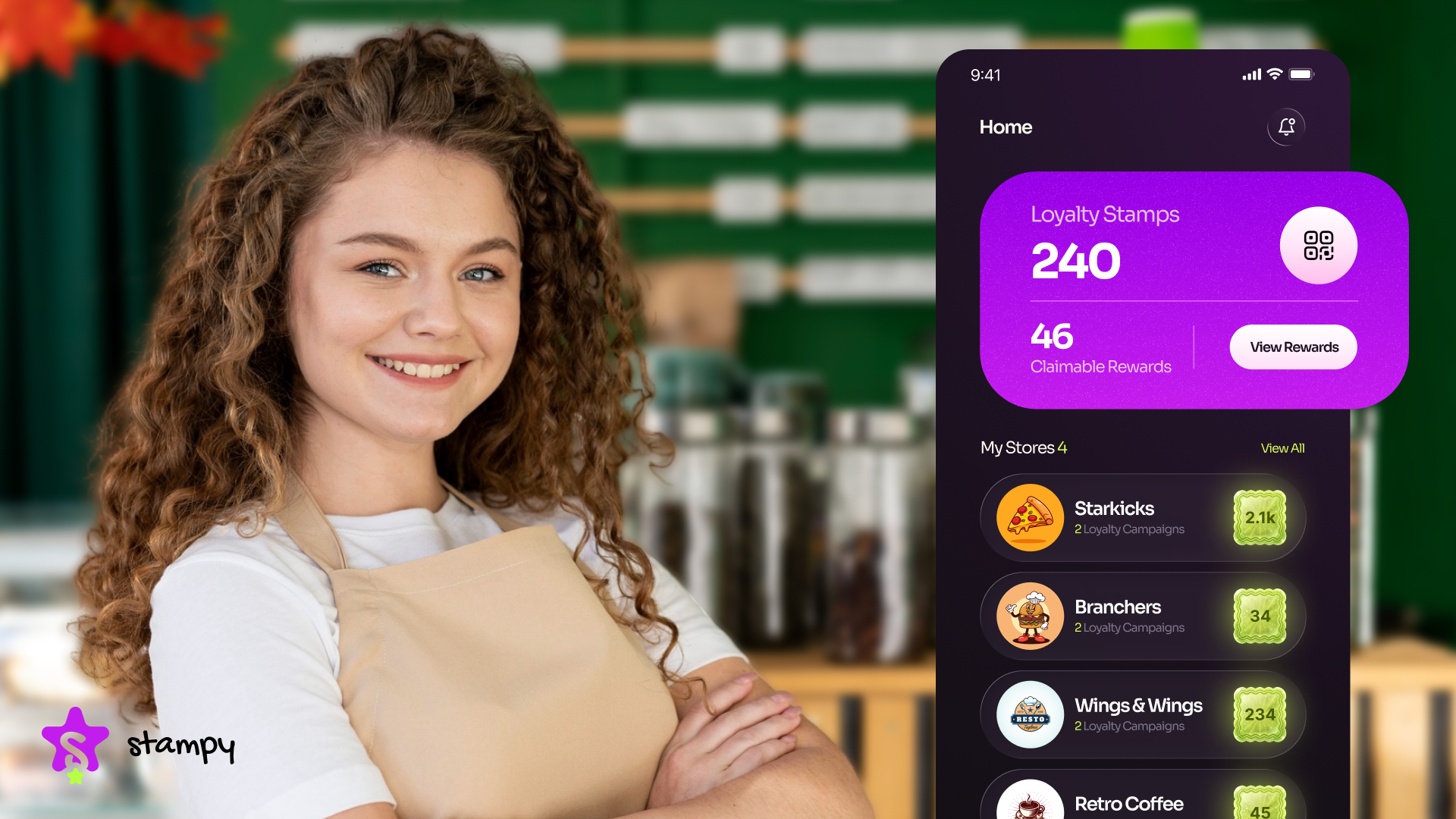
- Digital Stamps: No more cards lost, forgotten, or left at home, customers collect stamps on their phones.
- QR scanning: Staff can scan a QR code in seconds, so queues keep moving during the busiest trading hours.
- Custom rewards: Customise your own rewards and special offers that best fit the model your customers prefer.
- Customer insights: Find out who visits, how often they come back, and which rewards really motivate repeat business for you.
- Marketing campaigns: Targeted campaigns to win back quiet customers and increase footfall on slower days.
- Multiple locations: Manage all your branches from one dashboard, with rewards that work across all your locations.
You can explore Stampy's loyalty features to see how digital stamps, campaigns, customer activity, and rewards work together.
Conclusion
The first step in deciding which loyalty rewards programs to offer is to know how your customers are already shopping. For businesses that buy the same things often, digital stamps work well, but points and cashback are better for businesses with a wider range of purchases. Referrals, memberships, tiers and gamification serve different purposes, from acquiring customers to deeper engagement.
Start with the simplest model that fits your main goal. Keep the rewards simple to understand. Make sure the cost works for your margins. Digital tracking can also streamline the management of participation and provide useful insights into customers. As your programme matures, you can add features based on actual customer behaviour.
Frequently Asked Questions
What are the main types of loyalty programs?
The main types of customer loyalty programs include stamp cards, points, cashback, tiered, referral, paid membership, gamified and hybrid programs. Each model rewards a different customer behavior, such as frequent visits, higher spending, or referrals. Each one rewards a different habit, such as frequent visits, higher spending, and bringing new customers.
What is the simplest loyalty program for a small business?
A digital stamp card is the simplest loyalty program, because customers instantly understand collecting stamps toward a reward. It needs minimal setup and staff training, and it works well for cafés, barbers, bakeries and car washes.
Are points or stamps better for a small business?
Stamps are better when purchases are frequent and similar in value, such as coffees, haircuts or car washes. Points work better when order values vary widely, because customers earn rewards in proportion to what they spend.
What type of loyalty program works best for a coffee shop?
A digital stamp card is usually the best option for a coffee shop because customers visit regularly and often order similar drinks. Classic offers like buy eight coffees and your next is free are easy to understand.
What type of loyalty program works best for a salon?
Salons do best on visit-related rewards and referrals since clients buy regularly and recommend stylists they trust. More popular salons with loyal customers can later add VIP tiers, offering priority booking or birthday treats.
Can a small business combine different types of loyalty programs?
Yes, a small business can mix loyalty types like stamps with referrals, or points with VIP levels. Start with one simple programme and then add more layers once customers have used that one regularly and understand it.