11 min read




Key Takeaways
- Stamps typically reward repeat visits or qualifying purchases, while points can reward spending, purchases, referrals, or other defined actions.
- Stamps often work well when customers make frequent, similar-value purchases.
- Points can be a better fit when order values vary, and rewards are tied to how much customers spend.
- Stamps usually offer simpler, more visible progress, while points allow more flexibility in how customers earn and redeem rewards.
- The right choice depends on customer buying behavior, the behavior you want to reward, your reward structure, and how much complexity the program needs.
- Both stamps and points can be managed digitally through loyalty apps and, depending on the provider, wallet-based loyalty passes.
A loyalty program should make it easy for customers to understand how they earn rewards and give your business a clear way to encourage repeat purchases. Stamps and points both do this, but they reward different types of customer behavior.
Stamp programs work well when customers visit frequently and spend similar amounts, while points programs are more useful when order values vary and higher spending should earn greater rewards. The difference affects how customers progress, how rewards are structured, and how much flexibility your business has.
The decision to offer stamps or points depends on your customers, their buying habits, the rewards you want to provide, and how much complexity your team can handle. These factors can help you select a loyalty model that fits your business without adding unnecessary rules.
What Is the Difference Between Stamps and Points?
The key difference is how customers earn progress toward rewards.
Stamps usually track qualifying purchases or visits, while points can be tied to spending or other actions.
Factor | Stamp Program | Points Program |
Usually rewards | Visits or qualifying purchases | Spend or qualifying actions |
Example | Buy 8 coffees, get 1 free | Spend $1 = earn 1 point |
Progress | Number of stamps | Points balance |
Main strength | Simplicity | Flexibility |
Works well when | Purchases are similar | Purchase values vary |
Reward options | Usually fewer | Usually more |
Customer explanation | Very simple | May require more rules |
How Stamp Loyalty Programs Work
A stamp loyalty program follows four plain steps that customers can learn during their very first visit.
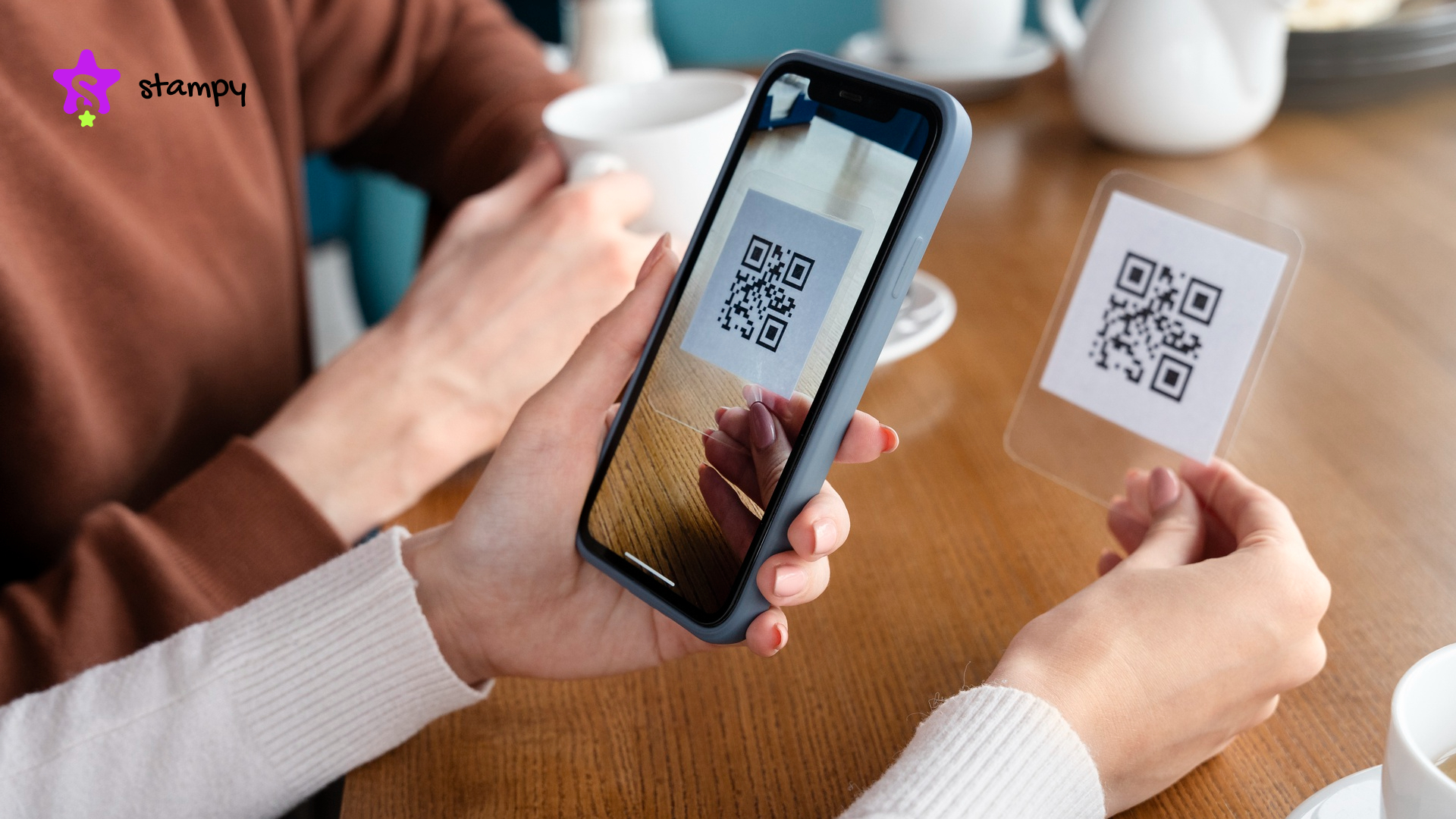
- Qualifying purchase: The customer buys a product or service that your program rules count toward a reward.
- Stamp earned: Staff adds one stamp to the paper card or digital stamp card straight after the payment.
- Progress builds: Each new stamp moves the customer closer to a fixed threshold, such as eight stamps in total.
- Reward claimed: The customer receives the reward you defined in advance once the card reaches that threshold.
Advantages of Stamp Programs
Stamps are simple to explain, easy for staff to run, and show progress that customers can see building. The fixed threshold stays predictable, suits repeatable purchases, and makes the cost of every reward easier to calculate.
Limitations of Stamp Programs
Customers may earn the same stamp despite very different spending, and reward choices are usually fewer than with points. Stamps also suit widely varying basket values less well, and you may need rules about which purchases qualify.
How Points Loyalty Programs Work
A points loyalty program turns spending or chosen actions into a balance that customers later exchange for rewards.

- Spending: Customers earn points for every dollar they spend, so larger orders build the balance faster.
- Purchases: A set number of points can be given for each completed order, regardless of the final total.
- Referrals: Members can receive bonus points when a friend they invited joins and makes a first purchase.
- Specific products: Extra points on chosen items help you promote new arrivals, slower sellers, or products with better margins.
- Campaigns: Short promotions, such as double points weekends, give customers a reason to buy during a set period.
- Other actions: Some programs also award points for birthdays, reviews, account signups, or other actions the business values.
Advantages of Points Programs
Points let rewards scale with spend, so they suit different basket sizes and make high spenders easier to recognize. You can also offer several reward options, run bonus point promotions, and adjust earning rules as your goals change.
Limitations of Points Programs
Points bring more rules, and customers may find the balance abstract when the value of one point is unclear. Staff may need more training, and a poor ratio between earning and redemption can leave members confused.
Stamps vs Points: 8 Differences That Matter
The differences below show how each model affects customer behavior, rewards, costs, and day-to-day management.
1. What Behavior Do You Want to Reward?
Stamps usually encourage repeat visits or repeat purchases, because every qualifying purchase earns the same single stamp.
Points usually let the reward scale with spending, so this first question forms the foundation for the whole comparison.
2. How Much Does Spending Vary?
Imagine one customer spends $6, and another spends $60, yet a stamp per visit gives both a single stamp.
Under a point-based loyalty system, the second customer earns proportionally more, which many customers see as fairer.
3. How Often Do Customers Visit?
Stamps work well for frequent, predictable visits of a similar value, such as cafés, bakeries, car washes, barbers and some salons.
Points can be more practical with less frequent customer visits, but the value of each transaction can vary.
4. Which Is Easier for Customers to Understand?
It is quicker to read six out of eight stamps than to read 620 out of 1,000 points on a card. These can both be simple, but customer loyalty stamps typically require less math or conversion rules than points.
5. What Offers More Flexibility in Rewards?
One common pattern for a stamp rewards program is to have a fixed number of purchases required to earn one fixed reward.
A points rewards program can have several levels like 100, 250, and 500 points, but the more choices, the more complicated it becomes.
6. How Do Reward Costs Differ?
With stamps, you weigh one reward against eight purchases, while points need an earn rate, redemption value, and reward thresholds. Neither model is automatically cheaper. Your costs depend on the reward value, earning rules, redemption rate, and margins, as explained in how much does a loyalty program cost?
7. Which Gives You More Campaign Options?
Stamp campaigns include double stamp Tuesdays, bonus stamps in quiet hours, referral stamps, and limited-time stamp challenges.
Points add double points, category bonuses, and spend multipliers, giving more configurable rules, yet stamps still support useful campaigns.
8. Which Is Easier for Staff to Manage?
Stamps mean fewer rules, a fast explanation, and less calculation, which helps small teams during busy, high-volume periods.
Points can require accurate spend capture, varied earning rules, and staff who understand what each redemption is worth.
Stamps vs Points Comparison Table
The table below summarizes the main differences so you can compare both models more easily.
Factor | Stamps | Points |
Frequent repeat purchases | Strong fit | Can work |
Similar purchase values | Strong fit | Often more complex than needed |
Highly variable basket values | Less flexible | Strong fit |
Easy explanation | Very strong | Depends on setup |
Visible progress | Very clear | Clear if designed well |
Multiple reward options | More limited | Strong |
Rewarding higher spend | Limited | Strong |
Promotional flexibility | Good | Very good |
Staff simplicity | Strong | More rules |
Reward cost setup | Simple | More variables |
Which Businesses Can Benefit From Stamp Programs?
Stamp programs are generally easier to apply when customers make frequent purchases and transaction values stay relatively consistent.
Business | Why Stamps Can Fit |
Coffee shop | Frequent, similar value purchases |
Bakery | Repeat low-value purchases |
Bubble tea or juice shop | Standardized repeat products |
Car wash | Repeatable service |
Barber | Similar recurring service |
Nail salon | Repeated appointment-based visits |
Quick service restaurant | Frequent purchases with relatively predictable value |
These are common patterns rather than fixed rules, so check your own visit and spending data first.
Which Businesses Can Benefit From Points Programs?
Points can be useful when customers spend different amounts or choose from products and services with widely varying prices.
Business | Why Points Can Fit |
Retail store | Basket value varies |
Ecommerce store | Spend-based earning is easy to calculate |
Boutique | Purchases vary in price |
Multi-service salon | Service prices can vary substantially |
Pet store | Different products and basket sizes |
Specialty retailer | Customers may make occasional higher value purchases |
Full service restaurant | Order values can vary by party and menu choice |
How to Choose Between Stamps and Points
Consider these four questions to find out which model works best with how your customers want to buy and operate.

Do Customers Spend About the Same Amount Each Time?
If most customers spend about the same amount each time they visit, a simple stamp program may be all you need. If spending varies greatly, points may provide you with a more equitable structure that considers what each customer spends.
Do You Want to Reward Visits or Spending?
If your goal is more visits, stamps are usually the natural fit because each visit earns visible progress. If you want to reward higher spending, points may suit you better, though neither mechanic guarantees the result.
How Often Do Customers Return?
Frequent repeat purchases make stamp progress easier to complete, so customers reach the reward before they lose interest. Less frequent, high-value transactions can make spend-based points more practical, because each purchase adds meaningful progress.
How Much Complexity Can the Program Handle?
Ask whether staff can explain the program in one sentence and whether customers will understand how they earn. Confirm reward value is obvious and tracking is accurate, then read how to launch a loyalty program for small businesses.
Can You Use Stamps and Points Together?
Yes, you can combine both models when each one serves a specific purpose.
- Bonus rewards: A base stamp program runs all year, with occasional bonus rewards added during slower weeks or seasons.
- Split earning: The stamps cover one core repeat product, while points apply to everything else the customer buys.
- Points tiers: Points combine with membership tiers, so customers who spend more over time get better results.
- Member promotions: Stamp progress continues as normal, while members also receive promotions that other customers cannot access.
How Stamps and Points Work Digitally
Well, stamps and points are reward mechanics, while paper cards, apps, and wallet passes are delivery formats. Both reward models can be delivered digitally, whether through an app, wallet pass, or another digital system. So, if you're deciding how customers should access the program, compare a loyalty app, wallet pass, or paper card based on convenience, access, and customer experience.
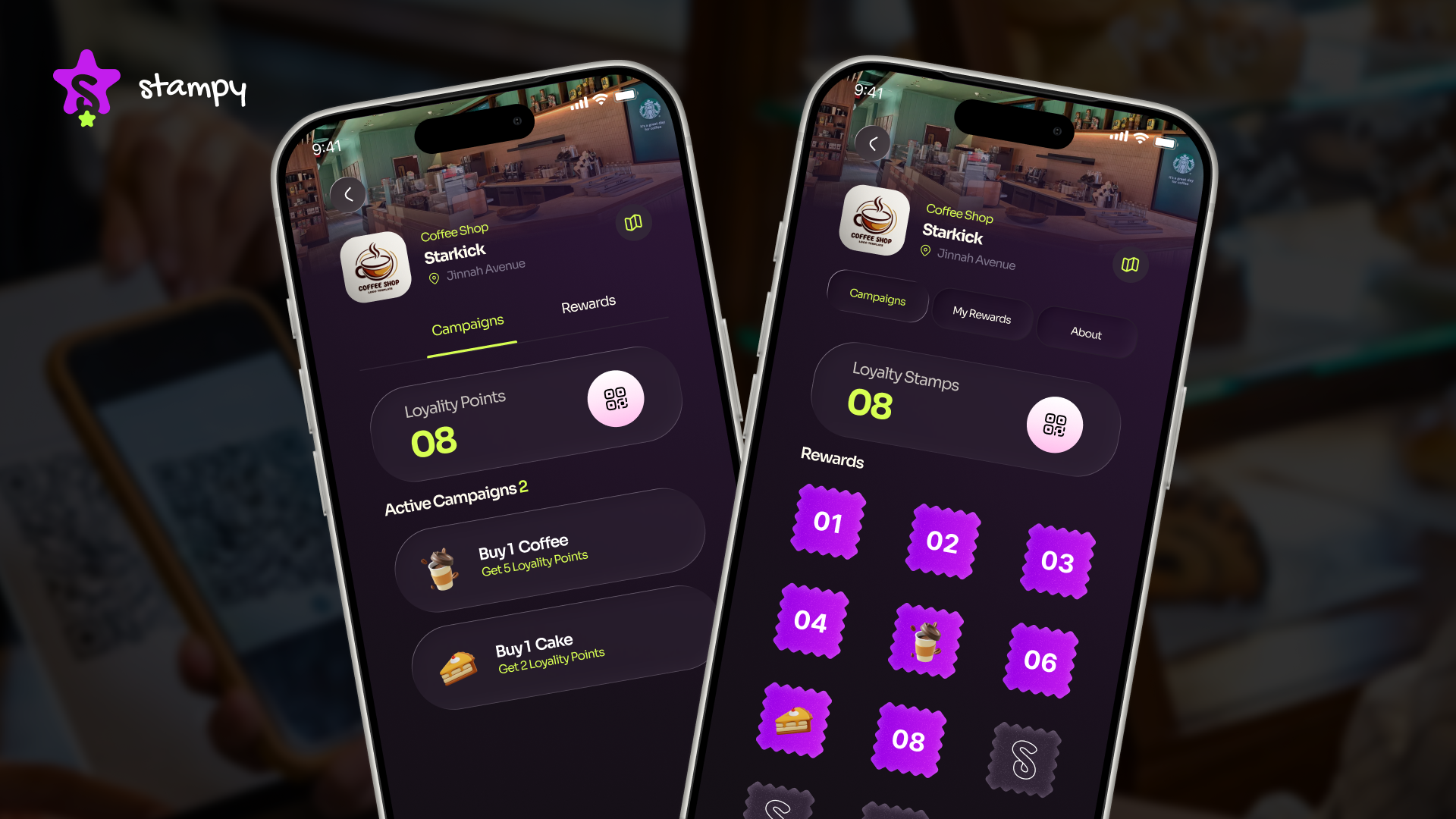
- Stamp app: Customers collect and track stamps inside a mobile app instead of carrying a paper card.
- Points app: Customers check their balance, earning history, and available rewards from one screen on their phone.
- Wallet card: The stamp card sits in the phone wallet, so customers need no separate app download.
- POS points: The point-of-sale system records each sale and adds points automatically, keeping balances accurate at checkout.
Conclusion
Stamps work well when repeat visits are the main behavior you reward and purchase values stay relatively consistent. Points become more useful when spending varies, and reward value should scale with what each customer buys.
The best loyalty mechanic is the one customers understand, staff can manage, and your margins can support. Start with your actual customer behavior rather than choosing the system that offers the most features.
Frequently Asked Questions
What is the difference between stamps and points in a loyalty program?
Stamps usually reward each visit or qualifying purchase with one stamp, building progress toward a single fixed reward. Points usually reward spending or other set actions, creating a balance that customers can exchange for different rewards.
Are stamps or points better for small businesses?
Neither is better for every small business, because the right choice depends on how your customers actually buy. Stamps suit frequent purchases of similar value, while points suit spending that varies widely between customers and visits.
When should a business use a stamp loyalty program?
Use a stamp loyalty program when customers return often, buy similar items, and pay roughly the same each time. It also helps when you want a program that staff can explain in a single short sentence.
When should a business use a points loyalty program?
Use a points loyalty program when order values vary widely, and you want higher spending to earn more rewards. Points also help when you need several reward levels, bonus promotions, or earning rules beyond simple purchases.
Are points better when customers spend different amounts?
Often, yes, because spend-based points let a customer who spends $60 earn more than one who spends $6. A loyalty points system keeps rewards in proportion to spending, which many customers and owners consider a fairer approach.
Can loyalty stamps be digital?
Yes, loyalty stamps can be fully digital, using a mobile app or a card stored in the phone wallet. A digital stamp card works like a paper card, but customers cannot lose it or leave it at home.
Can a business use both stamps and points?
Yes, a business can use both, such as stamps for one core product and points for everything else. Only combine them when the extra rule solves a specific need, because added complexity can confuse customers and staff.
Are digital stamps cheaper than points?
No, not always. The cost depends on your loyalty software, your reward structure, your customer redemption rate, and your transaction volume. Look at the setup costs, monthly costs, reward costs, and management requirements to see which is the best fit for you.
Which loyalty program is easier for customers to understand?
Stamp programs are usually easier because customers simply count stamps toward one reward without any conversion math. Points can be equally clear when the earn rate is simple, and reward values are shown plainly to members.