11 min read




Ever dug through your wallet looking for that crumpled coffee stamp card you were certain you had with you? That small annoyance is fading fast in Pakistan as digital loyalty cards replace the paper version in every neighbourhood. Shoppers count rupees more carefully than they did three years ago, so businesses need smarter ways to earn repeat visits. A digital loyalty card fits the way people in different cities already live with their phones.
This guide walks through what these cards do, how they work, and why paper looks tired by comparison.
What is a Digital Loyalty Card?
A digital loyalty card is the paper stamp card from your local cafe reborn inside a mobile app. Customers track rewards inside the app instead of carrying a thin paper card folded into a wallet pocket. Electronic loyalty cards sit inside dedicated apps connected to a portal where the business runs everything centrally. Every purchase, visit, or scan adds stamps to the customer's account, and the count updates the second it happens. The idea is old; the delivery is new, and smartphones have changed how loyalty marketing reaches Pakistani shoppers.
Picture an e-loyalty card as the heir to those little cards that vanished the week before redemption time. Many apps add location-based discovery so customers can spot nearby shops they normally walk past without a second thought. Online loyalty cards never get lost behind the sofa, dropped on the way home, or left at the office. Some apps even let shoppers favourite a business, so fresh campaigns from preferred stores reach them before anyone else.
How Do Digital Loyalty Cards Work?
The easiest way to understand how digital loyalty cards work is to follow one customer from signup to first reward. Customers begin by downloading the relevant app from the Google Play Store or the Apple App Store on their phone. They register through email verification or sign in using a Google or Apple account they already have on the device. Each person then gets a personal QR code tied to their profile, which the system uses to identify them later.
At checkout, the cashier opens a staff app on a tablet and scans the customer's QR code in seconds. The platform adds the right number of stamps to that account immediately, without anyone touching a pen or paper. The customer watches the count update inside the app and can see how close they sit to the next reward.
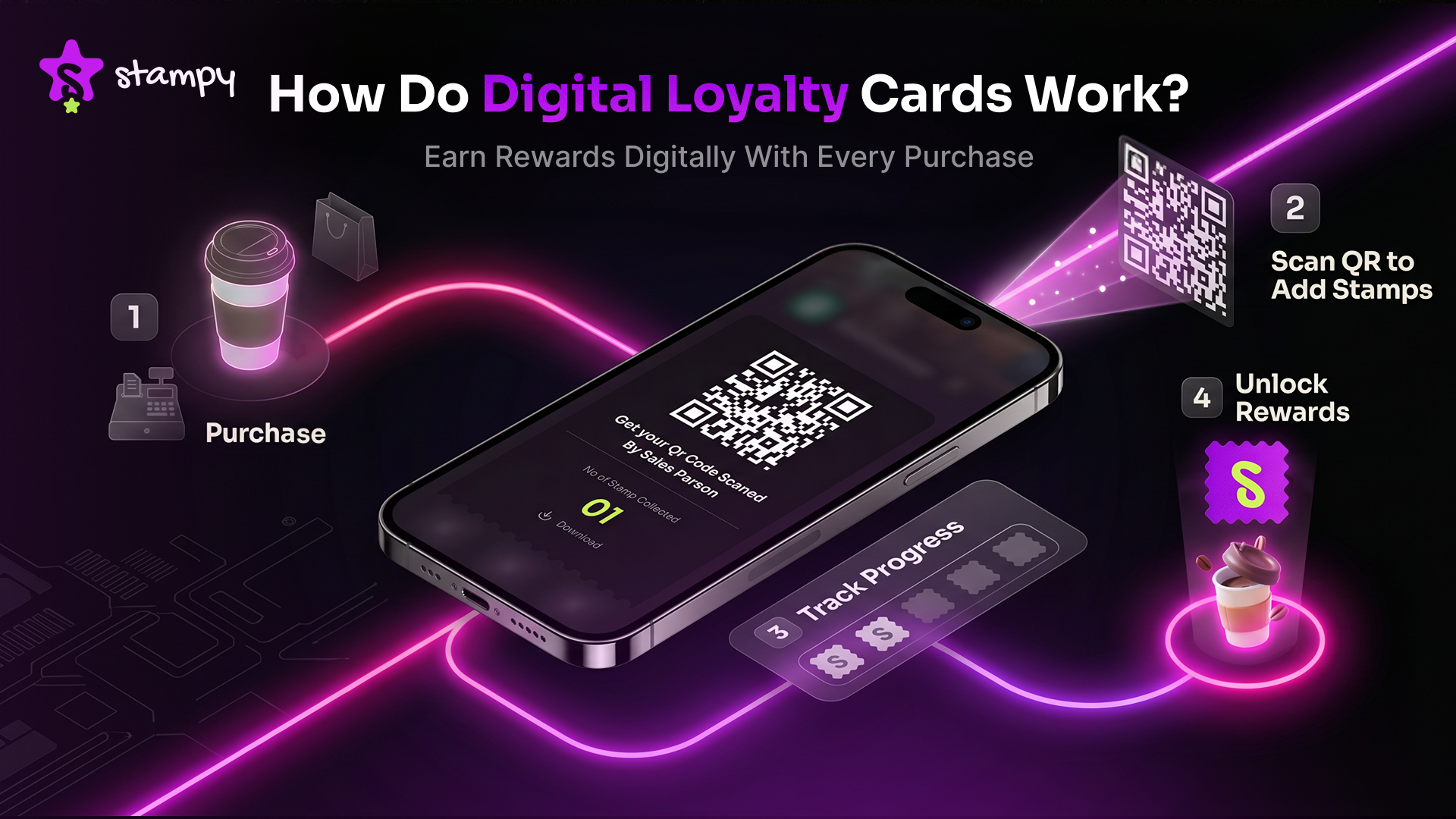
Meanwhile, the business watches every transaction land on a live dashboard that no paper stamp card could ever match. Each campaign defines which product earns stamps and how many stamps each qualifying purchase awards to participating customers. When a customer completes the requirements, they redeem the reward inside the app and see a confirmation immediately. The redemption history stays on file, so shoppers and owners can both go back and check past activity when needed.
Are Digital Loyalty Cards Better than Physical Ones?
Paper stamp cards have served their purpose for decades, but they carry hidden costs that owners rarely discuss openly. Customers lose them, leave them at home, or forget which pocket holds the right card on any given afternoon. Owners pay to reprint cards, deal with photocopied stamp fraud, and never get the customer data they actually need. A virtual loyalty card removes almost every one of these issues in a single shift, and shoppers actually welcome it.
You cannot drop something stored on your phone the way you drop a thin paper card during lunch rush. Stamps cannot be faked because each transaction passes through a secure scan tied to a specific business and campaign. Owners also get analytics that traditional paper systems never gave them, no matter how careful the bookkeeping happened to be. Anyone weighing the case for digital loyalty cards will find that most retail analysts treat paper as a fading format.
Paper waste matters here too, since digital systems replace the thousands of cards small businesses print and discard yearly. A loyalty card on a phone never suffers water damage in monsoon rain, sun fading, or accidental machine washing. The net result is simpler day-to-day operations for owners and a smoother experience for the customers paying for it all.
Why Pakistan is Ready for Digital Loyalty Cards
Pakistan has gone through an unusual digital shift in the past five years that few business owners predicted in 2020. JazzCash, Easypaisa, and similar apps trained millions of people to trust mobile transactions for everyday purchases nationwide. That same trust now extends to mobile loyalty cards, because the behaviour at the counter is honestly identical. Inflation has made every rupee count for the average family shopping at supermarkets, salons, restaurants, and clothing stores. Customer rewards programs that give real value grab attention quickly in a climate where every spending decision feels heavier.
Brands like Khaadi and Generation built customer loyalty the slow way, through consistent quality and well-timed seasonal collections each year. Smaller cafe chains and independent salons in Karachi, Lahore, and Faisalabad are figuring out how to win returning customers digitally. A smartphone loyalty card fits this moment because almost every potential customer already carries the required hardware wherever they go.
Pakistani business owners often ask whether their older customers will adapt to digital data. The answer is yes, faster than expected.
Most parents and grandparents already use WhatsApp and mobile banking confidently in their daily routines without thinking twice about it. A loyalty card on a phone simply extends behaviour they already practise with apps they trust and use daily. Adoption usually takes one weekend visit from a son, daughter, or staff member who walks them through the first scan.
Why Businesses Use Digital Loyalty Cards
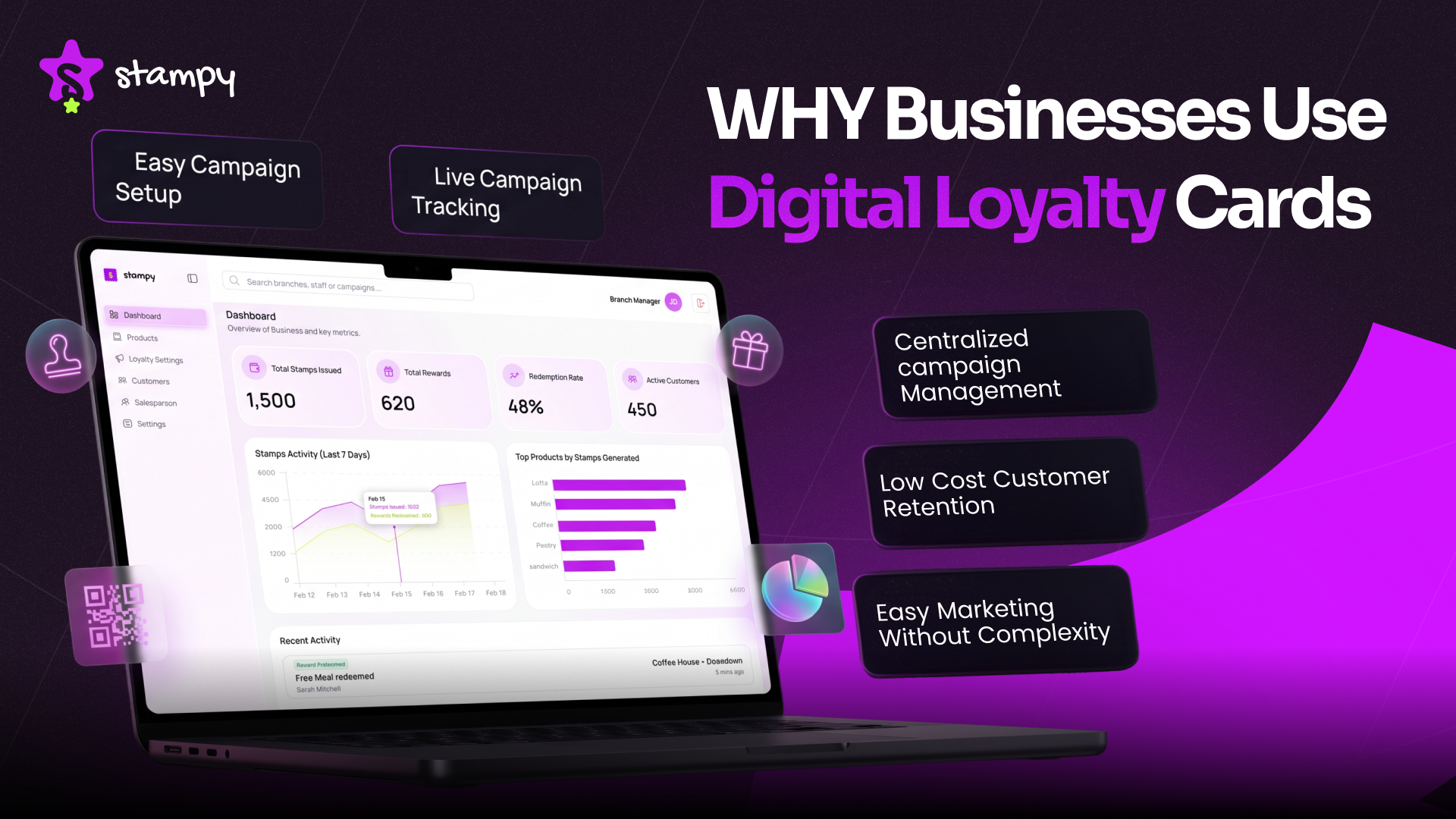
Businesses adopt digital loyalty cards because the retention tool pays for itself through the repeat business it generates. A research review shows returning customers spend significantly more per visit than new ones acquired through paid ads. Acquisition costs keep climbing on social forms, which makes customer retention financially attractive for owners each quarter that passes.
1: Easy Campaign Setup
Digital loyalty cards let businesses launch a promotion in minutes rather than spending hours planning and printing paper cards. Owners can create offers like "Buy 5 Coffees, Get 1 Free" or "Spend Rs. 2,000 and Get a Discount" with a few clicks, and push them to one branch or every location at once with no staff retraining needed. That speed matters when a slow Tuesday calls for a quick lunchtime deal.
2: Live Campaign Tracking
A live dashboard shows owners exactly which promotions are driving repeat visits and which need adjustment. You can compare last week's coffee promotion against this week's pizza deal on one screen. Performance summaries help owners decide which campaigns to keep running, which products to push, and when to launch the next offer without wading through manual records.
3: Centralised Campaign Management
Owners define rewards for each campaign and assign them to specific branches based on local demand. A brand can run different offers in Karachi and Lahore at the same time without confusing staff or customers. Subscription plans typically scale from small operations with a handful of branches up to larger chains needing ten or more locations, and custom plans are usually available for businesses with unusual needs.
4: Lower Retention Costs
Traditional marketing often requires a real budget, i.e. flyers, social ads, and printed cards, with no guarantee of repeat sales. Digital loyalty programmes cut out printing costs, wasted materials, and the hassle of redesigning cards every time a promotion changes. A small business can run professional loyalty campaigns at a fraction of what paid advertising costs, which makes retention both practical and worthwhile.
5: Marketing Without the Complexity
Digital loyalty cards turn ordinary customer visits into a consistent marketing channel. A restaurant can encourage weekday visits with a lunch promotion. A salon can reward customers who book multiple appointments. Everything runs from one dashboard, so owners who are not marketers can still run campaigns that feel professional.
Benefits Customers Actually Notice
Customers love digital loyalty cards because they strip away the small frictions that paper stamp cards never quite managed to fix. Your phone is already with you, so the rewards are with you regardless of which bag or jacket you picked. Location-based discovery features inside many apps help users find nearby shops they probably walked past for months without noticing. You can browse active campaigns, check available rewards, and decide where to spend based on the value each store offers.
Customers also like the privacy and security of having their data sit behind a verified login on their personal device. Push notifications remind users about expiring rewards, so they actually claim what they earned instead of forgetting about it later. Mobile wallet rewards fit naturally with how younger Pakistani shoppers already think about money, transactions, and saving small amounts monthly. The overall feel matches how people manage every other part of their financial life through their phone these days.
How do I Get a Digital Loyalty Card?
Getting a digital loyalty card takes nothing more than downloading the right app on the smartphone you already own. Most platforms support email registration along with social sign-in through Google or Apple, which keeps onboarding quick and painless. After verification, you can add your location, browse nearby stores, and start participating in campaigns at your very next purchase. Some apps let you favourite particular businesses, so their new campaigns appear at the top of your discovery feed.
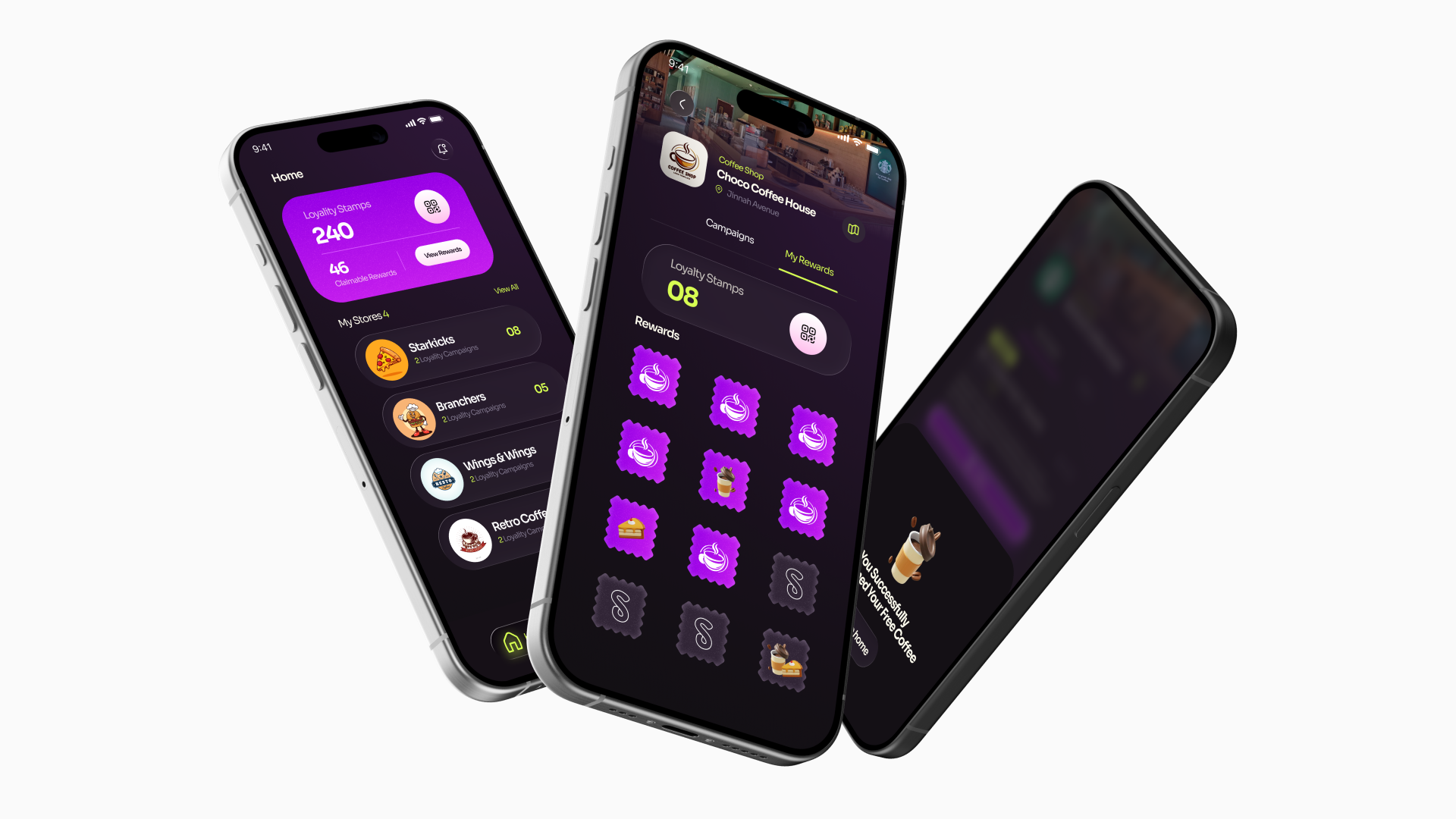
You may also share rewards with friends, depending on which features each platform makes available to consumers in your region. There is no special hardware needed beyond the phone you already use for messaging, banking, and ordering food deliveries weekly. The whole process usually takes under five minutes from downloading the app to your first scanned stamp.
Are Digital Loyalty Cards Free?
For customers, digital loyalty cards are almost always free because businesses themselves cover all the platform costs upfront. You download the app, register an account, and start collecting stamps without spending a single rupee on the service itself. Business owners pay subscription fees based on how many branches and features they need to run things effectively. Plans usually scale from small operations needing three branches up to larger chains requiring ten or more locations.
Why Digital Loyalty Cards are Taking Over?
There is a clear reason why digital loyalty cards are taking over traditional paper systems across nearly every retail category. Customer convenience plus business intelligence plus lower long-term costs give an offer that paper systems cannot match on any axis. Younger shoppers expect a digital experience from every brand they choose to support with their monthly spending budget today. Older customers, contrary to assumptions, pick these tools up quickly once a family member or staff member shows them the basics.
The move from cardboard stamps to smartphone scans mirrors the shift from cash to mobile wallets that already happened. Resistance fades quickly once customers feel the convenience of having their rewards always available wherever they happen to be shopping. Smart loyalty card adoption follows the same logic that drove ride-hailing apps to dominate local transport within five years. Owners who delay risk losing repeat business to competitors who already offer the smoother experience customers quietly expect.
Final Thoughts
Understanding what digital loyalty cards are is the first step toward modernising how your business connects with returning customers. These tools replace lost stamp cards with reliable digital tracking, give owners real insights, and reward customers in measurable ways. Pakistani businesses in a price-sensitive market cannot afford to ignore a retention tool that costs less than ongoing acquisition advertising. The shift toward mobile rewards is not a passing trend; it changes how customer loyalty functions in retail.
If you have been thinking about moving away from paper stamp cards, the time to explore your options is now. Start by talking to a loyalty platform provider about subscription plans, branch limits, and supported payment integrations for Pakistan. Your customers already have their phones ready, so meet them where they are with a loyalty experience built for today. The smartphone in their pocket is your single best tool for turning casual buyers into genuinely loyal returning customers.
Frequently Asked Questions
Are digital loyalty cards better than paper loyalty cards?
Yes. Digital loyalty cards cannot be lost, damaged, or forged. They also give businesses access to customer data, campaign analytics, and marketing tools that paper cards cannot provide.
Do customers need a smartphone to use digital loyalty cards?
Yes. Customers need a smartphone to download the loyalty app, register an account, and show their QR code at checkout.
Can small businesses use digital loyalty cards?
Absolutely. Cafes, salons, restaurants, grocery stores, pharmacies, and clothing shops can all use digital loyalty cards to increase repeat business at a manageable cost.
Are digital loyalty cards secure?
Yes. Customer data is protected through secure logins and verified accounts. Rewards are tracked digitally, which reduces fraud and unauthorised redemptions.
What types of businesses benefit the most from digital loyalty cards?
Businesses with repeat customers, i.e. coffee shops, bakeries, salons, gyms, restaurants, supermarkets, and retail stores, tend to see the strongest results.
Why are digital loyalty cards becoming more popular?
They offer convenience for customers, reduce costs for businesses, and provide detailed analytics that help improve customer retention and marketing outcomes.