15 min read




Key Takeaways
- The best restaurant loyalty software depends on your number of locations, budget, and the tools you already use.
- PAR Punchh and Paytronix are worth considering for large restaurant chains that need loyalty connected to other systems.
- Stampy is an option for smaller and growing restaurant groups that want digital rewards without changing their POS.
- Olo Loyalty, Thanx, and Talon.One offers different options for restaurants with specific loyalty or marketing needs.
- POS integration is useful for spend-based rewards, but not every restaurant needs it.
Managing a loyalty program at one restaurant is fairly easy. But once you open more locations, keeping everything organized becomes harder.
Customers expect to earn and use rewards at any branch they visit. Your team also needs to track loyalty activity, manage rewards, and run campaigns without handling everything separately at each location.
This is where enterprise restaurant loyalty software can help. It allows restaurant groups to manage their loyalty programs across multiple branches while keeping the customer experience consistent.
But not every platform works the same way. Some connect directly to your POS and ordering systems, while others work separately.
In this guide, we'll compare seven restaurant loyalty platforms to help you find the right one for your business.
What Makes Restaurant Loyalty Software Different for Multi-Location Brands?
Managing loyalty rewards across multiple restaurant locations can be challenging. Customers expect to earn and redeem rewards at any branch, while owners need to manage shared campaigns and location-specific offers. A good loyalty system makes this easier without adding extra work for staff.
Technology choices also carry more weight, because some groups want loyalty tied closely to their POS, ordering, and payments. Other groups prefer a standalone system that works across every branch without tying the brand to one checkout provider. You can read more about the differences in our guide to POS loyalty vs. standalone loyalty apps. That is why restaurant loyalty software for multi-location brands must handle both shared rules and local needs. Fit matters far more than size, so judge every option against how your brand actually runs each day.
Best Enterprise Restaurant Loyalty Software Compared
This quick table shows how each platform differs in focus, strength, and the size of business it suits. Buyers shopping for restaurant loyalty software for chains will find big differences in depth, focus, and setup effort.
Platform | Best for | Main benefit |
Stampy | Small and growing restaurant groups | Digital rewards without required POS integration |
PAR Punchh | Large restaurant chains | Loyalty connected with restaurant systems |
Paytronix | Multi-location restaurants | Loyalty, ordering, and marketing tools |
Olo Loyalty | Restaurants using Olo | Loyalty connected with ordering and guest data |
Thanx | Restaurants focused on repeat visits | Customer data and targeted offers |
Talon.One | Brands with complex reward requirements | Custom loyalty and promotion rules |
Incentivio | Growing restaurant groups | Loyalty, ordering, and customer engagement |
Use the table as a starting point, then read each profile below to check the details that matter to you.
1. Stampy — Best for Growing Multi-Location Restaurant Brands
Stampy suits restaurant groups that want one shared loyalty system without depending on a single POS environment.
Why It Stands Out
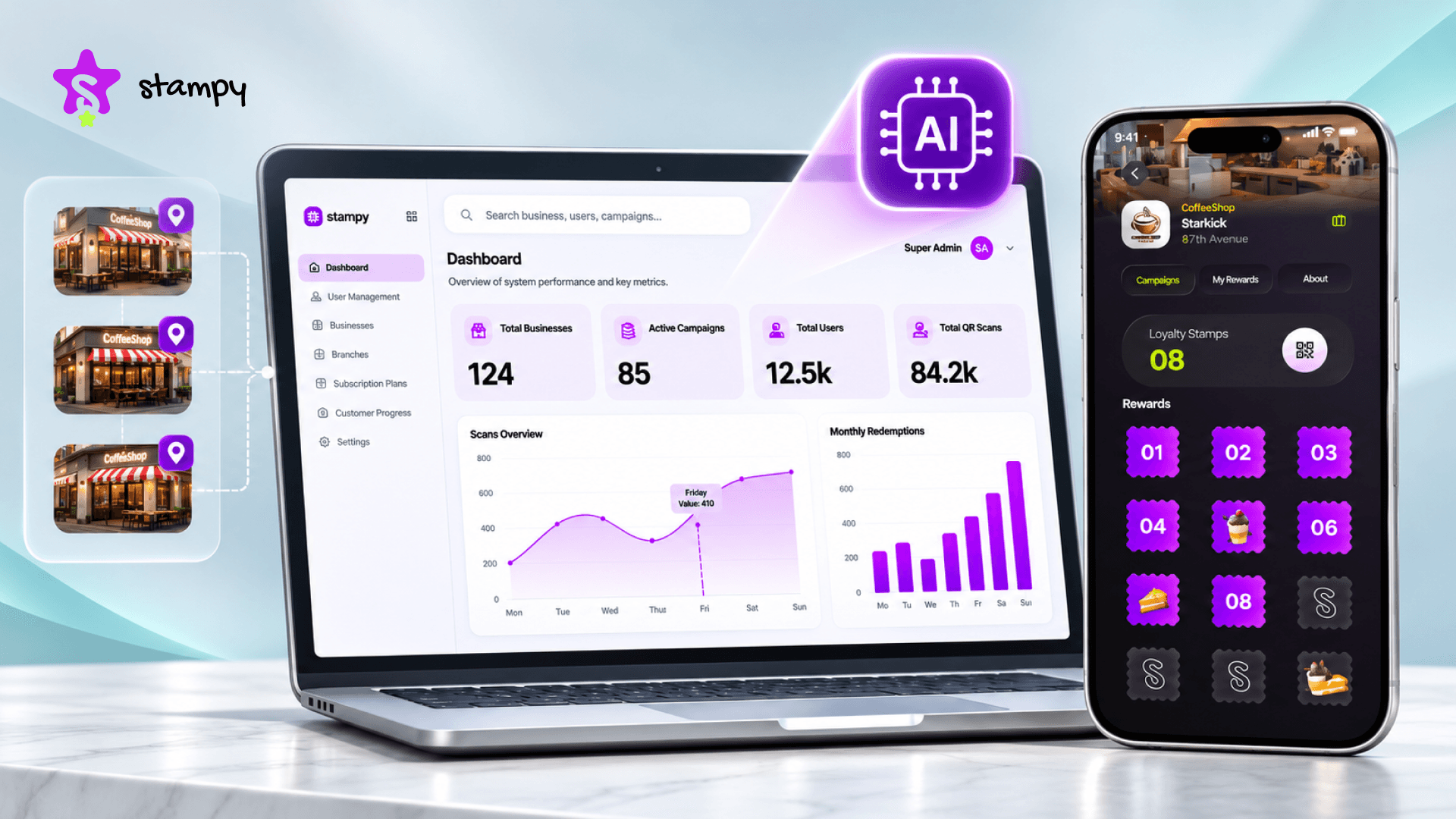
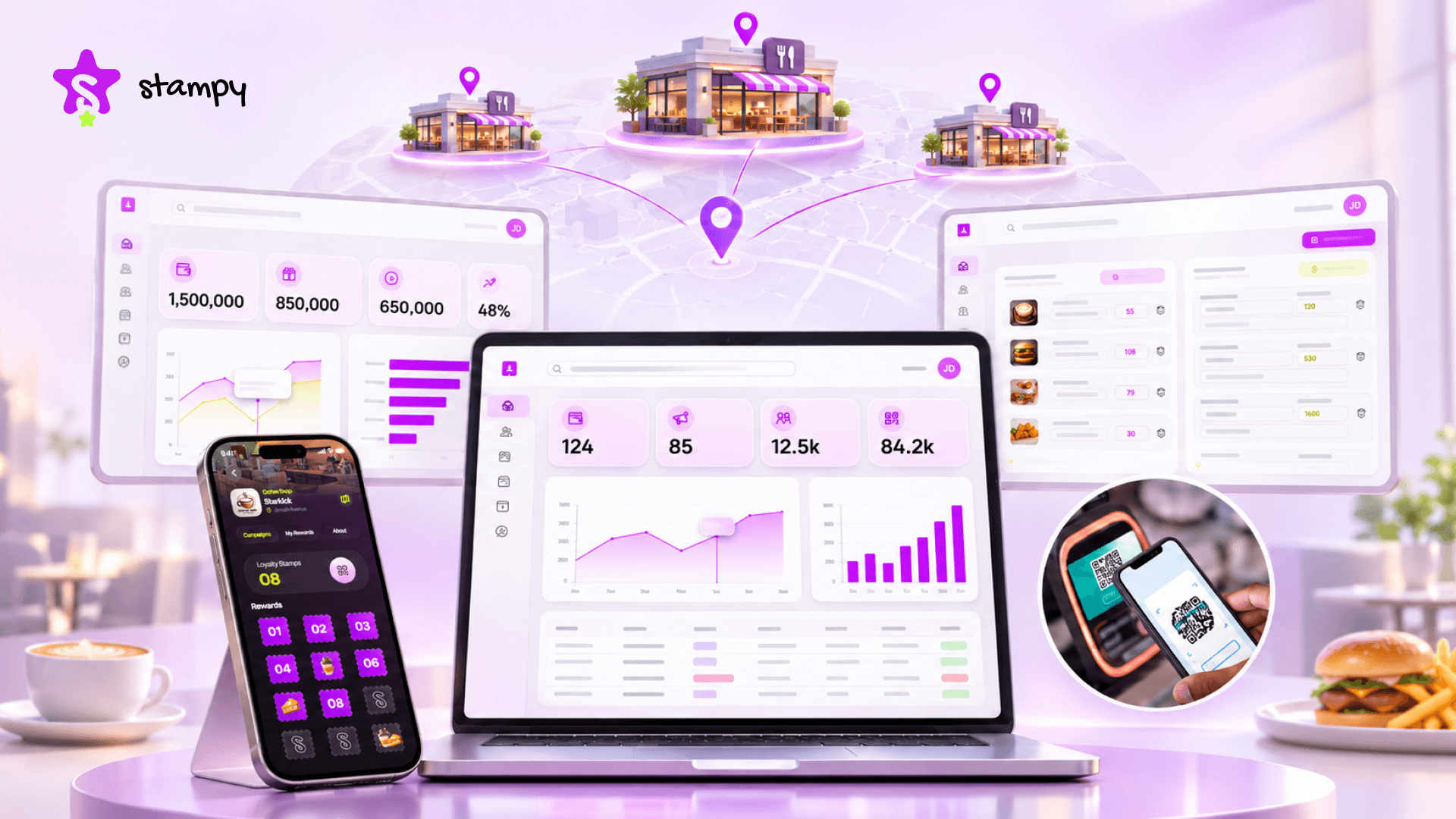
Stampy offers a simple way for growing restaurant groups to manage rewards, track customer visits, and run loyalty campaigns across their branches.
- Central Loyalty: One shared program covers every participating branch, so guests never face a separate scheme at each location.
- Customer Insights: Loyalty activity shows who returns, who has gone quiet, and who is close to earning a reward.
- Smarter Campaigns: AI-assisted recommendations suggest which campaign to run next, so teams spend less time guessing what might work.
- POS Independence: The loyalty workflow runs separately from checkout, which keeps your current systems in place during rollout.
Stampy goes beyond counting points or stamps, helping you understand guests and build lasting relationships instead of rewarding single transactions.
Consistency is the first thing guests notice when they visit more than one branch of the same brand. Restaurant groups can keep the experience the same across participating branches instead of building a separate program for each site.
Customer Insights and Smarter Campaigns
Stampy helps restaurant owners understand how customers use their loyalty program. This information can help them decide when to send an offer, encourage another visit, or remind customers about rewards they haven't claimed.
- First Visits: Encourage a first-time customer to return before the memory of a good meal fades away.
- Fading Guests: Re-engage a regular who has started visiting less often with an offer that feels timely.
- Quiet Hours: Promote slower periods so empty tables during the afternoon become busier without discounting your busiest nights.
- Reward Nudges: Remind customers who are close to a reward so they come back and finish what they started.
For a deeper look at this approach, read Which Loyalty Campaign You Should Run Next? Let AI Read the Data.
POS Independence
Stampy's loyalty workflow can run separately from the POS, which helps groups that cannot rebuild their checkout setup.
- Mixed Systems: Branches that use different checkout systems can still join the same loyalty program without extra rebuilding work.
- Current POS: Brands that do not want to replace their present POS can keep it exactly as it is.
- Future Changes: Groups that expect their technology to change as they grow avoid tying loyalty to one vendor.
Learn more in our posts on POS loyalty vs standalone loyalty apps and loyalty program without POS integration.
Best Fit
Stampy is a good option for cafés, restaurants, and small chains that want to manage rewards across multiple branches without changing their existing POS systems.
Main Consideration
Stampy's current public plans support up to six branches. Restaurants with more locations should check whether a suitable arrangement is available before signing up. Brands that need complex POS integrations or large-scale franchise management should also confirm that Stampy can meet their requirements.
2. PAR Punchh — Best for Large QSR and National Chains
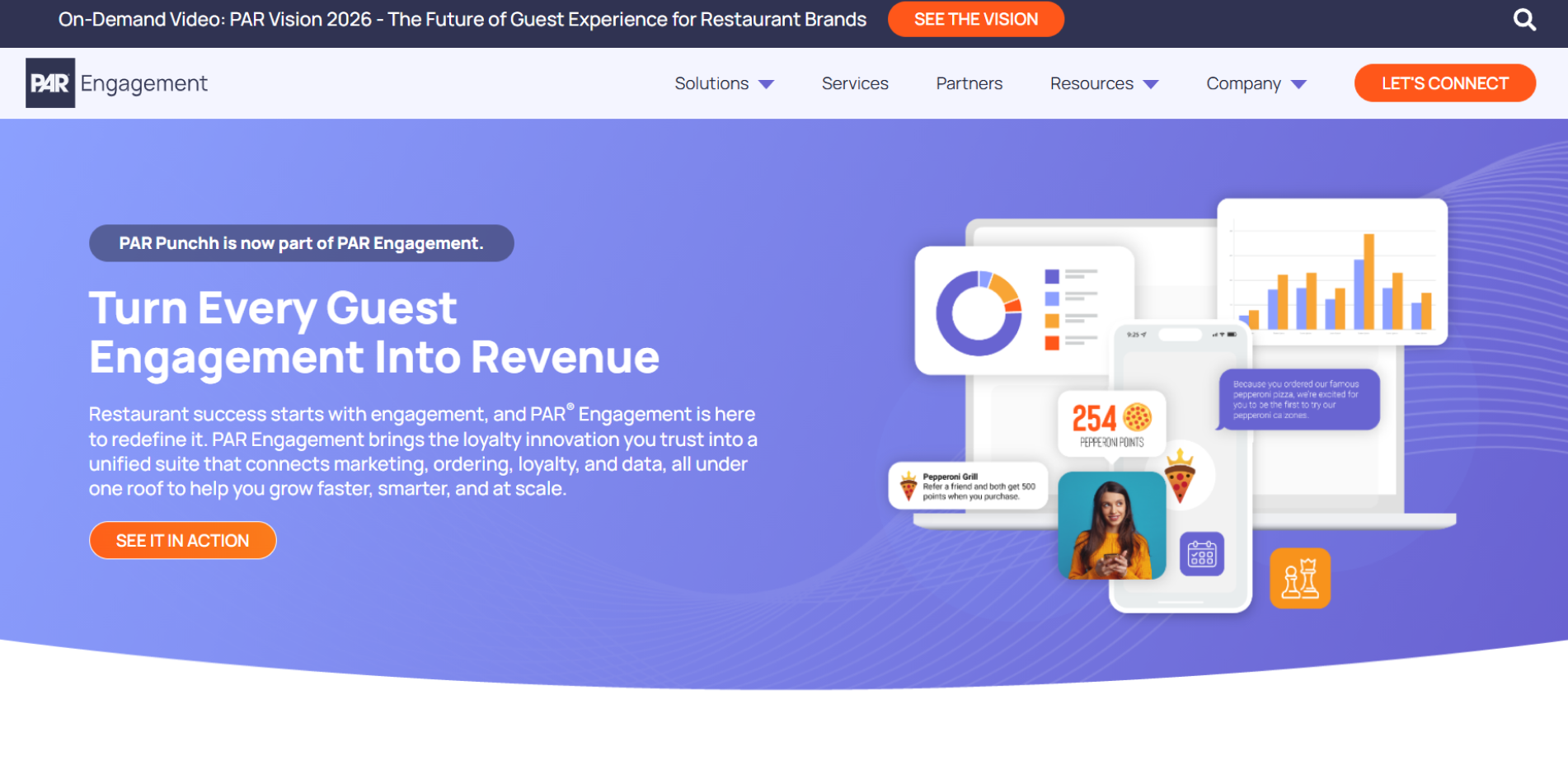
PAR Punchh is built for large organizations that need deep links between loyalty, POS, ordering, and customer data.
Main Strengths
As an enterprise restaurant loyalty platform, it is designed around large operations and complex technology setups.
- Restaurant Focus: The infrastructure is made for restaurants, which suits brands with many locations and busy digital channels.
- Flexible Programs: Brands can shape loyalty programs around their own rules instead of forcing one fixed structure.
- Strong Integrations: Connections with POS and ordering systems help rewards follow real transactions across many locations and channels.
- Large Scale: It supports customer engagement at a scale that many smaller tools may struggle to handle well.
Best Fit
PAR Punchh is a good option for large fast-food chains, fast-casual restaurants, and franchise groups that want their loyalty program connected to their POS, ordering systems, and customer data.
Main Consideration
A smaller regional group that just wants centralized loyalty and customer engagement may find all that enterprise depth more than it needs, so it’s worth thinking that through before you book a demo.
3. Paytronix: Best All-in-One Guest Engagement Platform
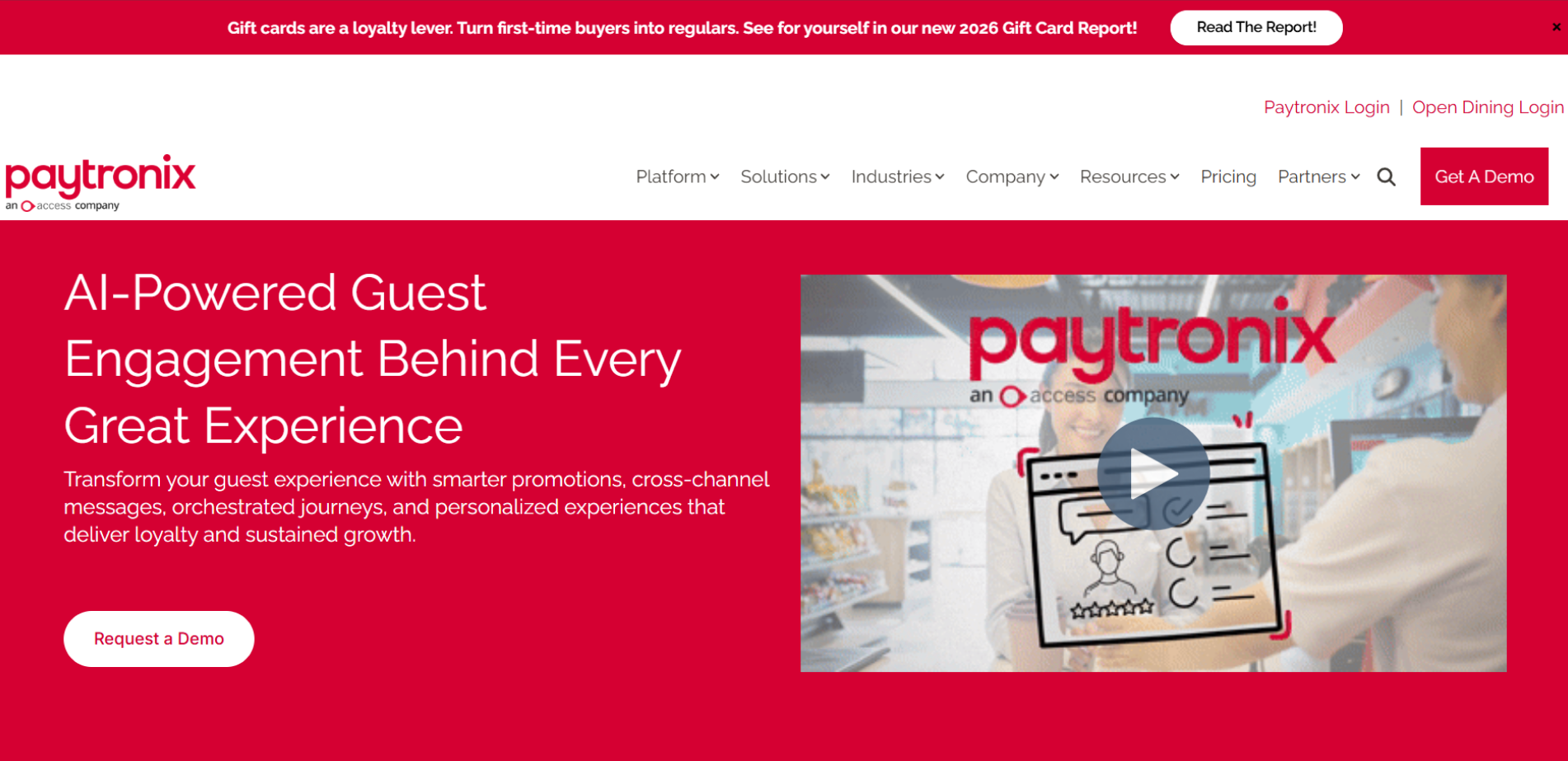
Paytronix brings loyalty, CRM, ordering, messaging, gift cards, analytics, and personalization together in one system. You can handle most of the guest journey from a single place. For many brands, that makes it a full engagement platform, not just a rewards tool.
Best Fit
Large restaurant groups that want loyalty and other guest tools under one roof will like this one. How well it fits depends on how many guest functions you want in a single system.
Main Consideration
If you only need a simple loyalty program, Paytronix may offer more tools than your restaurant needs. Ask about setup requirements, costs, and staff training before choosing it.
4. Olo Loyalty: Best for Restaurant Brands Already Using Olo
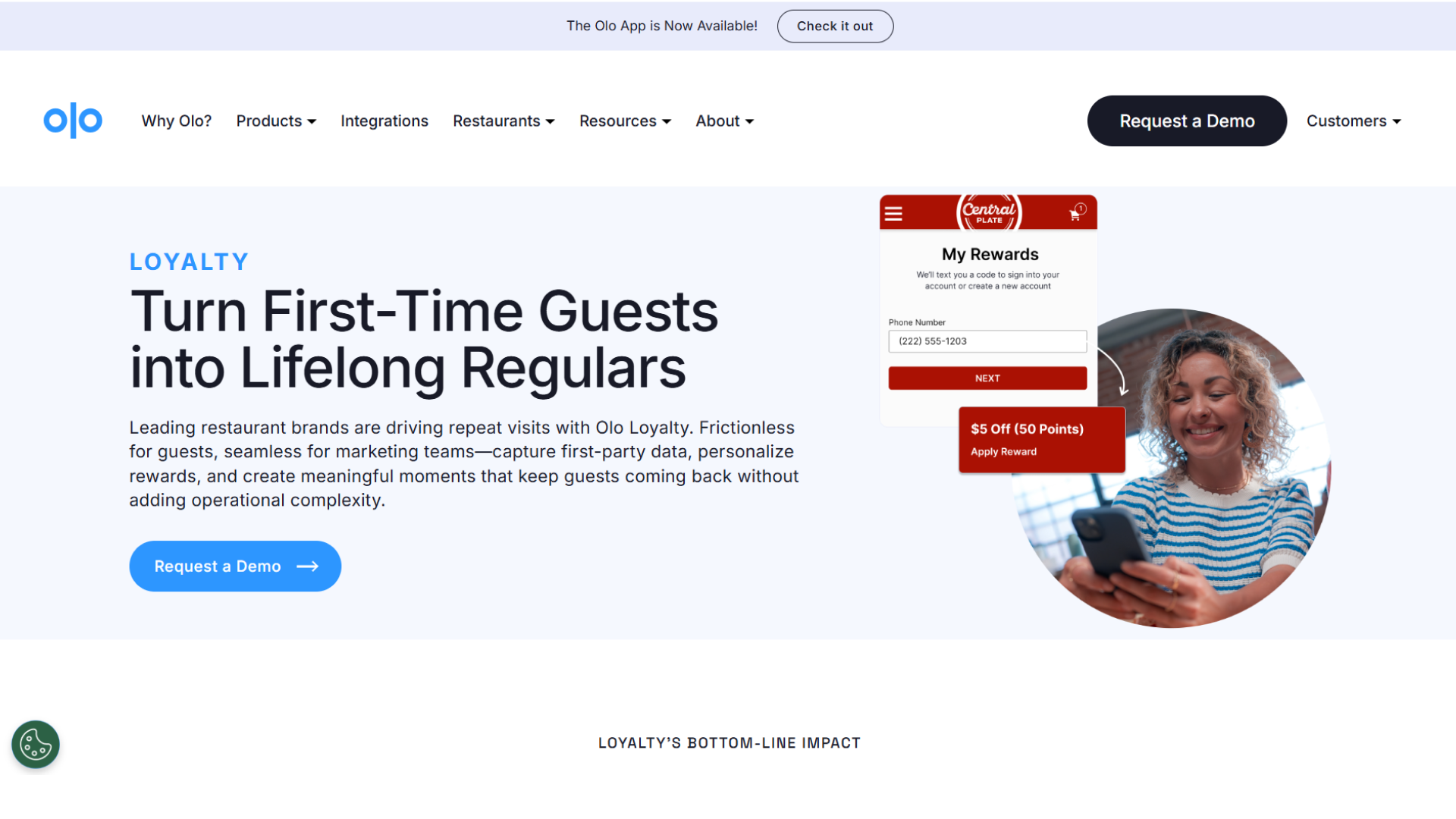
Olo Loyalty connects with the Olo ordering and guest-data setup that many digital restaurants already use. That makes it a natural pick for brands that run online ordering and customer engagement through Olo today.
Best Fit
Olo Loyalty is worth considering if your restaurant already uses Olo for online ordering and customer management. Keeping these tools connected can make it easier to manage rewards and customer information.
Main Consideration
Its value grows with the tools around it, so it works best as part of a wider Olo plan. Buying it on its own may not make much sense.
5. Thanx: Best for Customer Intelligence and Lifecycle Marketing
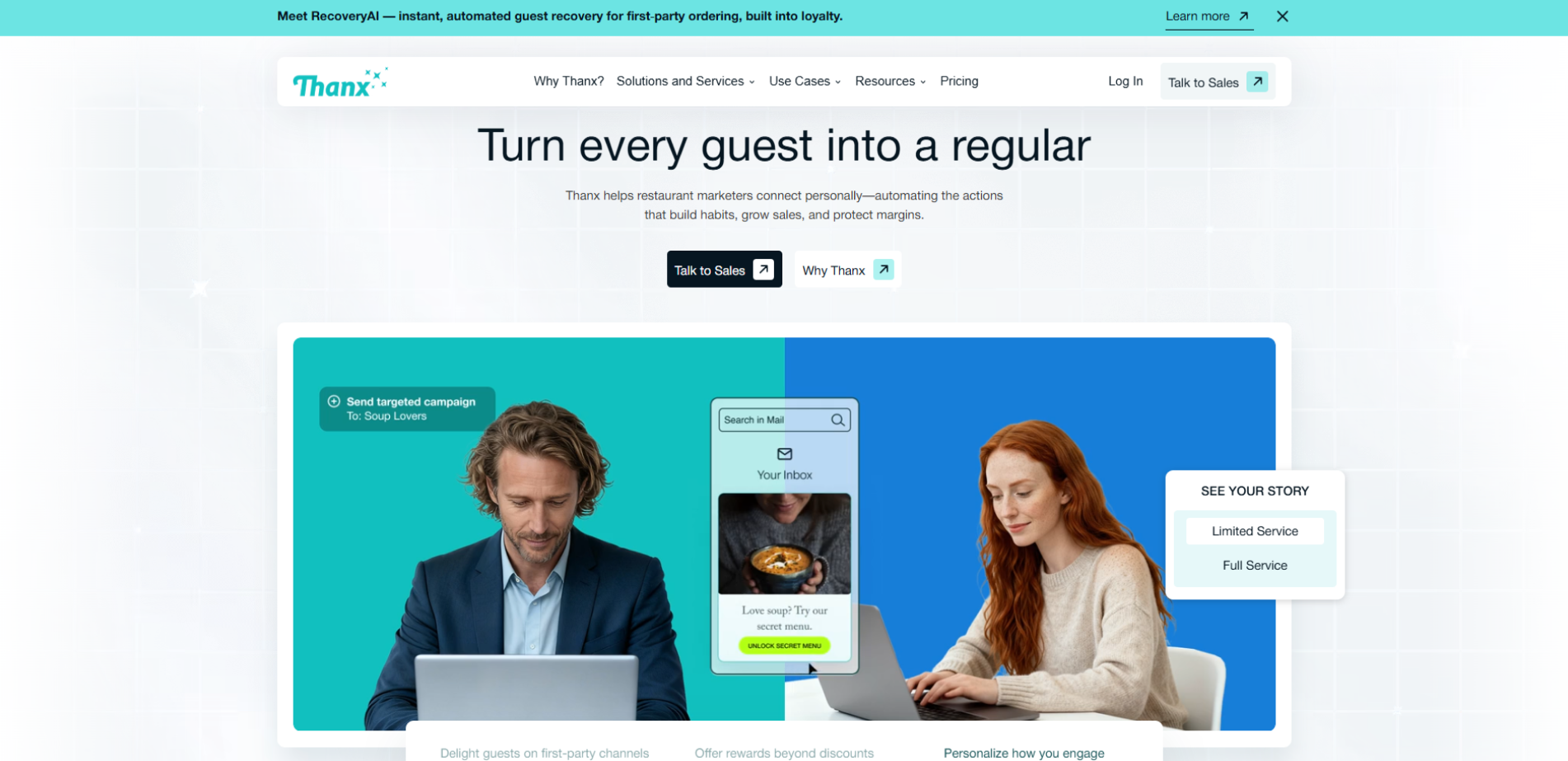
Thanx treats loyalty as a CRM and marketing job, not just collecting points. Brands can use guest activity like visit frequency, spending, and preferences to build campaigns that fit each customer.
Best Fit
Restaurant groups that rely on targeted messages to bring guests back should shortlist Thanx. It works best when personalized marketing is the center of your loyalty plan.
Main Consideration
Thanx is better suited to restaurants that plan to use customer data for regular marketing campaigns. If you only want customers to collect points and redeem rewards, a simpler loyalty app may be enough.
6. Talon.One: Best for Complex Loyalty and Promotion Rules
Talon. One works more like an enterprise promotions engine than a regular loyalty app for guests. It gives you plenty of room to set loyalty rules, tiers, coupons, and location-specific offers. Groups running several concepts should give flexible tools like this a look.
Best Fit
It suits technically large restaurant companies with complex promotions and the in-house skills to manage them. Your team’s tech ability is the biggest factor in whether it works.
Main Consideration
All that flexibility costs planning time, so think about your resources before you start. It requires more technical work than a plug-and-play option made for restaurants.
7. Incentivio: Best for Growing Multi-Unit Restaurant Groups
Incentivio is built for loyalty across multiple restaurant locations and adds broader engagement tools for operators. Groups can run loyalty from one central place while keeping an eye on every location.
Best Fit
Regional chains and growing groups with five or more locations are the natural audience. Location count is often the clearest sign that it belongs on your shortlist.
Main Consideration
If you already have ordering and marketing systems you want to keep, check how they fit first. Those brands may prefer a loyalty tool that works more on its own.
Centralized Loyalty Matters More as Locations Grow
Customers should be able to earn and redeem rewards across participating branches. Restaurant owners can set shared loyalty rules while allowing individual locations to run their own offers. A good loyalty system should support both and make it easy to track results across all locations.
Brand-Level Control
Good multi-location restaurant loyalty software lets headquarters own the rules that define the program for every branch.
- Earning Rules: Set how guests earn so every branch awards rewards in exactly the same way each day.
- Core Rewards: Decide the main rewards so guests know what they are working toward at every location.
- Brand Identity: Keep the look, tone, and name of the program the same across every guest touchpoint.
- Major Campaigns: Run big seasonal or brand-wide offers from one place so the message stays clear to guests.
Location-Level Flexibility
Local teams know their own neighborhoods, so they need some approved room to act on what they see. A branch may want to run a promo for a local event, fill a slow week, or celebrate a new opening. Clear limits protect the brand, and franchise owners get the freedom they want without breaking the brand’s identity.
Customer-Level Consistency
Guests shouldn’t have to guess how the program works when they visit a different branch. They should know where they earn, where they redeem, and whether their progress follows them around. Keep the main loyalty promise the same everywhere, and only localize promotions where it makes sense. For step-by-step help, read our article How to Run the Same Loyalty Program Across Multiple Locations.
If you're managing several branches, read our guide on how to run the same loyalty program across multiple locations to learn how to manage shared rewards, staff access, and local promotions.
POS-Integrated vs Standalone Loyalty for Multi-Location Restaurants
This choice shapes your rollout speed, your reporting, and the kind of rewards your program can offer.
POS-Integrated Loyalty
Restaurant loyalty software with POS integration works better when your program depends on exact transaction details.
- Exact Values: Rewards can follow the precise amount each guest spends at the register on every single visit.
- Product Rules: Earning rules can reward specific menu items instead of treating every order as the same.
- Automatic Points: Points are calculated for you, which removes manual steps and reduces mistakes at busy counters.
- Easy Redemption: Rewards can apply to the bill automatically when a guest chooses to redeem them at checkout.
- Refund Sync: Refunds update loyalty balances too, so guests do not keep rewards from orders that were returned.
Punchh, Paytronix, and Olo are the stronger examples of integration-heavy environments in this particular comparison.
Standalone Loyalty
A standalone approach trades some transaction detail for speed, simplicity, and freedom from one vendor.
- Simple Rewards: Visit-based or simple qualifying-purchase rewards are often enough for brands that want an easy program.
- Fast Launch: Faster rollout matters, and a standalone tool avoids long technical projects before the first guest joins.
- Checkout Freedom: Brands keep their current checkout setup, which protects staff training and avoids costly hardware or software changes.
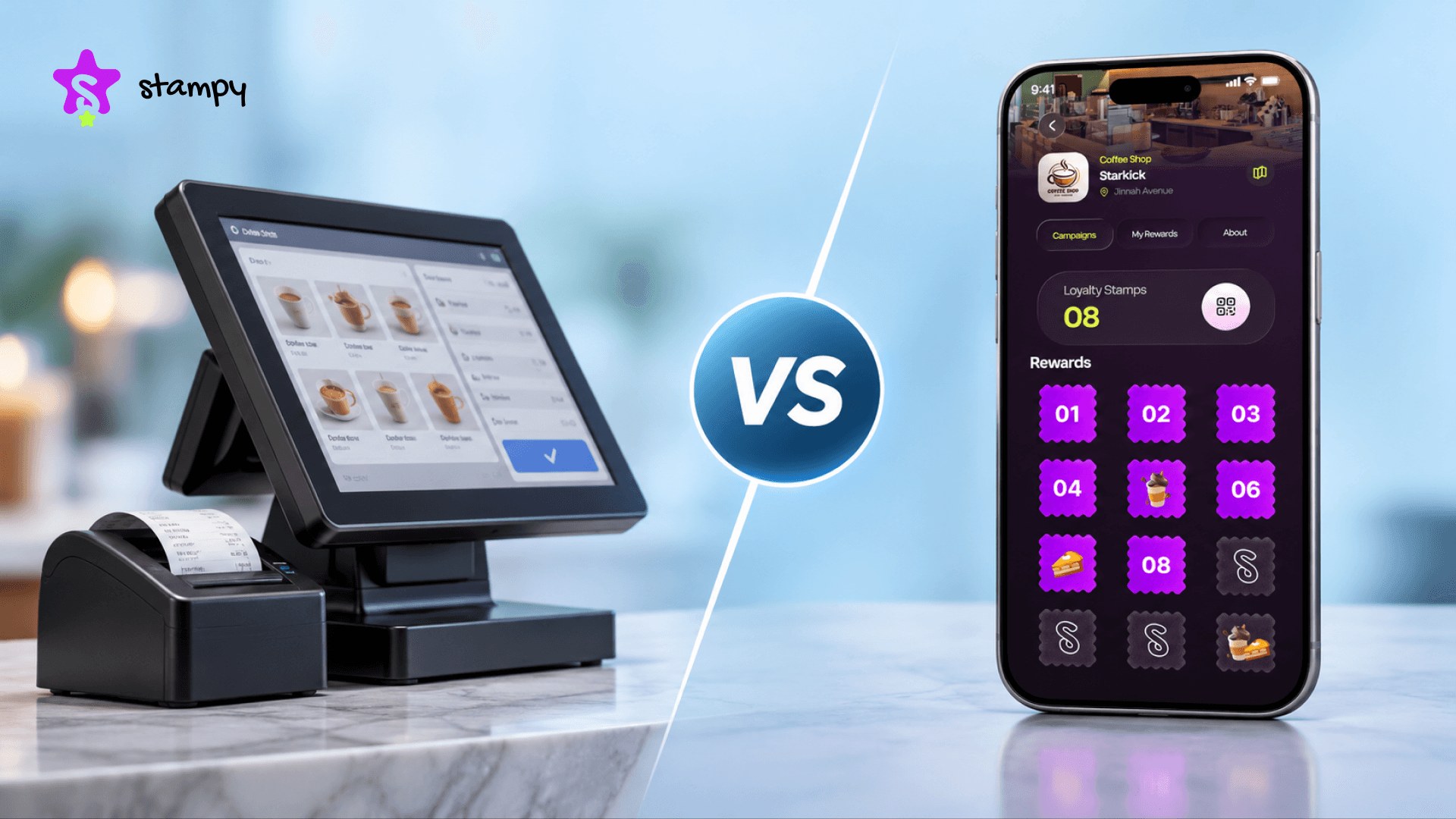
Stampy is one example of a standalone loyalty app. Restaurants can use it to manage digital stamps, rewards, and campaigns without requiring POS integration
Deep integration is valuable when strategy depends on transaction data, but it becomes extra complexity when it does not.
If you want to keep your current checkout system, our guide to running a loyalty program without POS integration explains how it works and what you need to get started.
AI and Personalization in Restaurant Loyalty Software
Not all customers are coming to a restaurant for the same reason. Some visit weekly, some only once and don't return for months. For restaurant owners, it is important to know these patterns, and loyalty software can assist them in understanding them. For example, it can reveal the customers who are coming more often, the ones who have discontinued their visits and the customers who are near to earning the reward.
AI can also recommend offers or prioritize who to reach out to on some platforms to help restaurants make their decisions. This can be a very useful tool for marketing, since restaurants no longer need to send the same offer to all.
Here is how a few platforms in this comparison approach personalization and customer intelligence in practice.
- Stampy: Provides customer insights and AI-assisted campaign suggestions designed for groups that want guidance without a large analytics team.
- Paytronix: Uses AI-driven customer engagement and segmentation to match its messages with the different guest groups it serves.
- PAR Punchh: Brings enterprise customer intelligence and personalization to large brands that manage many guests across several channels.
- Thanx: Builds behavior-driven segmentation and lifecycle marketing around how often each guest visits and how much they spend.
Strong restaurant loyalty analytics should answer who is slipping away and what offer might bring them back.
The key buying question is whether the platform only shows customer data or helps you turn it into action.
Customer Data Should Work Across the Restaurant Brand
As restaurants grow, guest information often ends up scattered across locations, ordering channels, apps, POS systems, and loyalty accounts. A good loyalty platform should pull those records together so your team can see each guest across the whole brand, wherever that’s possible. Before you sign a contract, put these four questions to every vendor on your shortlist.
- One Profile: Can a single customer profile work across every location, or does each branch hold separate records?
- Central View: Can your team view activity centrally without collecting reports from each branch by hand every month?
- Data Export: Can you export customer data whenever you need it for your own analysis or other tools?
- Vendor Exit: What happens to your loyalty data if you decide to change vendors in the future?
This matters most for larger brands, because switching platforms gets harder as the loyalty database keeps growing.
Cost is another factor to consider before choosing a platform. Our guide on how much a loyalty program costs explains software fees, setup costs, and other expenses to plan for.
Conclusion
The best restaurant loyalty software depends on your number of locations, reward plans, and existing systems. Larger chains may need enterprise platforms with advanced POS and ordering integrations, while smaller and growing brands can benefit from simpler loyalty apps.
Stampy helps restaurants manage digital stamps, customer rewards, and loyalty programs without requiring POS integration. It is a practical option for brands that want to encourage repeat visits without adding extra work for their teams.
Before choosing a platform, compare its features, pricing, integrations, and location support. Check whether it allows customers to earn and redeem rewards across all branches. The right system should fit your daily operations, keep reward management simple, and give customers a reason to return.
Frequently Asked Questions
What is the best enterprise restaurant loyalty software?
That will depend on the size, as Punchh is for expansive chains and Paytronix is for expanding groups.
What is multi-location restaurant loyalty software?
It is a mutual program that enables guests to collect and redeem points for various branches, with headquarters monitoring performance.
Can one loyalty program work across several restaurant locations?
Yes, it is possible to cover all the participating branches with one program and guests eat according to the same rules at all branches.
Which restaurant loyalty software is best for franchises?
For large restaurant chains, search for restaurant loyalty software that is both consistent with their brand and flexible for owners.
Does enterprise restaurant loyalty software need POS integration?
Not always, since Rules at Transactions level can be benefited by integration, but simple visit-based rewards can be effective without it.
What is the difference between POS-integrated and standalone restaurant loyalty?
POS-integrated loyalty automatically reads checkout data, while standalone loyalty works independently, leaving your current checkout system intact.
Which restaurant loyalty platforms use AI?
Each of these brands – Stampy, Paytronix, PAR Punchh and Thanx – makes use of AI, segmentation and/or customer intelligence to inform personalized campaigns.
Can restaurant brands run different promotions at different locations?
Absolutely – headquarters can establish basic rules and approved local offers, backfill events, quieter times and new locations at specific branches.
Can customers earn rewards at one branch and redeem them at another?
Yes, when the program is shared across participating branches, progress follows the guest and rewards work at any participating location.
Can customers earn rewards at one branch and redeem them at another?
Yes, when the program is shared across participating branches, progress follows the guest and rewards work at any participating location.
What should multi-location restaurants look for in loyalty software?
Look for central control, local flexibility, clear customer data, easy exports, and a setup that fits your current technology.
Is Stampy suitable for multi-location restaurant brands?
Yes, Stampy suits growing groups that want shared loyalty and insights, though large national chains may need a bigger platform.