8 min read



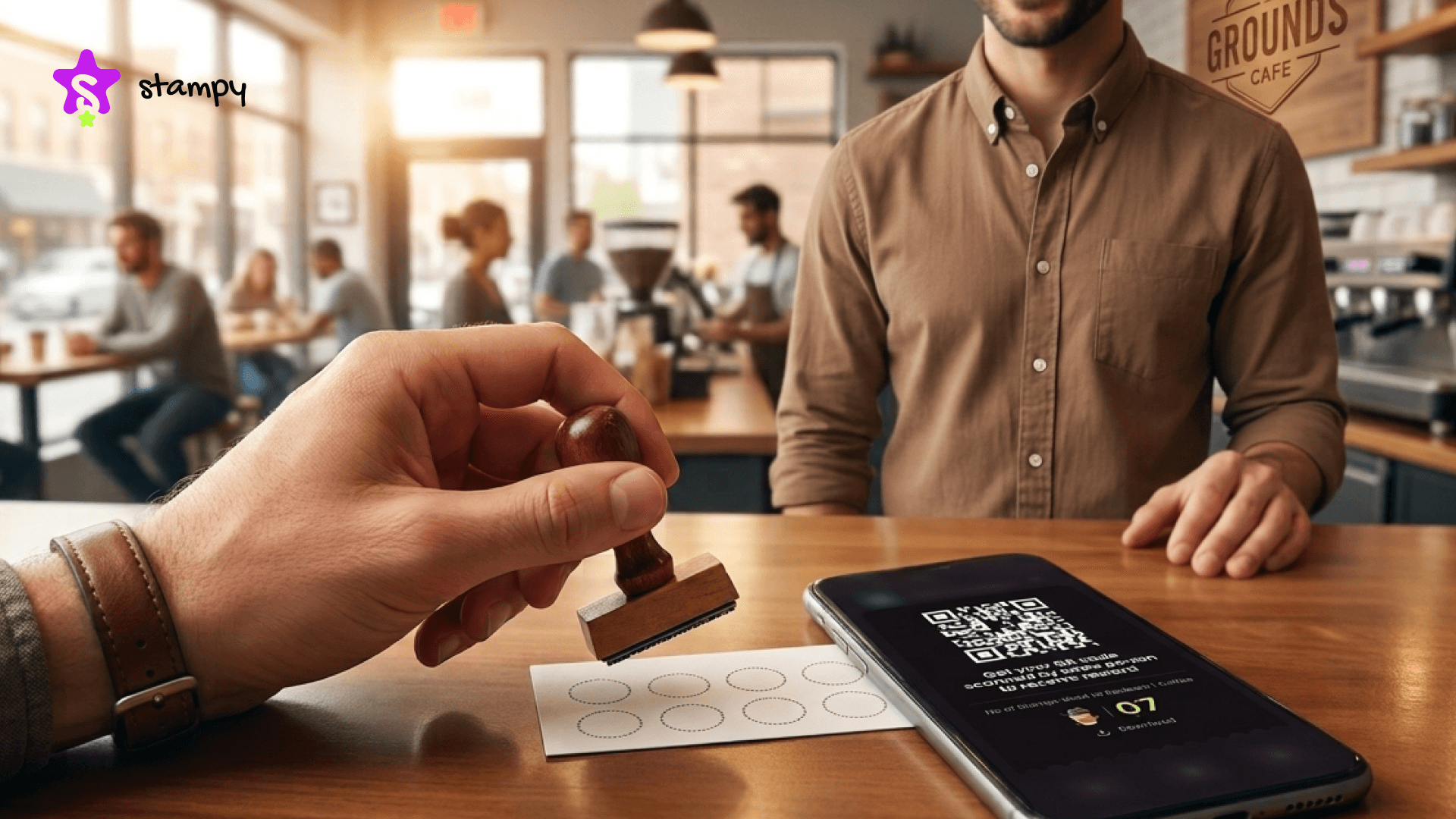
You probably have one somewhere in your wallet right now. A coffee shop card with seven of ten holes punched and a smoothie place card with three stamps. Maybe something from a salon you visited once in 2023, but the question is, when did you last actually use one?
Paper punch cards were the go-to retention tool for small businesses for decades. Cheap to print, simple to explain, and zero technology required. So why are coffee shops, gyms, pizza places, and salons around the world moving away from them?
The honest answer: the paper stopped working a long time ago. Businesses kept printing cards out of habit, mostly because nothing simpler had taken their place. That's changed now, and the numbers are hard to argue with.
How Paper Punch Cards Fell Apart
Paper punch cards have a certain charm, and there's something satisfying about watching the holes add up progress you can actually hold. But the problems beneath that charm are worse than most owners realize.
1: Nearly Half of All Cards Are Never Redeemed
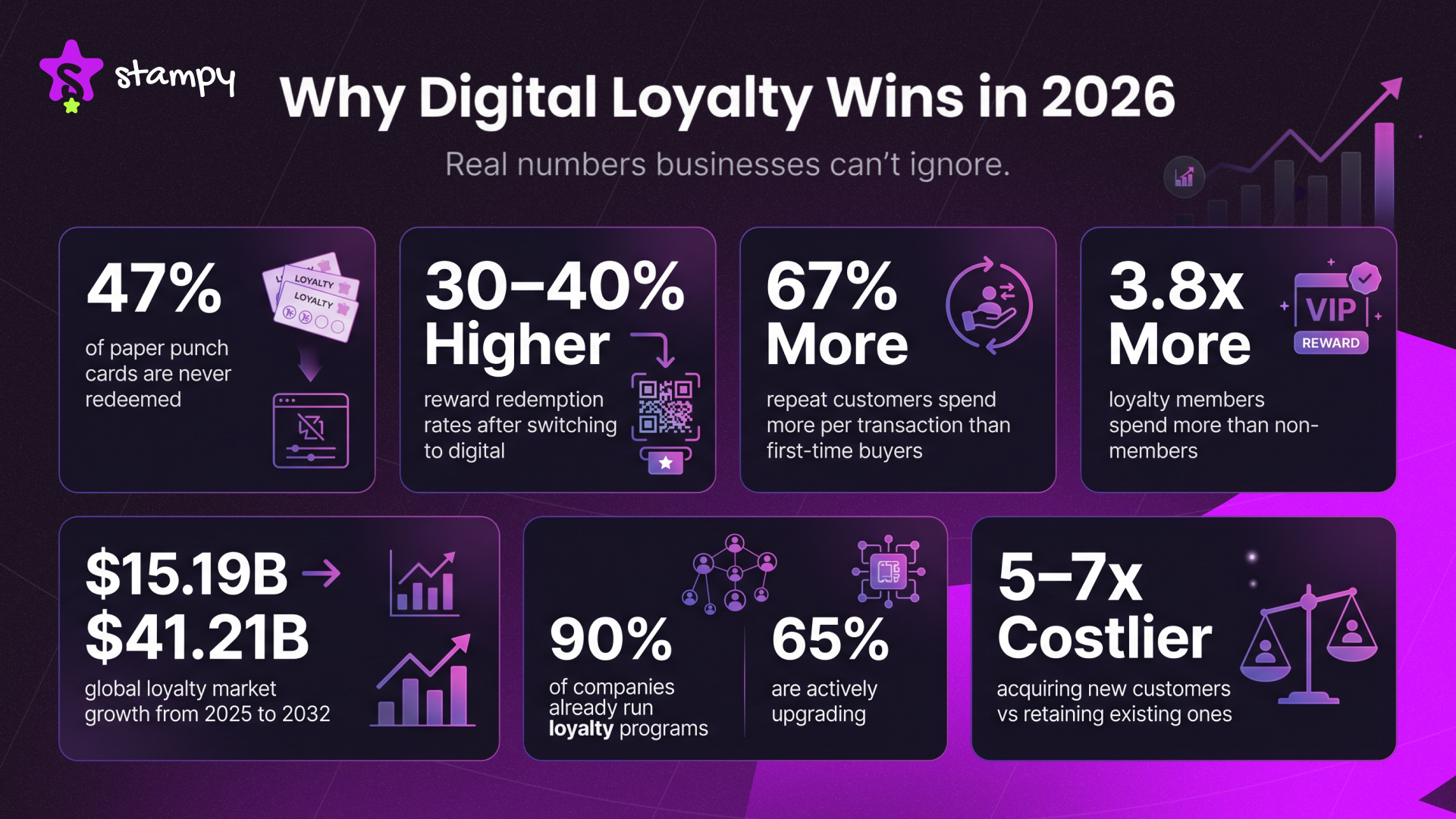
Around 47% of paper punch cards never make it to redemption. They end up washed with jeans, buried in junk drawers, or tossed out with an old receipt. That's not a loyalty program; that's a system with failure designed into it.
Anyone who's worked a register knows the conversation: "I had it, I just left it at home." You either hand over a goodwill stamp or you kill the customer's mood; both options cost you something.
2: You Learn Nothing From a Redeemed Card
When a customer cashes in a paper card, you learn exactly one thing: somebody filled it. No name, no contact info, no visit history, no sense of whether this person comes in twice a week or twice a year. The card gets tossed the moment it's redeemed, and every bit of useful information goes with it.
That blind spot has a real cost because you can't identify your best customers. You can't spot which regulars have quietly stopped coming, and you're running customer retention on guesswork. You can't tell whether your reward changes behavior or just hands free drinks to people who'd have come back anyway.
3: The Fraud Problem Nobody Talks About
A rubber stamp on cardstock isn't hard to beat as staff stamp friends' cards. Customers swap half-filled ones or show up with copies, which is not catastrophic on its own, but it adds up over a year. Digital loyalty eliminates this as each card carries a unique ID that can't be duplicated.
What "Digital Loyalty" Actually Looks Like Right Now
Most people hear "digital loyalty" and picture a clunky branded app demanding a phone number, firing fifteen push notifications a week, and delivering a birthday offer three months late. That version still exists, and reality is, it's also not what's working.
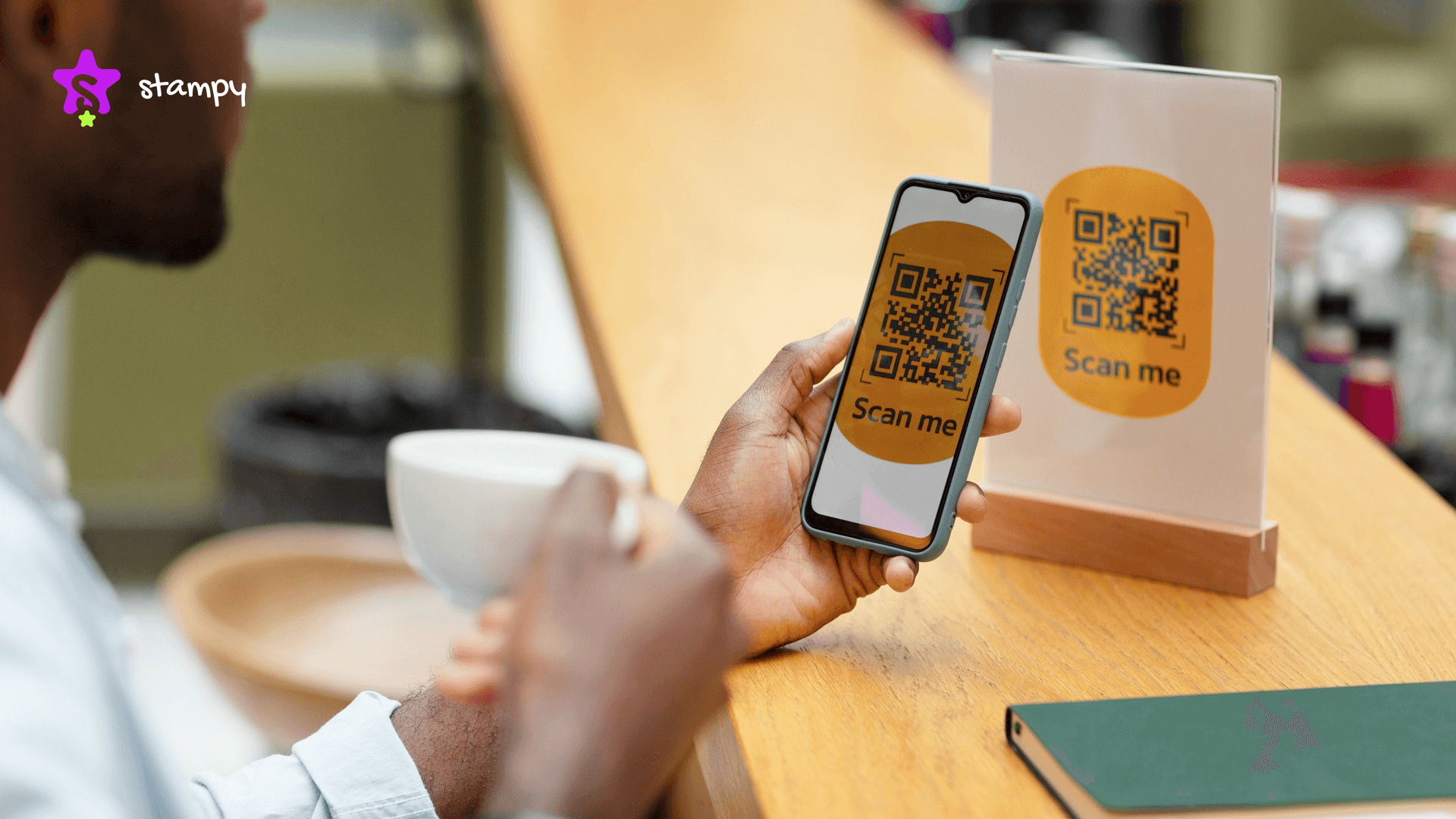
What works in 2026 is much quieter. A QR code at the counter. A two-second scan. Stamps that update live on the customer's phone, stored in Apple Wallet or Google Pay, with no app to download, no account to remember, and no password to reset. Some platforms track loyalty across multiple businesses, so customers don't start from zero every time they walk into a different café.
The friction has nearly disappeared. That's the real shift.
Why Digital Loyalty Is Winning in 2026
1: The Card Is Always With Them
The average person checks their phone 96 times a day. A loyalty card sitting in Apple Wallet or Google Pay is always there. It can't be left in last winter's coat pocket or washed with the laundry. Moving the card from a physical wallet to a phone is responsible for most of the 30–40% lift in redemptions businesses see after switching.
2: You Finally Know Who Your Best Customers Are
Digital loyalty turns every transaction into actual data. You can see who visits most often, what they order, when they usually come in, and how long it's been since their last visit. That matters because behavior follows patterns, and patterns let you act before you lose someone.
If a regular who comes in every Tuesday hasn't shown up in three weeks, paper tells you nothing. A digital system flags it and lets you send a win-back offer before they become someone else's regular.
3: You Can Reach Customers Between Visits
Once a customer walks out the door, a paper card goes silent. No way to reach them, remind them you exist, or let them know about a new item or a slow-day special.
Push notifications land directly on a lock screen, and engagement is far higher than social posts or printed flyers. A well-timed "you're one stamp away from a free coffee" on a slow Tuesday can actually fill an afternoon.
4: Promotions Take Minutes, Not Days
Want to run double stamps on Mondays to lift a slow shift? With paper, that means printing new cards, briefing the whole team, and managing confused customers at the counter. Digitally, it's a toggle in a dashboard, live by 9 AM and off at close.
Want to test whether a free pastry drives more repeat visits than a free coffee? Change the reward, watch what happens over two weeks, and decide with real numbers. Paper can't do any of that.
5: Digital Loyalty Grows With You
The paper falls apart the moment you open a second location since customers need separate cards. You're left managing some improvised unified system by hand, and with three or more locations, and it becomes chaos.
Digital scales without effort, and one card works across every branch. Customer data unifies automatically, and you can easily run location-specific or chain-wide promotions from a single screen. If you're planning to grow even a little, that infrastructure gap matters.
6: The Environmental Case
A business issuing 500 cards a month prints 6,000 a year. Factor in the 47% that are never redeemed and the ones that get lost and replaced, and a lot of that cardstock goes straight to landfill. Around 78% of consumers say they prefer to support businesses with sustainable practices, so it's not just an operational improvement, it's a perception one too.
Why digital loyalty is winning in 2026, the data says it all.
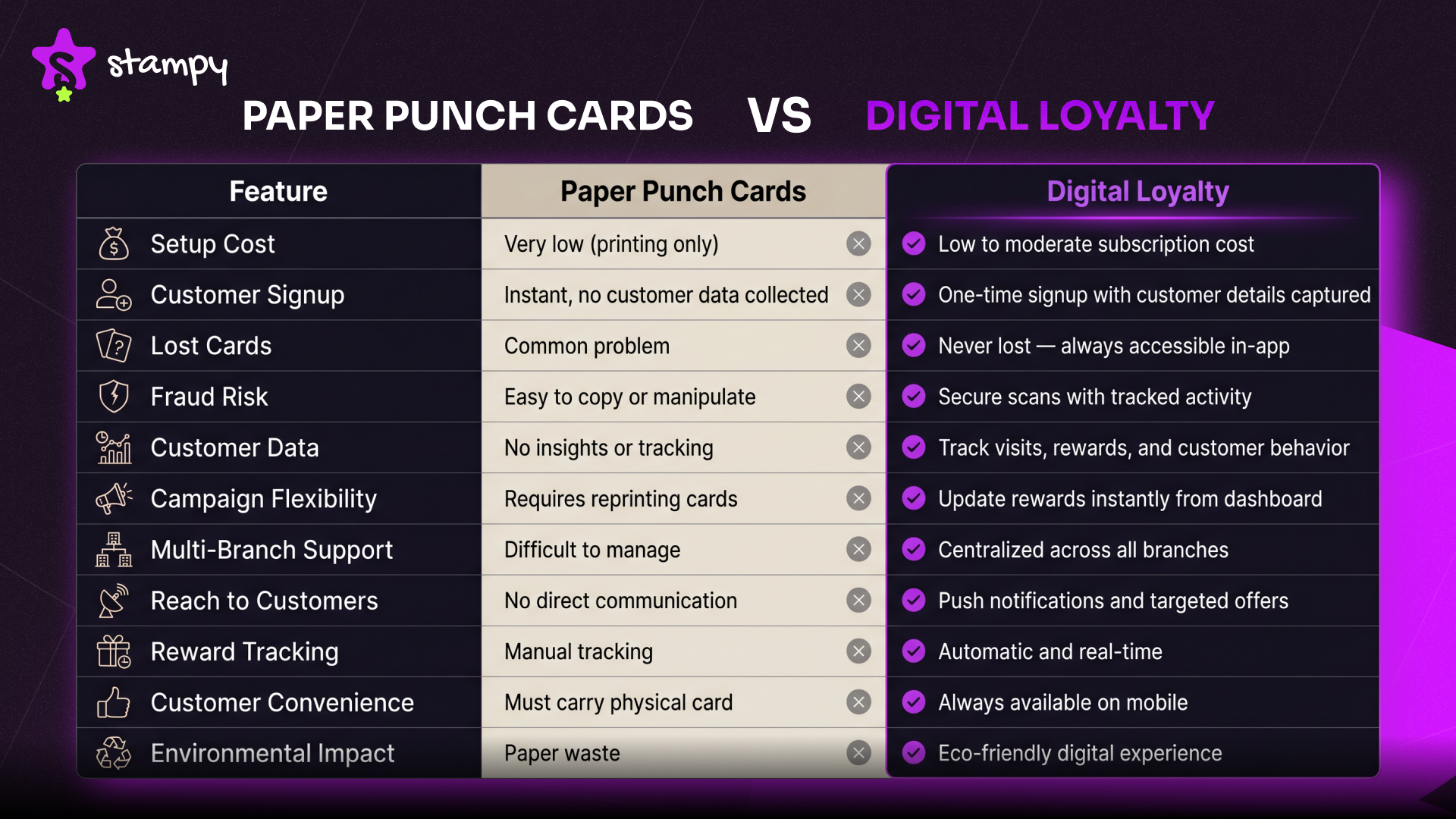
Paper Card vs. Digital Loyalty: Key Differences
The comparison between paper card vs Digital Loyalty makes one thing clear. Paper punch cards still work at a basic level, but they leave a lot on the table. Digital loyalty closes those gaps and turns occasional visitors into consistent customers.
Where Paper Still Makes Sense
Paperwork when the power's out, the Wi-Fi is down, or the customer's phone is dead. Some businesses prioritize reliability over sophistication, and a stack of cards in a drawer will never crash.
A regular customer who's been coming to your bakery for fifteen years doesn't need to be taught what a punch card is. Asking that same person to scan a QR code and save something to a digital wallet is a real ask, and if it goes badly, you're not just losing a sale.
Some customers also don't want to be tracked. A small but genuine percentage will opt out of digital programs on principle, and that's a fair call.
Paper isn't dead; it's just not the right default for a business that wants to understand what's actually working.
If You Own a Local Business, This Part Is for You
The math behind it isn’t complicated, and you can easily understand it. Losing five repeat visits a month because customers forget their card, at $10 a visit, is $600 a year, handed to a piece of cardboard. For salons or sit-down restaurants where visits run higher, that number gets ugly fast.
The harder question is which platform fits your situation, given the crowded market. Some platforms are built for large chains and feel like overkill for a single location. Others are built for tiny shops and crack the moment you open a second branch. The right choice depends on how you want stamps collected, how much customer data you actually want to use, and whether you're planning to grow.
This is the problem Stampy was designed to solve.
Stampy is a digital loyalty platform built specifically for the kinds of businesses paper punch cards used to serve well: independent coffee shops, small restaurant groups, salons, and neighborhood retail. Each customer gets a unique QR code, and staff scans it at the counter. Stamps land in the account automatically, and rewards trigger when a campaign threshold is hit. Business owners get a dashboard for multiple branches, multiple staff accounts, and campaign management without needing to learn complicated software.
Stampy is still in development, so we're not overselling it. But the design comes directly from what this article is about: low friction, something customers will actually use, and real data on who keeps coming back.
Bottom Line
The wallet full of half-punched cards everyone's been carrying since 2018 is headed somewhere, and probably the recycling bin. If you're a customer, give the digital programs at your favorite local spots a genuine try. Most aren't the privacy problems people worried about a decade ago, and you'll stop losing rewards you've already earned.
If you run a business, the question isn't really Paper vs. Digital anymore. It's whether you want to actually know your customers or keep guessing at them. The shops switching now are building something paper never could. The ones waiting will spend the next few years wondering why the place down the street always seems a little busier than it should be.