15 min read



Key Takeaways
- Loyalty apps offer the broadest range of features but require customers to download and set up an app.
- Wallet passes provide convenient mobile access without requiring a separate loyalty app.
- Paper cards remain a simple, low-tech option for launching a basic loyalty program.
- The right choice depends on your business size, program complexity, budget, and customer habits.
Small businesses have three common ways to deliver a loyalty program, and each offers a different customer experience. A dedicated loyalty app gives customers a full experience with stamps, offers, and notifications. A digital pass stored in Apple or Google Wallet keeps things simple without requiring a separate loyalty app download.
A traditional paper card asks for nothing more than a physical card and a stamp. All three can reward repeat customers, but they differ in signup experience, functionality, customer engagement, cost, and customer data. This guide compares all three formats to help you understand which approach fits your business and customer habits.
Loyalty App vs Wallet Pass vs Paper Card: Quick Comparison
See how the three loyalty formats compare across setup, customer experience, features, tracking, engagement, and overall functionality.
Feature | Loyalty App | Wallet Pass | Paper Card |
Customer download | Required | No separate loyalty app | None |
Signup friction | Medium to high | Low | Very low |
Loyalty tracking | Digital | Digital | Manual |
Customer data | Strong | Moderate to strong | Minimal |
Push notifications | Yes | Supported | No |
Reward progress | Real time | Real time | Printed or stamped |
Customization | High | Moderate | Low |
Fraud protection | Strong | Strong | Limited |
Analytics | Strong | Platform dependent | None |
Offline simplicity | Moderate | Moderate | High |
Initial setup | Moderate | Moderate | Very low |
Best suited to | Feature-rich loyalty experiences | Simple mobile loyalty access | Very basic programs |
Apple supports loyalty passes with dynamic updates, offer details, balance information, and multiple distribution methods. Google Wallet works similarly, letting businesses distribute loyalty cards through apps, websites, email, or text messages.
What Is a Loyalty App?
A loyalty app gives customers a dedicated space to manage their entire rewards relationship with a business.

Customers typically use a loyalty app to complete several everyday actions.
- Join programs: Customers sign up for a rewards program directly inside the app in just a few taps.
- Earn rewards: Every purchase or visit adds stamps that count toward a future reward.
- Track progress: Customers can see exactly how close they are to unlocking their next reward.
- Redeem offers: Completed rewards or promotions can be redeemed right from the app itself.
- Receive alerts: Push notifications keep customers informed about new offers and expiring rewards.
There are two common versions of this model worth understanding clearly.
Dedicated Branded Loyalty App
This is a single app built specifically for one brand, showing only that business's rewards and offers. Larger chains often choose this route to fully control the customer experience from start to finish.
Shared Loyalty Platform App
This is one app that lets customers interact with multiple participating businesses through a shared interface. Stampy operates this way, letting customers download one digital loyalty app and collect stamps across several places. Businesses manage their own campaigns through a separate business portal while customers enjoy one unified app experience.
What Is a Wallet Loyalty Pass?
A wallet loyalty pass is a digital loyalty card stored inside a phone's built-in wallet application. Customers typically add the card through a QR code, a link, a website, or an email prompt. Apple describes loyalty passes as a way for customers to check in and receive real-time updates. Google Wallet similarly lets customers view and manage their loyalty information directly inside the Wallet app.
How Apple Wallet Loyalty Passes Work
Customers usually add a pass to Apple Wallet through a quick scan or a simple tap. Some businesses also support NFC-based check-ins for an even faster experience. Once added, the pass can display dynamic balance updates alongside current offers and notifications.
How Google Wallet Loyalty Passes Work
Google Wallet passes can be distributed through a website, an email, or a text message link. Once installed, the pass shows loyalty balance and reward progress updated through the business's system. Some implementations also support NFC or Smart Tap for faster in store interactions.
What Is a Paper Loyalty Card?
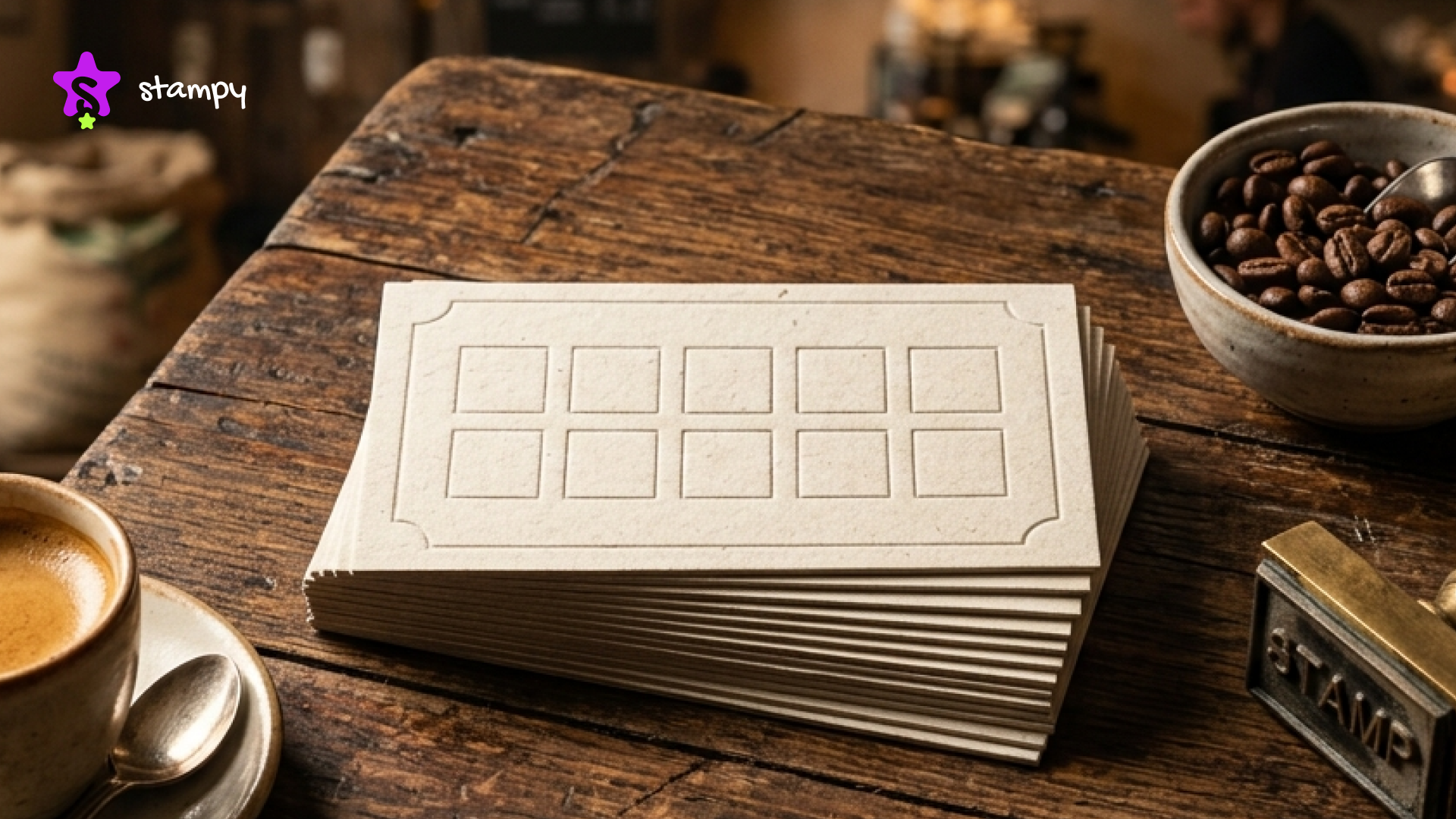
A paper loyalty card follows the classic punch card format most customers already recognize instantly. The customer receives a physical card, and staff add a stamp after each qualifying visit or purchase. Once the card is full, the customer presents it in person to claim their reward.
Paper cards come with a few clear advantages worth acknowledging honestly.
- Simple concept: Nearly every customer instantly understands how a paper loyalty card works.
- Fast launch: A business can start a paper program the same day without any setup.
- No phone needed: Customers do not need a smartphone or any app to participate.
- Minimal tech: There is no software, integration, or backend system required to begin.
- Paper cards also carry some meaningful limitations that businesses should weigh carefully.
- Easy to lose: Physical cards are frequently forgotten at home or misplaced entirely.
- No history: There is no automatic record of a customer's past visits or purchases.
- No outreach: Businesses cannot message customers between visits to encourage a return.
- Limited insight: There is no meaningful way to measure program performance over time.
- Fraud risk: Physical stamps can potentially be copied or shared between customers.
If you want a deeper breakdown of paper versus digital tracking, our existing comparison on paper punch cards vs digital loyalty covers that topic in more depth.
Loyalty App vs Wallet Pass vs Paper Card: Key Differences
This section compares all three formats directly across the factors that matter most to business owners.
1. Customer Signup and Ease of Joining
Signup experience varies significantly across all three formats, and this often shapes early adoption. With a paper card, the customer simply receives the card and keeps it. With a wallet pass, the customer scans or taps once to add it directly to their phone. With an app, the customer downloads the app first, then registers or signs in to join. Wallet passes do not require a separate merchant app installation, unlike most dedicated loyalty apps.
2. Customer Convenience
How easy it is for customers to actually use their rewards often decides whether a loyalty program sticks or gets ignored. Each option below suits a different kind of customer, depending on their habits and how they already interact with their phone.
Loyalty App
If your customers already have your app open regularly, a dedicated loyalty app is worth the investment. It gives you room to do more than just track stamps. You can house rewards, purchase history, personalized offers, and other loyalty features all in one place, which makes the whole experience feel more connected.
Wallet Pass
A wallet pass lives right inside the customer's existing mobile wallet, so there's no separate app to download or open. That convenience is the whole appeal. The tradeoff is that it can't do as much as a full app, since the features are more limited by design.
Paper Card
There's something familiar about a paper card, and some customers still prefer it for that reason. The catch is they have to remember to carry it every time they want to earn or redeem a reward. And unlike a digital option, a paper card can get lost, damaged, or simply left at home.
3. Features and Functionality
This is where loyalty apps offer more functionality, while wallet passes and paper cards focus on simpler loyalty needs.
Loyalty App
Loyalty apps can provide a broader set of tools for customer engagement and loyalty management, such as:
- Multiple rewards programs
- Detailed customer history
- Business discovery
- Gamification
- Personalized offers
- Notifications
- Ordering and payments
- Account management
- Referrals
Wallet Pass
Wallet passes focus on essential loyalty features that customers can access directly from their digital wallet:
- Membership or loyalty status
- Stamps tracking
- QR codes or barcodes
- Rewards and offers
- Notifications
- Basic links and actions
Paper Card
Paper cards offer a simple way to track customer progress toward a reward:
- Stamps or punches
- Reward threshold
- Simple reward redemption
4. Customer Engagement Between Visits
Ongoing engagement separates these formats sharply once the initial signup moment has passed. Paper cards cannot communicate with customers at all once they leave the store. Wallet passes may support limited updates and notifications tied to loyalty status changes. Loyalty apps can support push notifications, reward reminders, and richer ongoing campaign experiences. Stampy, for example, supports notifications and campaign updates through its digital loyalty platform. To learn how to keep customers engaged with your loyalty program, see our guide on why customers stop using loyalty cards.
5. Customer Data and Analytics
Data collection is another area where these three formats differ substantially from one another. Paper cards provide almost no usable behavioral data for the business to review. Wallet passes can provide digital activity data depending on the loyalty system running behind them. Loyalty apps typically provide the most extensive customer profiles since activity happens within one controlled platform. Stampy's business tools track visits, rewards, and redemptions to support this kind of insight. It is worth noting that a wallet pass alone does not automatically create rich analytics on its own.
6. Reward Progress and Visibility
Visibility into progress affects how motivated customers feel to keep returning to a business. With paper cards, customers must count physical stamps manually themselves. With wallet passes, the card can display an updated loyalty status or stamp balance automatically. With apps, customers typically see real-time progress alongside a fuller reward history. Google notes that loyalty cards can give users direct visibility into stamps inside Google Wallet. Stampy similarly lets customers view their stamp progress and reward history inside its app.
7. Customization and Branding
Branding flexibility varies considerably across these three loyalty formats for business owners.
App flexibility: Businesses can fully control navigation, visual design, and every loyalty mechanic offered.
Wallet flexibility: The pass can be branded and updated but stays within Wallet's fixed format.
Paper flexibility: Branding is limited mainly to a printed logo and simple color choices.
Apple supports configurable images and colors, though the pass still operates inside Apple's own Wallet experience.
8. Loyalty Program Complexity
Program complexity often determines which format makes the most practical sense for a business. A simple buy nine get one free structure works reasonably well across all three formats. Running multiple campaigns and rewards usually calls for an app or a sophisticated digital system. Personalized offers generally require a digital system capable of tracking individual customer behavior. Complex gamification or ordering features almost always require a dedicated loyalty app.
9. Fraud and Reward Verification
Fraud protection depends heavily on how each format actually gets implemented in practice. Paper stamps can potentially be copied, shared, or applied without a genuine qualifying purchase. Digital transactions can be recorded and tied directly to a specific customer or staff action. Stampy, for example, verifies stamps through QR scans linked to individual staff accounts. It is important to note that no format is automatically fraud-proof by default.
10. Cost
Rather than quoting specific dollar figures, it helps to compare the underlying cost structure instead.
Paper costs: Expect ongoing spending on printing, replacement cards, and reprints when programs change.
Wallet costs: Expect a loyalty platform subscription plus possible integration or development costs.
App costs: Expect subscription fees, or custom development costs if building independently from scratch.
A ready-made platform like Stampy is not comparable in cost to building a custom app from the ground up.
Pros and Cons of Loyalty Apps
Loyalty apps offer a strong feature set but come with real tradeoffs worth understanding clearly.
Pros include a rich feature set, strong customization, and detailed customer history over time. They also support push communication, multiple campaigns, and features like business discovery when available.
Cons include the need for customers to install an app before joining at all. Account setup can add friction, and custom-built apps require ongoing development and maintenance work.
Pros and Cons of Wallet Loyalty Passes
Wallet passes trade some functionality for a much simpler customer experience overall.
Pros include no separate app download, since the pass fits into an existing phone wallet. Passes can update digitally, support loyalty balances, and send basic notifications when needed.
Cons include less overall flexibility compared to a full app experience. Advanced loyalty functions still require a supporting backend platform behind the pass itself.
Pros and Cons of Paper Loyalty Cards
Paper cards remain useful for certain situations despite their obvious limitations today.
Pros include simplicity, familiarity, and the ability to launch a program almost instantly. They work without a smartphone and require essentially no software setup at all.
Cons include the risk of loss, no meaningful analytics, and no way to send reminders. Reprinting becomes necessary whenever the program changes, and fraud controls remain fairly limited.
Which Loyalty Format Is Best for Different Businesses?
The right loyalty format depends on how often customers return, how much functionality you need, and how comfortable they are with digital tools. Use these scenarios as a practical starting stamps.
Business Situation | Format to Consider |
Very small business testing loyalty for the first time | Paper card or simple digital solution |
Cafe with frequent repeat visits | Digital loyalty app or wallet pass |
Salon needing reminders and customer history | Loyalty app |
Restaurant with multiple campaigns | Loyalty app |
Simple one card rewards program | Wallet pass |
Business wanting minimal customer setup | Wallet pass or paper |
Multi-location business needing reporting | Loyalty platform or app |
Business needing ordering or advanced functionality | App |
Customers who rarely use smartphones | Paper option may still help |
When Does a Loyalty App Make More Sense?
A loyalty app tends to make sense once your program grows beyond a simple digital stamp card. It works well when you run multiple campaigns and want customers to see their full reward history. It also helps when you want discovery features, detailed analytics, or personalized notifications.
Businesses operating multiple locations often prefer one platform managing the entire loyalty relationship. Stampy's app currently provides QR-based stamps, live progress tracking, and in-app reward redemption. It also includes reward history, nearby business discovery, notifications, and business-side analytics tools. You can explore the full feature set on our loyalty app features page, or read how a digital loyalty app works for more detail.
When Does a Wallet Pass Make More Sense?
A wallet pass works well when your loyalty program stays fairly simple in structure. It suits businesses that primarily need stamps, or a basic status indicator. Minimizing enrollment steps often matters more than offering a full app experience for some businesses.
Wallet passes fit best when customers do not need broader navigation or extra functionality. It is worth remembering that wallet passes are not simply apps without a download step. They represent a different interface entirely, with their own distinct set of limitations.
When Is a Paper Loyalty Card Still Enough?
Paper loyalty cards can still work for small customer bases, testing rewards, customers who prefer physical cards, or areas with unreliable internet access. Most businesses eventually outgrow paper once certain needs start to appear.

- Multiple locations: Managing several sites manually becomes difficult without a digital system.
- Customer segments: Targeting different customer groups requires data paper cards cannot provide.
- Personalized offers: Tailoring rewards to individuals needs a system that tracks behavior digitally.
- Real analytics: Measuring program performance requires more than counting physical stamps by hand.
- Automated messages: Reaching customers between visits requires a digital communication channel.
- Multiple campaigns: Running several promotions at once becomes hard to track on paper alone.
Loyalty App vs Wallet Pass: Don't Confuse the Two
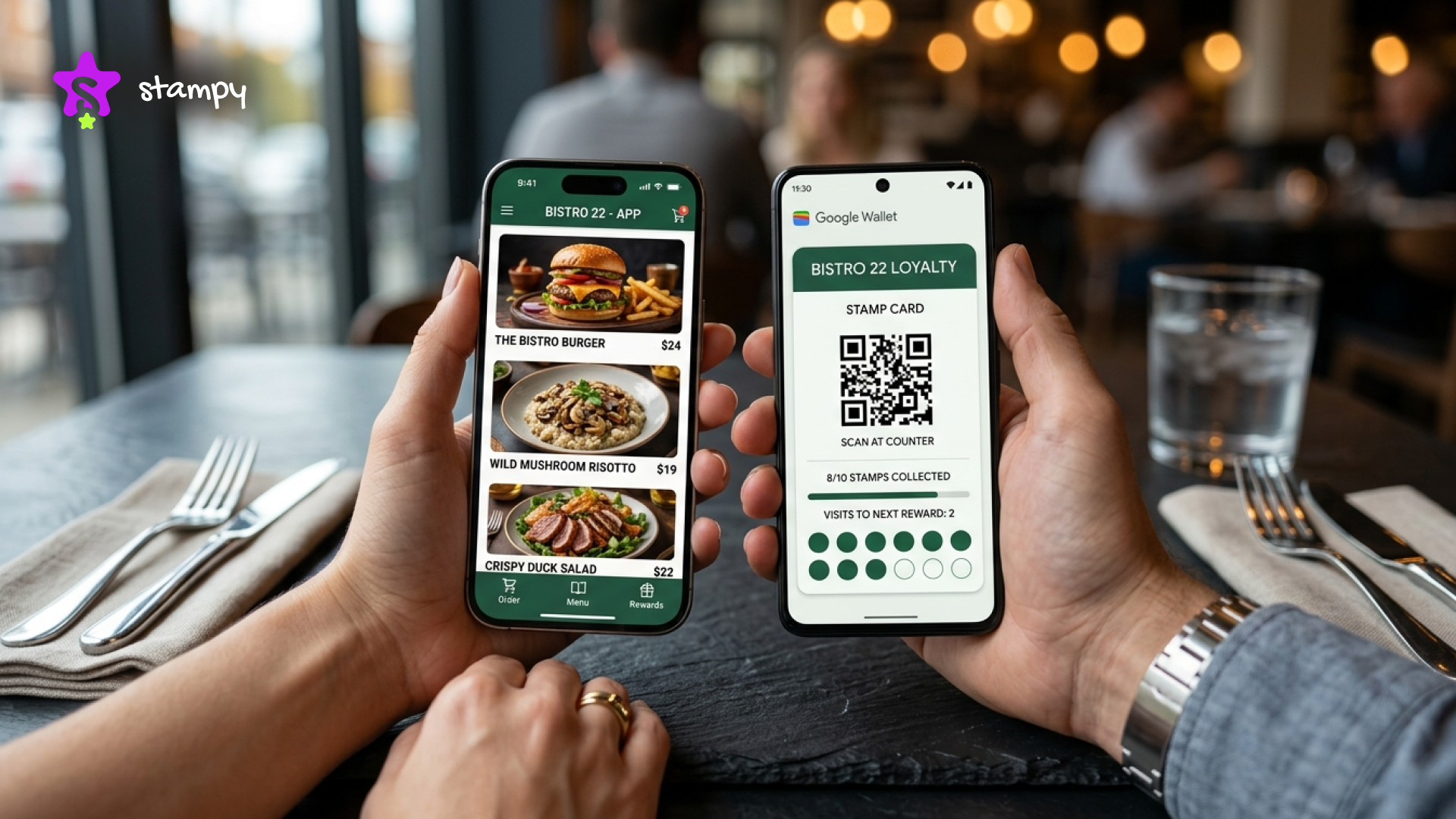
A loyalty app is standalone software that customers download and open to view rewards, track stamps, receive offers, or interact with a loyalty program.
A wallet pass, by contrast, is a digital loyalty card stored directly in Apple Wallet or Google Wallet, giving customers quick access without requiring a separate app.
The two can also work together rather than compete. A wallet pass can provide convenient access to a loyalty card, while a full app can offer more advanced features and engagement. Apple also describes passes as something that can complement an app and link customers back to it.
How Stampy's Approach Works
Stampy gives businesses a simple way to create and manage loyalty campaigns, customize rewards, track customer activity, and keep customers engaged from one convenient platform.
- Create campaigns: Businesses can set up new loyalty campaigns whenever their goals change.
- Configure rewards: Reward thresholds and offers can be adjusted to match business needs.
- Track activity: Customer visits, redemptions, and engagement stay visible in one dashboard.
- Send updates: Notifications keep customers informed about new offers and expiring rewards.
- Manage branches: Multiple locations can be handled through a single unified account.
- Review analytics: Business owners can see how their loyalty program performs over time.
If you want to see this in action, learn more about how Stampy works or explore our full digital loyalty features. You can also check Stampy pricing to find the plan that fits your business.
Conclusion
Loyalty apps, wallet passes, and paper cards can all support repeat-customer programs, but they differ in convenience, functionality, cost, and customer engagement. Paper cards work well for simple programs, while wallet passes offer easy mobile access without a separate app. Loyalty apps provide more tools for managing rewards, tracking customers, and staying connected between visits.
The right choice depends on your business needs, customer habits, and how complex you want your loyalty program to be. If you want to move beyond physical cards and manage loyalty digitally, Stampy offers QR-based stamps, rewards, customer tracking, notifications, and analytics in one platform.
Frequently Asked Questions
Is a loyalty app better than a paper loyalty card?
A loyalty app generally offers more features, better data, and stronger customer engagement over time. A paper card can still work well for very small or simple programs starting out.
What is the difference between a loyalty app and a Wallet pass?
A loyalty app is standalone software customers actively open, while a Wallet pass lives inside their phone's wallet. Both can track rewards, but an app typically offers far more features overall.
Do customers need an app for Apple Wallet loyalty cards?
No, customers do not need a separate app to use an Apple Wallet loyalty card. The pass can be added directly through a scan, link, or website prompt instead.
Can Google Wallet store loyalty cards?
Yes, Google Wallet supports loyalty cards that can be distributed through apps, websites, email, or text messages. Businesses can also update loyalty information programmatically once a card has been added.
Are paper loyalty cards still worth using?
Paper cards still work well for very small businesses or simple programs without a large customer base. They become less practical once a business needs data, automation, or multiple ongoing campaigns.
Which loyalty option is best for a small business?
The best option depends on program complexity and how customers already interact with their phones. Many small businesses start simple and move toward an app as their program grows.
Can a business use both an app and a Wallet pass?
Yes, a Wallet pass can work alongside a full loyalty app rather than replacing it entirely. Apple even allows passes to link customers directly to an associated app when needed.