12 min read




Key Takeaways
- Create a pizza loyalty program that matches your customers’ regular ordering habits.
- Choose attractive rewards that encourage repeat orders without reducing your profit margins.
- Keep loyalty program rules simple and easy for customers and staff to understand.
- Offer double stamps during quiet hours to encourage more orders on slower days.
- Use Stampy to manage digital stamp cards, customer rewards, and personalized offers.
A customer can love your pizza and still order from another shop next time. When they’re grabbing lunch or picking up dinner on the way home, they have plenty of choices. Being one stamp away from a free slice gives them a reason to come back to yours.
A pizza shop loyalty program can reward the orders you’d like to see more often, from lunchtime slices to family dinners and office orders. Pick a reward your customers will want, and your shop can afford. Then keep the rules simple enough for staff to explain while they ring up an order.
This guide shows you how to choose a reward, work out what it costs, and get customers to sign up. You’ll also find six ideas to try and learn how to set up a restaurant loyalty program with Stampy.
Understanding Customer Loyalty in the Pizza Business
A pizzeria loyalty program works best when it fits customers' regular ordering habits. Think about when people usually order pizza, who they order with, and what rewards they would enjoy. For example, six stamps may feel within reach for a family that orders every Friday. Small rewards tied to regular visits can give customers a reason to choose the same pizzeria again.
- Family Night: Offer a free side when families come back for their usual Friday pizza.
- Lunch Break: Give students and nearby workers a stamp when they buy a lunch combo.
- Weekend Pickup: Let Saturday regulars claim their reward when they pick up their usual order.
- Office Lunch: Give office teams a free dessert tray after several qualifying lunch orders.
- Game Night: Reward game night orders with a side everyone at the table can share.
Find more ways to turn occasional diners into regular customers.
7 Steps to Create a Pizza Shop Loyalty Program
Decide which order you want to see more often before choosing a reward or asking staff to explain it.
1. Set Your Loyalty Goals
The best loyalty program for pizza shops starts with one clear goal. Pick what you want to improve in the first month and check your order records before you launch.
- Second Orders: Count how many new members place another qualifying order within 30 days.
- Weekday Sales: Compare qualifying orders on your slowest weekday before and after launching the offer.
- Larger Orders: Track the average order value to see if customers spend more on bundles.
- Direct Orders: Count pickup orders customers place through your website or over the phone.
Review these numbers regularly to understand which offers bring customers back and where your loyalty program needs improvement.
2. Understand Your Customers' Ordering Habits
Check a few weeks of receipts to see what people buy, when they order, and how much they spend. Look at customer purchase frequency separately for lunch and dinner, since regulars may order at different times. Set aside unusually busy days, such as a local game night, so they don’t skew the results.
If families often order garlic bread with their pizzas, offer it as a reward they already enjoy. Loyalty programs for independent pizzerias can start with a simple question for staff about what regulars usually order.
3. Choose Your Reward Structure
A stamp card is easy to follow when most qualifying customers buy roughly the same thing each time. A spending model can suit a shop that takes small lunch orders and much larger catering orders every week.
Reward Structure | Example |
Stamp-based | One stamp per eligible pizza, with a free selected pizza after six stamps |
Visit-based | One credit per qualifying visit, with a reward after five visits |
Spend-based | Points for each eligible dollar spent |
Product-based | One stamp with each eligible pizza meal deal |
Decide whether three pizzas in one order earn three stamps or just one before you print any signs. A per-pizza rule favors larger orders, while a per-order rule gives people a reason to make more visits. Compare stamps and points if customers at your shop regularly spend very different amounts when they come in to order.
4. Select Attractive Pizza Rewards
If you’re deciding how to reward loyal pizza customers, start with something your kitchen can serve during dinner rush. A free selected pizza can be the main reward in a pizza loyalty program, while smaller perks can suit slice shops and lunch counters
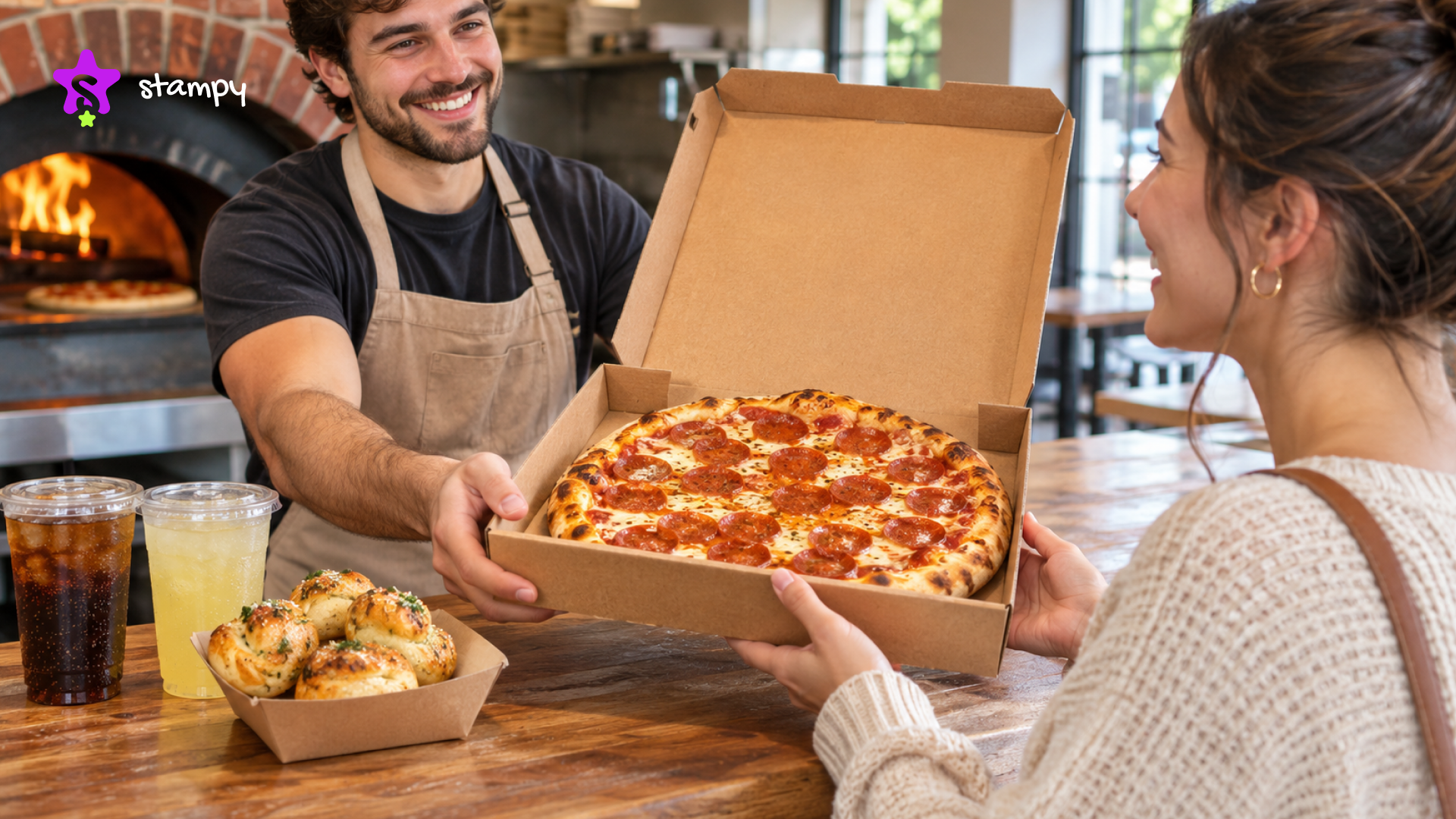
- Free Pizza: Pick a size and a short list of eligible pizzas so staff can confirm the offer before checkout.
- Extra Toppings: Let customers choose one topping from a list that excludes premium ingredients your kitchen buys in smaller quantities.
- Garlic Bread: Offer a side that works with most pizza orders and fits easily into your usual pickup packaging.
- Size Upgrade: Give customers a larger pizza when the extra dough, cheese, and box still leave you enough margin.
- Drinks & Desserts: Choose a bottled drink or a dessert that staff can hand over without slowing down the kitchen.
5. Set Clear Loyalty Program Rules
Tell customers which orders qualify, how much they must spend, and how many stamps they need to earn a reward. Use Stampy’s guide to setting clear reward rules to decide how to handle expiry dates, meal deals, and refunds. Post the main rules where customers sign up, and keep a copy by the till for staff.
6. Choose a Digital Loyalty Platform
Paper pizza shop loyalty cards are easy to lose, while digital loyalty cards for pizza shops keep each customer’s stamps on their phone. Stampy lets staff check the order and scan the customer’s QR code in the Partner app. See how to run a loyalty program without POS integration if you want to keep your current checkout setup.
7. Train Your Staff and Launch
Show staff how to invite customers, check which orders qualify, scan the QR code, and confirm each stamp. Practice with a two-pizza order and a reward claim so everyone applies the rules and charges the right amount. Test on a quiet shift, then fix anything staff had to explain twice before promoting the offer widely.
6 Pizza Shop Loyalty Program Ideas
Choose the offer that fits an order your customers make often enough to work toward a reward.
1. Buy Six Pizzas, Get One Free
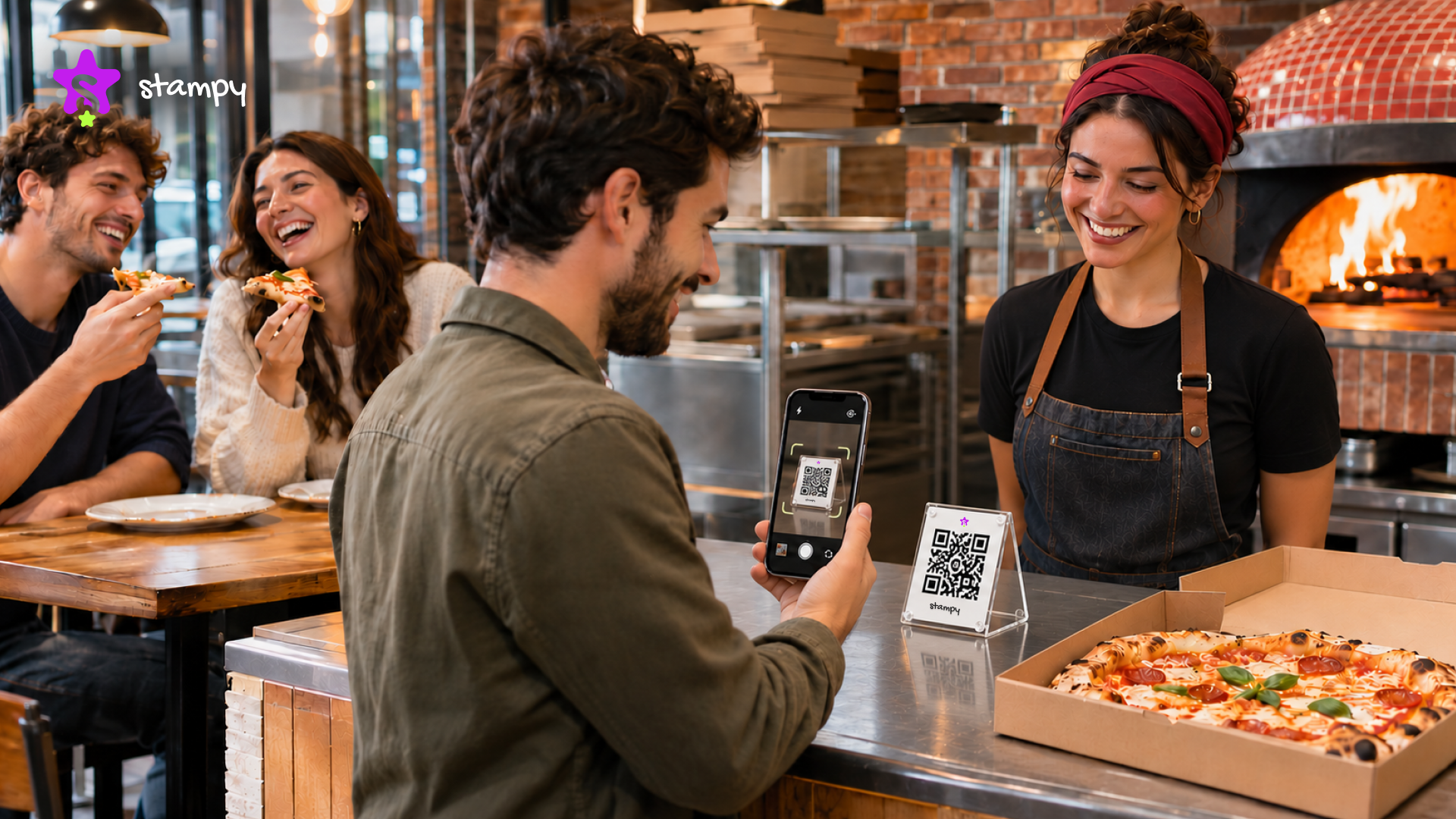
Give customers one stamp for each qualifying pizza, then let them choose a free pizza from a short list. For example, a couple who buys two qualifying pizzas every Sunday would earn their free pizza after three orders. Check what the free pizza costs you before deciding whether to limit the number of stamps per order.
List the pizzas and sizes that qualify on the card, along with the price of any size upgrade.
2. Family Pizza Night Rewards
Provide a stamp to families for purchasing a meal deal they know and love, like two large pizzas with sides and beverages. Once the card is filled, offer them something they can share, such as garlic bread, a mixed side of dishes, etc.
Wait a couple of weeks and see if families are ordering more frequently or if they have opted to buy the bundle instead of a pizza. If the bundle is already discounted, calculate the amount that you save on food and reward.
3. Student and Lunchtime Rewards
If your pizza shop is near campus, give customers a stamp when they buy a slice and drink combo. Keep the offer open to nearby office workers so it can still bring in lunch orders during school breaks.
A free bottled drink or an upgrade to a specialty slice can be an affordable reward for lunch regulars. For shops near campus, these restaurant promotion ideas for students offer more ways to bring customers back between classes.
4. Double Stamps on Quiet Days
Offer double stamps on orders placed during a quiet stretch, such as Tuesdays from 4 to 6 p.m. Run the offer for a few weeks and compare those hours with similar Tuesdays before the offer began.
Check the full week’s orders to see if customers ordered more often or simply moved their usual pizza night.
5. Exclusive Takeaway Rewards
Give customers a stamp when they order pickup through your website or by phone, and explain which orders count. Have staff check where the order came from before adding a stamp, especially if app orders share the pickup shelf.
Offer a free side once customers fill their card, then check whether extra direct orders cover the reward cost.
6. Group and Office Order Rewards
Use your pizza shop rewards program to give offices a reason to order their next team lunch from you. Set a minimum order that covers extra prep and packaging, and offer a dessert tray the team can share.
Agree on who can claim the reward when the company pays, then track how often each office orders again.
How to Create Profitable Pizza Loyalty Rewards
Start with what the reward costs your kitchen to make and pack. Then decide how many paid orders a customer needs to place before you can afford to give it away.
- Reward Costs: Include the ingredients, prep time, and packaging needed to serve each reward.
- Minimum Spending: Set a minimum order value that leaves enough money to cover the reward.
- Reward Milestones: Give regulars enough time to earn the reward before their stamps expire.
- Free Add-ons: Compare the cost of a free topping, drink, or side with a discount.
- Purchase Frequency: Check whether members place more orders after the program starts.
Details | Example |
Price per eligible pizza | $12 |
Purchases required | 6 |
Total qualifying sales | $72 |
Cost to make and pack the free pizza | $4 |
Reward cost as a share of qualifying sales | 5.6% |
Six paid pizzas bring in $72, and the free pizza costs $4 to make and pack. That puts the reward at about 5.6% of qualifying sales, before the cost of the paid pizzas and other shop expenses. If customers would have placed those six orders anyway, check whether the profit from any extra orders covers the $4 reward.
How to Promote Your Pizza Shop Loyalty Program
Mention your loyalty program when customers order, pay, or pick up their pizza. Tell them what they can earn and where to join.
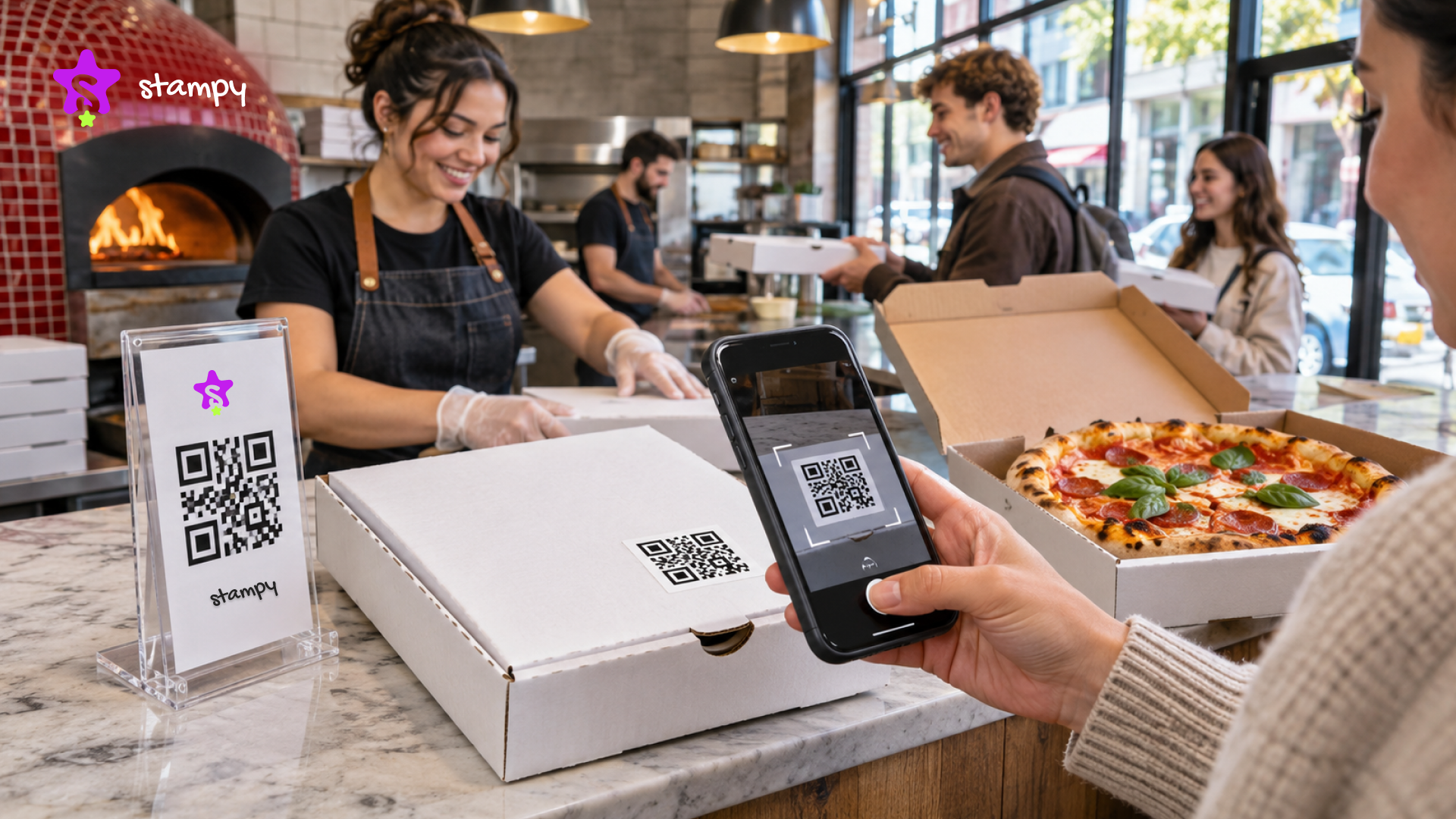
- Pizza Boxes: Add a short note inviting customers to find your shop in Stampy.
- Checkout Counters: Put the reward and stamp count on a sign customers can read in line.
- Staff Invitations: Ask cashiers to mention the program when a customer places a qualifying order.
- Social Media: Show the pizza customers can earn and share dates for bonus stamp offers.
- Ordering Pages: Explain which pickup orders earn stamps before customers pay online.
Ask new members where they heard about the program so you know which signs or posts to keep using. If customers ask how to join, use these tips to make signup easier.
Launch and Manage Your Pizza Loyalty Program With Stampy
Start with one stamp card for a pizza or meal deal customers already order.
If you run several shops, use Stampy to manage rewards and track how each location is doing.
Create Customized Digital Stamp Cards
Create a card with your shop’s branding in the Stampy Business Portal. List the pizzas and sizes that qualify, how many stamps customers need, and what they’ll get. Before you launch, open the card on a phone and check that the rules are easy to read.
Simplify Stamp Collection and Reward Redemption
Make it easy for customers to collect stamps and claim rewards without slowing down the checkout process. With digital loyalty cards, customers can collect stamps after eligible purchases, track their progress, and redeem rewards directly from their phones. This also saves staff from manually tracking stamps or checking paper loyalty cards.
Run Personalized Loyalty Campaigns
Send an offer that fits what customers usually order. For example, invite families who order on Fridays to try a midweek meal deal. In the app notification, say what they’ll get, which orders count, and when the offer ends.
Track Customer Activity With AI-Powered Insights
Check how many customers fill their cards and claim rewards at each shop. Stampy’s AI can suggest offers for customers who haven’t ordered in a while. Use stampy’s business tools to compare locations and manage staff access.
Conclusion
A well-planned pizza shop loyalty program gives customers a reason to return beyond good food and occasional discounts. Start with rewards that match their ordering habits, protect your profit margins, and encourage more frequent purchases.
With Stampy, you can create digital stamp cards, offer personalized rewards, run targeted campaigns, and track customer activity. Whether you own an independent pizzeria or manage multiple locations, Stampy makes managing customer loyalty easier for your team.
Focus on rewarding regular customers, understanding their preferences, and giving them more reasons to choose your pizza shop over competitors.
Frequently Asked Questions
What is the best loyalty program for a pizza shop?
A stamp card usually suits shops where customers order similar meals and can earn a reward within several visits. Spending-based points can suit a pizza restaurant loyalty program with both inexpensive slice orders and larger catering purchases.
How many stamps should a pizza loyalty card have?
Start with six stamps if regulars can reach the reward in a reasonable time, and the math supports it. If customers order only once a month, consider using fewer stamps and choosing a side as the reward.
How much does a pizza loyalty program cost?
The cost will vary based on your app subscription, number of rewards claimed, and time staff spends operating the app. When creating a monthly budget, calculate your subscription and staff expenses and include that in your reward budget.
Can I create a pizza loyalty program without POS integration?
Yes, a pizza loyalty app, such as Stampy, can allow employees to verify an order and scan the customer's code independently. Your normal payment process continues, and staff will put a stamp on the eligible order once it has been paid.
Can customers earn pizza rewards across multiple locations?
Yes, when you add participating branches to your program, Stampy can reward and redeem rewards within those branches as well. If there are some stores that are not available, inform the customers, especially if the branch has a different menu or a different franchise owner.