17 min read




Key Takeaways
- Update your menu, opening hours and photos wherever local diners find you.
- Choose partnerships and promotions that fit your neighbourhood.
- Give customers a clear reason to return, with rewards you can afford.
- Aim quiet-day offers at a specific service period.
- Track additional orders, repeat visits and reward costs before spending more.
Running a small restaurant in the UK comes with its challenges. Rising food costs, energy bills and quiet weekdays can make it difficult to maintain a healthy profit, especially when you have a limited marketing budget.
According to a July 2026 UKHospitality survey, 23% of surveyed hospitality businesses were operating at a loss. For independent restaurants, spending more on advertising isn't always a practical solution.
Start by reaching people who live and work nearby and giving existing customers a reason to return. Updating your Google listing, introducing lunchtime offers or rewarding regular diners are all affordable ways to attract customers.
This guide covers 15 low-cost restaurant marketing ideas to attract local customers, increase repeat visits and make better use of your marketing budget.
Free Marketing Ideas to Attract Local Restaurant Customers
Start with the information customers need before choosing where to eat. These activities cost staff time, but you can begin without paying for advertising. Free restaurant advertising can start with the profiles and community channels available to you, provided you keep their information useful and accurate.
1. Optimise Your Google Business Profile
Check your Google Business Profile as though you were deciding whether to visit for the first time. Can someone find today’s opening hours, current prices and a clear menu? Work through these updates:
- Check your address, phone number and opening hours, including bank holidays.
- Add recent photographs of your food, dining room and entrance.
- Update dishes and prices using Google’s menu editor, where available.
- Publish useful updates about seasonal dishes and offers.
- Add working booking and ordering links where applicable.
Use an accurate restaurant category and describe your cuisine naturally. This helps customers understand whether you suit searches such as “Restaurants in Birmingham” or “places to eat near me”. Avoid filling your business name or description with repeated search terms. Test every link on a phone before considering the job finished.
2. List Your Restaurant on Free UK Directories
Choose listings that people in your area are likely to use. A visitor planning a weekend away may discover you differently from someone looking for lunch near work. If you’re deciding how to advertise a restaurant for free, begin with a few relevant listings you can maintain yourself.
Platform | Best suited to |
Google Maps | Nearby restaurant searches and directions |
Tripadvisor | Tourists and visitors comparing places to eat |
Yell | Local business discovery |
Nextdoor | Neighbourhood recommendations |
Taybl Discover | Restaurant discovery and venue information |
Local BID directories | Town and city-centre visibility |
Tripadvisor, Yell and Nextdoor offer free basic business listings or pages. Taybl Discover also offers a free basic venue listing; booking tools are a separate service. A BID is a Business Improvement District. Ask your local BID whether your restaurant qualifies for its directory and whether inclusion carries a charge.
Keep your name, address, phone number and opening hours consistent. A few accurate listings are more useful than dozens you never maintain.
3. Encourage Genuine Customer Reviews
Make it easy for diners to leave honest feedback without putting them under pressure. Place a review QR code on receipts or near the till. Staff can mention it when presenting the bill: “If you’d like to share feedback about your visit, the review link is on your receipt.”
Invite feedback consistently, including from customers whose experience needs improvement. Thank reviewers for useful comments, acknowledge specific problems and move conversations involving personal details into a private channel.
Keep review requests separate from loyalty rewards. Google’s review policy prohibits offering discounts, free food or other incentives for reviews, even when you ask for an honest opinion. Use recurring feedback to improve service. Several comments about slow lunches may point to a problem that advertising cannot solve.
4. Reach Local Customers Through Social Media
Choose one channel you can update and check regularly. Start where customers already tag you, ask questions or respond to posts. Show food people can actually order:
- Film a short clip of a popular dish being prepared or plated.
- Share today’s special in Instagram Stories, including its price and serving time.
- Add your location and a few relevant local hashtags.
- Post in community Facebook groups when their rules allow business updates.
- Invite customers to tag the restaurant, and ask permission before reposting their content.
Give each post a clear next action, such as viewing the menu, booking a table or collecting dinner. When sharing rewards, show what diners can earn and explain which purchases count. A short checkout demonstration can help you promote a loyalty programme on social media without needing a separate advertising shoot.
If you search for “Restaurant marketing ideas UK”, “Restaurant promotion ideas UK” or “Digital marketing for restaurants UK”, judge each suggestion by what a nearby customer can do next. An attractive post needs a clear menu, a working link and an offer your team can deliver.
Affordable Ways to Bring More Customers Through the Door
Local relationships can put your restaurant in front of people who already spend time nearby. Choose partners and activities that match your service, prices and opening hours. Marketing strategies for small restaurants should reflect these local routines rather than copy promotions from businesses with different customers.
5. Partner With Nearby Businesses
Approach businesses whose customers or employees could realistically eat with you. Useful possibilities include nearby offices, coworking spaces, hotels, guest houses, gyms and entertainment venues. Match the offer to their routine: office workers may want a dependable lunch, while cinema customers may need an early evening meal.
For example, suppose you introduce a fixed-price weekday lunch for employees of a neighbouring office. Give the office contact a short menu showing the price, collection arrangements and available hours. Local restaurant marketing becomes more focused when the offer meets a need that nearby people already have.
Agree how customers identify the partnership, such as showing a staff pass or mentioning a booking code. Record those purchases separately so you can decide whether the arrangement deserves more time.
6. Work With Local Food Bloggers and Creators
Choose creators whose audience lives within travelling distance of your restaurant. A large following spread across the country may have little value for a neighbourhood takeaway. Before agreeing to a collaboration, ask about audience location and review recent comments. Look for relevant questions and local conversations rather than follower count alone.
Agree in writing:
- What the creator will receive, including any meal or payment.
- What content they will produce and when.
- Whether you may reuse their photographs or video.
- How you will identify resulting bookings or orders.
A gifted meal still costs ingredients, preparation and table capacity. Include those costs when judging the collaboration. Paid or gifted promotional content needs clear disclosure. The ASA’s influencer advertising guidance explains why an upfront “Ad” label is clearer than “gifted” alone.
7. Participate in Local Food Events
Consider community markets, food festivals, restaurant weeks, town-centre events and Small Business Saturday activities. Ask the organiser about likely attendance, pitch fees, equipment, staffing and any requirements for serving food. Compare the full cost with what you could reasonably sell.
A smaller role may suit a tight budget. You could join an event’s restaurant trail, offer a short tasting menu at your premises or contribute a dish to a shared community activity. When considering how to increase restaurant footfall, check whether an event reaches people who could realistically visit you afterwards.
Give visitors a practical reason to find you afterwards. Include your location, opening hours and menu address on a small card. If you offer a return-visit perk, give it a clear name so staff can record its use.
8. Attract Students and Office Workers
Build offers around the people close enough to become regular customers. Near a university, you might test a student meal deal, a sharing bundle or an exam-season collection menu. Near offices, a quick lunch with a clear collection time may be more useful than a larger discount.
Keep the offer easy to understand. State the eligible dishes, price, hours and any student ID requirement together. For repeat lunchtime trade, consider a reward tied to qualifying lunches. These student restaurant loyalty ideas explain how to match rewards to buying routines and campus events.
Check whether discounted meals also earn stamps. Staff should know the answer before the first customer asks. Choosing restaurant marketing ideas to attract customers means considering both the offer and how easily someone can use it during a normal working or study day.
Low-Cost Marketing Ideas to Increase Repeat Restaurant Visits
Once someone has enjoyed your food, make the next visit easy to choose. A useful reward, relevant reminder or convenient collection option can give that customer a specific reason to return. Understanding how to increase repeat customers in a restaurant starts with checking what happens between their first purchase and their next visit.
9. Introduce a Digital Restaurant Loyalty Scheme
A digital loyalty scheme records eligible purchases and shows customers what they are working towards. Start with one reward. Possible offers to cost and test include:
Illustrative offer | Conditions to define |
Buy five qualifying meals and earn a dessert | Eligible meals and dessert choices |
Collect six lunch stamps and earn a complimentary lunch | Lunch hours, qualifying dishes and reward menu |
Complete four qualifying takeaway orders and earn a side | Minimum order, eligible channels and side choices |
These are examples, not recommended profit margins. A full meal costs more to provide than a small side, so choose the reward after checking your menu costs and usual visit frequency. A reward that takes too long to earn is one reason customers stop using loyalty cards.
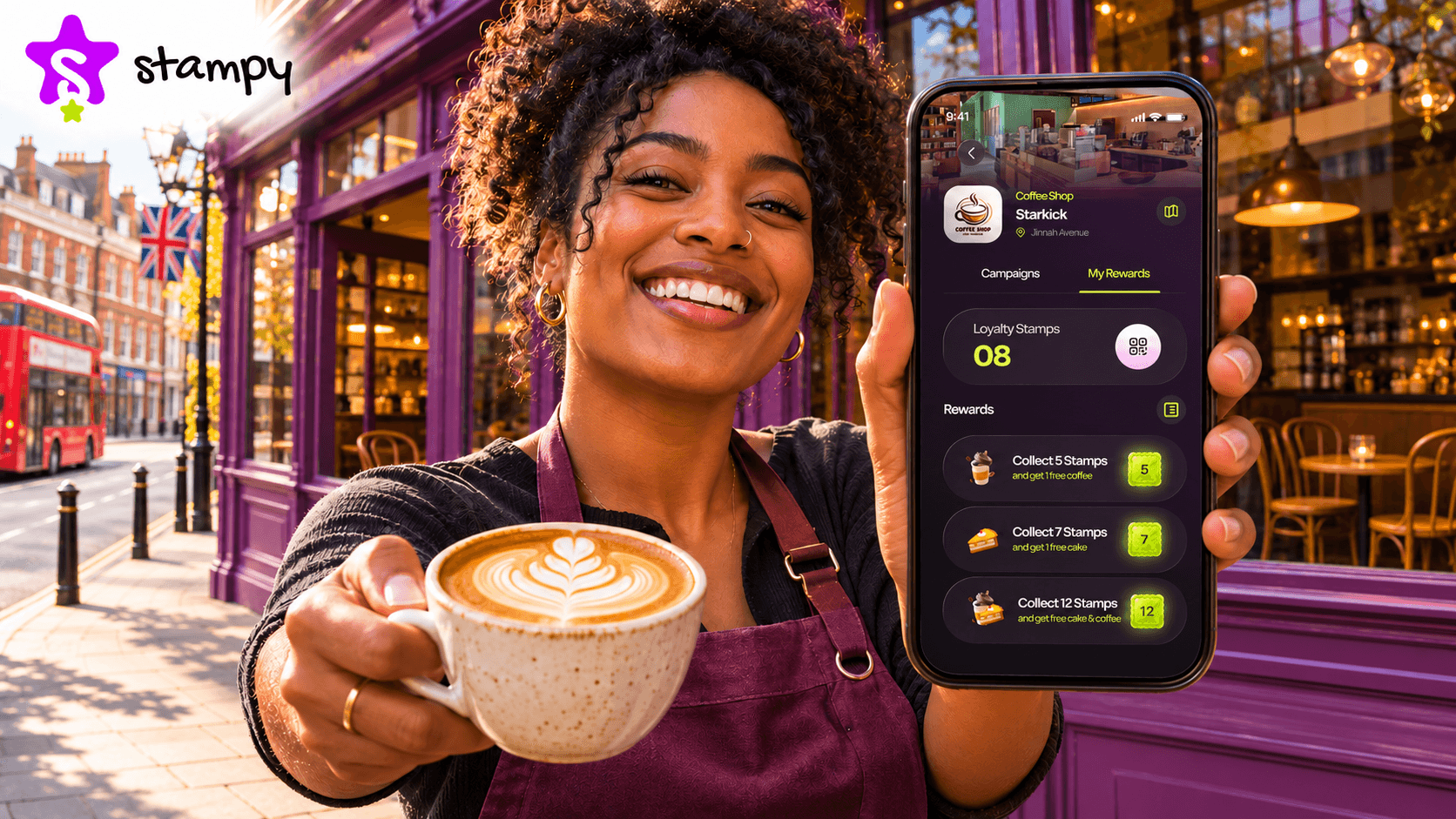
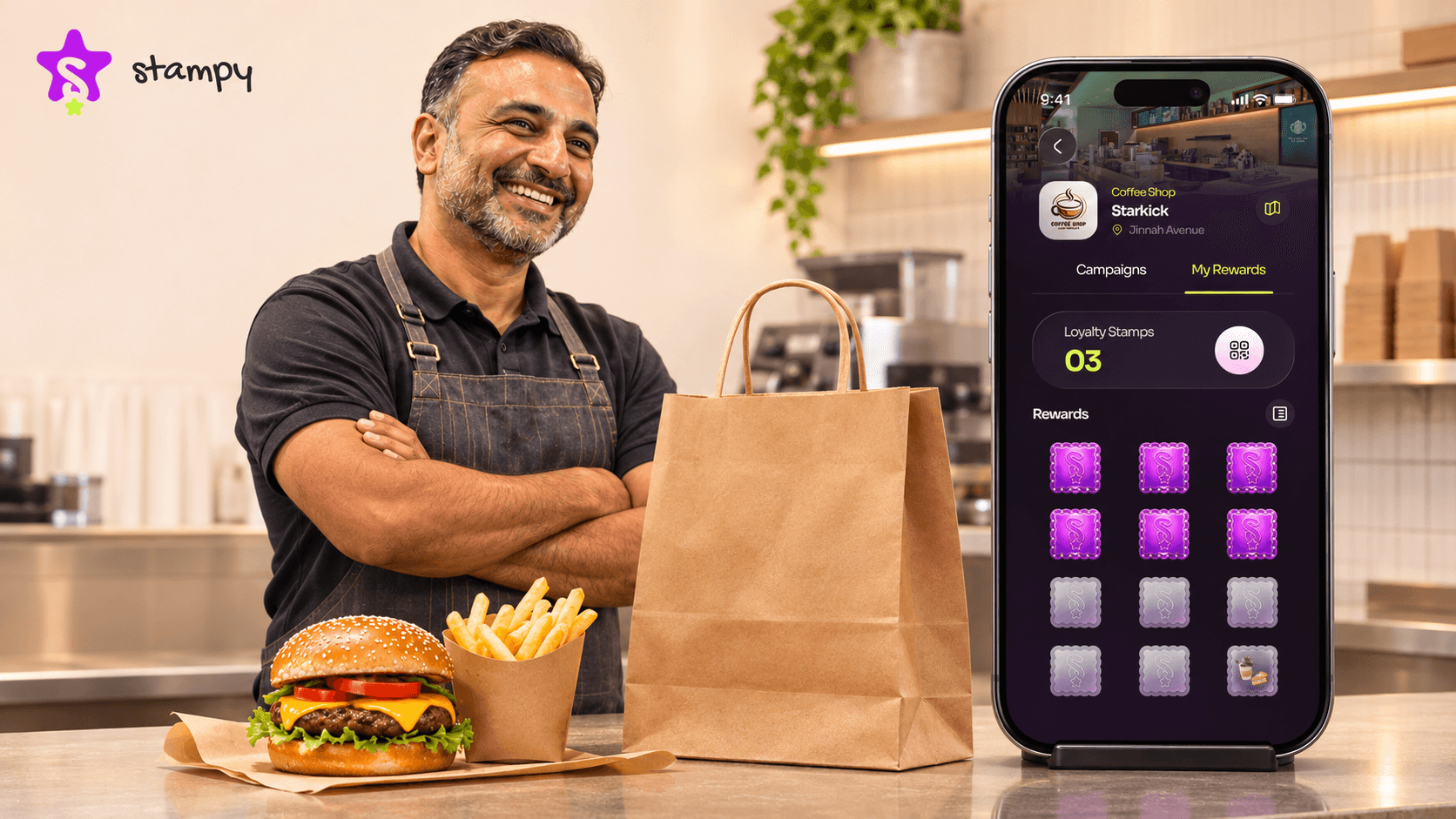
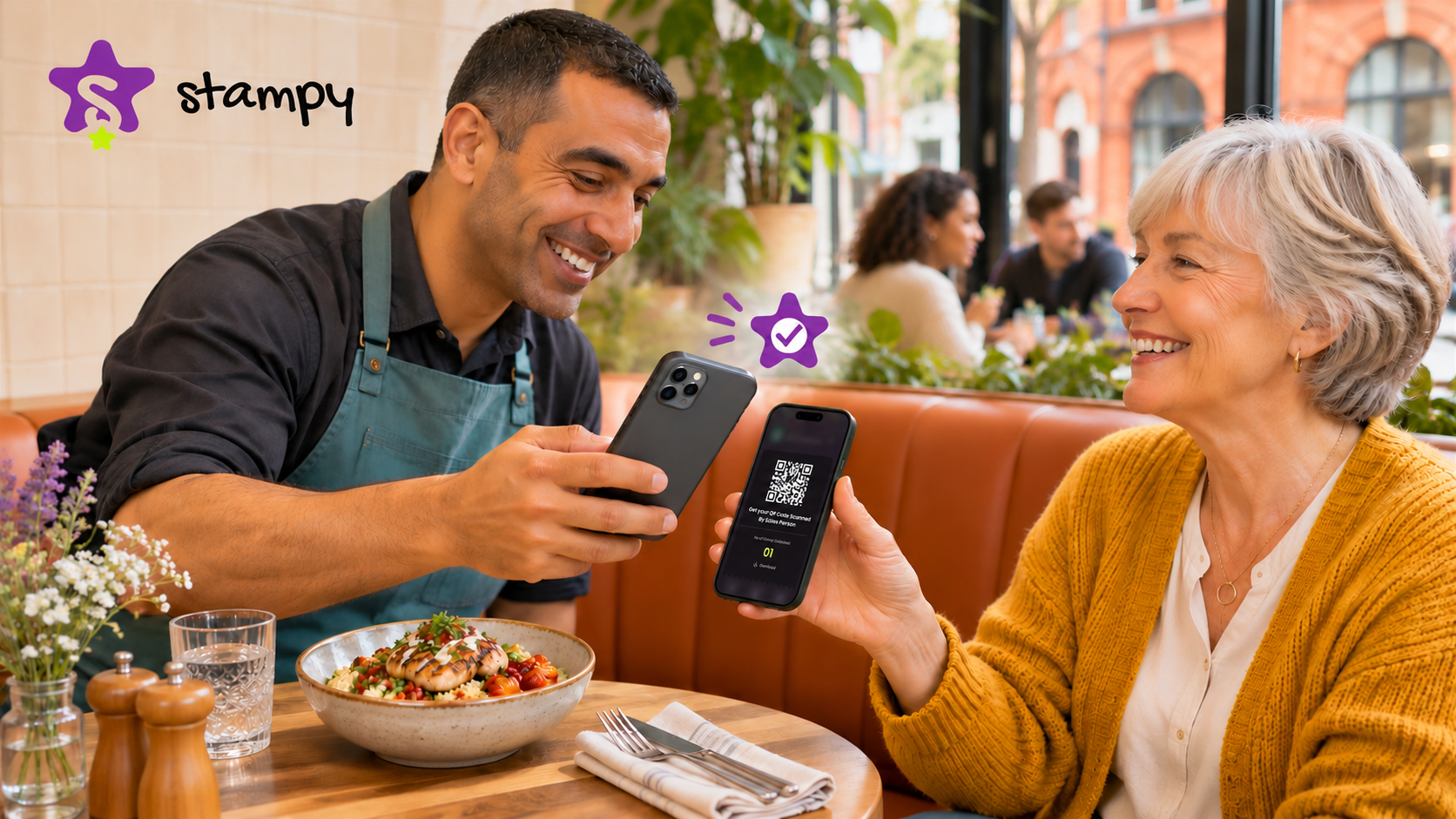
With the restaurant loyalty programme, customers create an account in the app. Staff scan their QR code to award stamps after eligible purchases. Once the reward unlocks, the customer presents its reward QR code for staff to scan and redeem.
Write clear reward redemption rules covering eligible purchases, exclusions, expiry and whether offers can be combined. Avoid advertising “a free meal” if only a narrow selection qualifies.
If coffee is a regular part of your breakfast or lunch trade, this comparison of loyalty apps for coffee shops in the UK can help you shortlist suitable options. Compare monthly costs, how customers join and whether the app works with your existing till before choosing a system.
Before launch, have staff practise joining, awarding a stamp and redeeming a reward. Testing the complete journey is a useful part of launching a loyalty programme, especially during a busy service. When comparing options found through “Restaurant loyalty schemes UK”, check the customer steps, reward controls and ongoing costs before choosing a platform.
10. Reward Customers for Bringing Friends
Give regular diners an offer they can explain easily to someone else. For example, you could test:
- A complimentary sharing starter when four diners each buy a main.
- A shared dessert when a member brings a new diner and both buy qualifying meals.
- A bring-a-friend set menu on a quiet evening.
Decide whether you need to verify that the guest is new. A simple group offer may be easier to run than a formal referral scheme. If you combine the promotion with loyalty rewards, state whether the same meal earns a stamp.
Record the offer through a booking note or till button unless you have confirmed that your software tracks referrals. A digital stamp card does not automatically identify who introduced a new customer.
11. Send Personalised Offers to Existing Diners
Choose the message according to the customer’s situation. A regular who has an available reward needs a reminder about claiming it. To win back inactive diners, choose a reason to return that fits their previous visits. A birthday offer is useful only when you have the relevant information and permission to use it.
Possible messages include:
- A birthday dessert with a qualifying meal.
- An invitation for regulars to try a new dish.
- A reminder about an available reward.
- A return offer for customers whose usual visit gap has become longer.
For example, suppose lunch regulars normally return weekly. You could review customers absent for several weeks and send one relevant invitation, rather than treating every missed week as a lost customer.
Stampy supports personalised notifications, targeted loyalty campaigns and customer activity insights. Use the notification options available in your plan; check the setup before promising automatic birthday or inactivity messages.
For email and text promotions, obtain appropriate consent or meet every condition of the existing-customer “soft opt-in” exception. The ICO’s small-business marketing guidance explains the conditions, including an easy way to opt out when collecting details and in each message.
12. Encourage Repeat Takeaway and Collection Orders
Make direct ordering convenient before promoting it. Customers should be able to find the menu, understand collection times and place an order without chasing a reply. You could offer a collection-only bundle or let eligible direct collection purchases count towards a reward. Put joining instructions and a menu QR code on your own receipts and packaging.
Explain where each code leads. A menu code helps someone order; a loyalty joining code explains rewards. Neither should be described as doing both unless it actually does.
Before adding promotional inserts to delivery-platform orders, check your platform agreement. Do not assume that customer details supplied to fulfil an order can be reused for marketing.
A reliable collection experience also matters when turning first-time customers into regulars. Clear collection instructions and food ready at the agreed time give customers a reason to order again.
Budget-Friendly Restaurant Promotion Ideas for Quiet Days
Use your sales records to identify the exact gap you want to improve. An empty Wednesday dinner service needs a different offer from a quiet half-hour before the lunch rush. Deciding how to attract customers on quiet restaurant days becomes easier when you know which service period needs support and who is available to visit then.
13. Launch Off-Peak Loyalty Offers
Choose one quiet period and attach one benefit to it. For example, suppose Wednesday lunches consistently underperform. You could test an extra stamp on qualifying lunches for four Wednesdays. Other options include an early evening dessert, an upgrade during quiet lunch hours or double stamps on a selected weekday.
Confirm how staff will apply bonus stamps before advertising them. Do not assume the app automatically recognises the time, customer eligibility or promotional conditions. These restaurant loyalty ideas for slow days offer ways to match the reward to the service period.
Compare results with similar weeks before the offer. Review covers, order value, reward costs and sales across the rest of the week. A busier Wednesday is less useful if customers simply move their full-price Thursday meal and your weekly profit falls.
14. Create Limited-Time and Seasonal Menus
Choose occasions that fit your customers and cuisine. Possibilities include Mother’s Day, Valentine’s Day, bank holiday weekends, Christmas, Ramadan, Eid and local football match days.
Keep the menu manageable. A short set menu using ingredients you already buy can reduce extra preparation and purchasing. For example, you might build an early evening menu around existing mains and one seasonal dessert. Show the price, serving dates, booking arrangements and any conditions together.
For Ramadan and Eid, plan with the needs of your local community in mind. Confirm suitable serving times and describe ingredients and dietary suitability accurately. Promote the menu early enough for diners to organise a visit. Remove dated offers from your website, social profiles and printed materials once they end.
15. Run Small Local Advertising Campaigns
Use paid advertising to test a specific offer after your menu and booking or ordering links work properly. Start with one dish or meal offer, one local audience and a spending limit you can afford. Target the area customers realistically travel from, rather than choosing a wide radius simply to reach more people.
Send readers to the relevant menu, booking page or ordering page. Set an end date and check that the campaign’s budget settings match your intended total spend. Measure confirmed bookings, orders and offer use. Likes alone do not show whether the campaign paid.
For example, suppose a £20 advert produces five additional orders, each leaving £4 after food, packaging, discounts and other variable costs. Those orders cover the advertising spend. They have not yet covered software costs or your management time.
How to Market a Small Restaurant With a £50 Budget
Use £50 as a controlled monthly test budget, with free visibility work supporting one small promotion. Restaurant marketing on a budget needs a spending limit and a way to record results, so you can stop an unsuccessful test before committing more money.
Marketing activity | Example allocation |
Google Business Profile | £0 |
Free basic directory listings | £0 |
Organic social media | £0 |
QR cards and promotional printing | £10 |
Loyalty reward costs | £20 |
Local advertising test | £20 |
Total | £50 |
This is an illustrative allocation, not a supplier quote or an industry benchmark. It excludes staff time and any ongoing software subscription. Use the reward allowance to estimate what you can afford before publishing an offer. For example, if each reward costs £2 to provide, £20 funds ten redemptions.
Choose earning rules and a campaign size you can sustain, and honour rewards customers have already earned. Include preparation, packaging and other relevant costs when calculating your loyalty programme budget. Bonus stamps also create future reward costs.
Check results each week. If an advert produces little useful response, stop and review the offer or destination page before increasing the budget. Reinvest only when the additional business justifies the full cost. Low-budget marketing strategies for independent restaurants should stay manageable enough for the owner to track alongside daily service.
How Stampy Helps Small Restaurants in the UK Grow on a Budget
The app brings loyalty setup and activity reporting into one dashboard, giving owners a way to manage rewards alongside their existing restaurant operations. Its tools support these tasks:
- Digital stamps: Record eligible meal and takeaway purchases.
- Custom rewards: Choose a reward that fits your menu and costs.
- Targeted campaigns: Build offers around the customers and repeat visits you want to encourage.
- Smart notifications: Bring relevant rewards and campaigns to participating customers’ attention.
- Customer analytics: Review visits, reward redemptions and engagement patterns.
- AI recommendations: Use suggested campaign ideas alongside your knowledge of customers.
- Simple setup: Run the loyalty process using smartphones, without buying dedicated loyalty hardware or integrating a POS system.
Features and limits vary by plan. For example, the Starter plan includes automatic campaign-launch notifications, while manual push notifications are listed on higher plans. Start your free trial after comparing the plan features with the campaign you intend to run.
Conclusion
Choose marketing activities around the problem you need to solve first. Accurate listings help nearby diners find you; useful local partnerships introduce your food; a clear loyalty offer gives customers something to return for.
Keep some of your budget for existing diners. Stampy can help manage their rewards, while your team delivers the food and service that make another visit worthwhile. This week, choose one quiet service period and write down a single affordable offer to test.
Frequently Asked Questions
How Can I Promote My Restaurant for Free in the United Kingdom?
Update your Google Business Profile, maintain free basic directory listings, share useful social posts and invite honest reviews. Local partnerships can also introduce customers without an advertising fee, although preparation and staff time still have a cost.
How Much Should a Small Restaurant Spend on Marketing?
Spend an amount your cash flow and margins can support, then increase it only when results justify the cost. The £50 example above is a starting test allocation; add software, staff time and any other costs to calculate your actual budget. If you’re considering how to promote a restaurant on a small budget, begin with the free activities before adding paid tests.
What Are the Best Marketing Ideas for Independent Restaurants?
The best ideas address your current trading problem. Start with accurate local listings for discovery, nearby partnerships for relevant introductions and a simple reward for repeat visits. Test one change at a time so you can see what helps. Choosing how to get more customers into a restaurant in the UK also means understanding nearby customers’ budgets, travel habits and preferred meal times.
How Can Restaurants Attract More Customers During Quiet Days?
Offer a specific benefit during the service period you want to improve. A limited lunch bundle, bonus stamp or early evening menu can give customers a reason to visit then. Compare weekly profit as well as sales during the offer.
Do Loyalty Schemes Work for Small Restaurants?
Loyalty schemes can encourage repeat visits when the reward is useful, achievable and easy to claim. Judge your own scheme by additional purchases and profit after rewards, software and operating costs; sign-ups alone do not demonstrate success.
How Can I Attract Restaurant Customers Without Offering Discounts?
Show your food clearly, make menus and ordering easy to use, build local partnerships and offer something distinctive. Seasonal dishes, member previews and dependable quick lunches can give customers a reason to choose you without reducing menu prices.