14 min read




Key Takeaways
- Trust starts with the first visit. Clients want to feel heard, understand their treatment and know what to expect.
- Regularly explaining recovery progress helps clients see the purpose behind their treatment.
- A complicated booking process can put people off, even when they are happy with the clinic.
- Useful updates and occasional communication help keep the clinic familiar after treatment ends.
- Loyalty rewards may suit eligible retail purchases, but they should never influence clinical decisions.
- Client complaints can reveal problems with waiting times, communication, pricing or the overall service.
- Retention, treatment completion and loyalty programme activity are different things. Clinics should measure them separately.
- Digital tools can make it easier to organise campaigns, rewards and customer communication.
Introduction
Think about a client who visits a sports therapy clinic because of a knee injury. They attend their appointments, follow the treatment plan and eventually get back to running. Once they have recovered, they may not need to visit the clinic again for a long time.
That is where Sports therapy client retention becomes relevant. It does not mean trying to keep every person coming back for appointments they do not need. It means giving people a good enough experience that they remember the clinic, trust its services and feel comfortable returning if another need arises.
Treatment quality matters, of course. So do the smaller things: whether someone explains the next step, how easily a client can arrange an appointment, and whether the clinic listens when something goes wrong.

Why Do Clients Stop Returning to Sports Therapy Clinics?
Some clients leave because their treatment is complete. Others become busy, find the cost difficult to manage or simply lose contact with the clinic. A poor experience can also be enough to make someone look elsewhere.
Clients Stop Booking Once They Feel Better
Many people first contact a sports therapy clinic because something is stopping them from exercising or carrying out their usual activities. Once the pain or movement problem improves, they may feel there is no reason to book another session.
The practitioner can help by discussing the treatment plan from the beginning. Clients should know what the sessions are intended to achieve and why a particular number of appointments may be recommended.
Clients Do Not See Enough Value in Their Sessions
People are more likely to question the value of treatment when they cannot see what is happening or why they are attending another session.
The practitioner might discuss what has changed since the previous assessment, which movements are improving and what still needs attention. If the treatment approach changes, the client should understand the reason.
Treatment Costs and Busy Schedules Get in the Way
Work commitments, family responsibilities, training schedules and the cost of treatment can all make regular appointments difficult.
Clear pricing, accessible booking information and a reasonable choice of appointment times make arranging a visit easier.
Clients Forget About Your Clinic Between Visits
After a client's treatment ends, communication often stops altogether. There may be no further reason for the clinic to contact them, and the client gradually forgets about the business.
Occasional, relevant communication can help. A clinic might share general sports wellness advice, announce an educational workshop or let customers know about a new service.
This is also worth considering when working on Sports massage client retention. A person who does not need a massage this week may still remember the business when they decide to book one later.
Poor Experiences Push Clients Towards Competitors
For example, someone might be satisfied with their practitioner but repeatedly find that appointments start late. If reception staff do not acknowledge the delay or explain what is happening, the client may eventually decide that another clinic is easier to deal with.
Clinic owners should look beyond the treatment room when reviewing client experience. Reception, appointment management and communication all contribute to how people judge the business.
For a broader look at the subject, read why customer loyalty matters.
9 Ways Sports Therapy Clinics Can Build Lasting Client Loyalty
Once a clinic understands why clients stop visiting, it can start looking at the areas it has some control over. Some changes may involve the way practitioners communicate. Others are about making everyday business tasks easier or staying connected with people after their treatment.
1. Give Clients a Reason to Trust Your Clinic From Their First Visit
The first appointment sets expectations. Clients want to explain what is troubling them without feeling rushed, and they want to know that the practitioner has understood their concerns.
A few things are worth getting right from the start:
- Personal attention: Ask about the client's activities, daily routine, concerns and goals instead of treating every case in exactly the same way.
- Clear communication: Discuss treatment options, costs and expected next steps in language the client can follow.
- Honest expectations: Do not promise guaranteed results or give recovery timelines that cannot be supported.
- Consistent service: The experience should feel professional from the first reception interaction through to the treatment session.
You can also read how to turn first-time customers into regulars for more ideas on building relationships with new customers.

2. Help Clients Understand Their Recovery Progress
A client should have some idea of what has improved since the previous appointment. Otherwise, treatment can start to feel like a series of sessions without a clear direction.
Practitioners can discuss progress using relevant observations and assessments. Depending on the client's condition and treatment plan, this might include:
- Changes in range of motion.
- Improvements in functional movement.
- Progress towards a sporting goal.
- Fewer difficulties with everyday activities.
- Completion of agreed rehabilitation milestones.
Recovery can take time, and some people may need a different approach. When progress is slower than expected, it is better to discuss the situation openly than to give vague reassurance.
3. Make Booking and Returning to Your Clinic Easier
A client might intend to arrange another appointment but leave it until later because booking takes too much effort.
A few basic improvements can prevent that:
- Keep treatment services and prices up to date on the website.
- Explain how clients can book an appointment.
- Offer suitable appointment times where the clinic has availability.
- Send appointment confirmations and reminders through booking software.
- Make cancellation and rescheduling rules easy to find.
- Check that contact details are correct and visible.
When a practitioner recommends a follow-up, the client should know how to arrange it before leaving.
4. Introduce a Digital Loyalty Programme That Adds Real Value
A loyalty programme may be useful for a sports therapy clinic, particularly if it also sells products such as sports accessories or other eligible retail items. It gives the business another way to recognise customers and organise rewards.
However, a healthcare setting needs a little more care than an ordinary retail business. Rewards should not encourage people to book treatment they do not need, and they must not affect a practitioner's clinical judgement.
There are other ways to make a programme useful. For example:
Loyalty programme idea | Example | Potential business benefit |
Digital stamp card | Earn stamps on eligible sports accessories purchases | Give retail customers a reason to purchase again |
Wellness rewards | A benefit on an eligible non-clinical wellness product | Add value to a suitable purchase |
Member benefits | Invitations to general sports education workshops | Keep customers connected with the clinic |
Seasonal rewards | Offers on eligible sports accessories | Support seasonal retail activity |
Customer appreciation | A complimentary branded water bottle | Thank customers for their support |
Professional requirements should be checked before a programme goes live. The College of Physiotherapists of Ontario's guidance on incentives is one example of how professional regulators address incentives and potential conflicts of interest. Clinics should check the requirements that apply to their own practice.
How Digital Stamp Cards Work
Paper cards can be easy to hand out, but they are not always easy to manage. Customers forget them, cards get lost and staff may have to keep track of stamps manually.
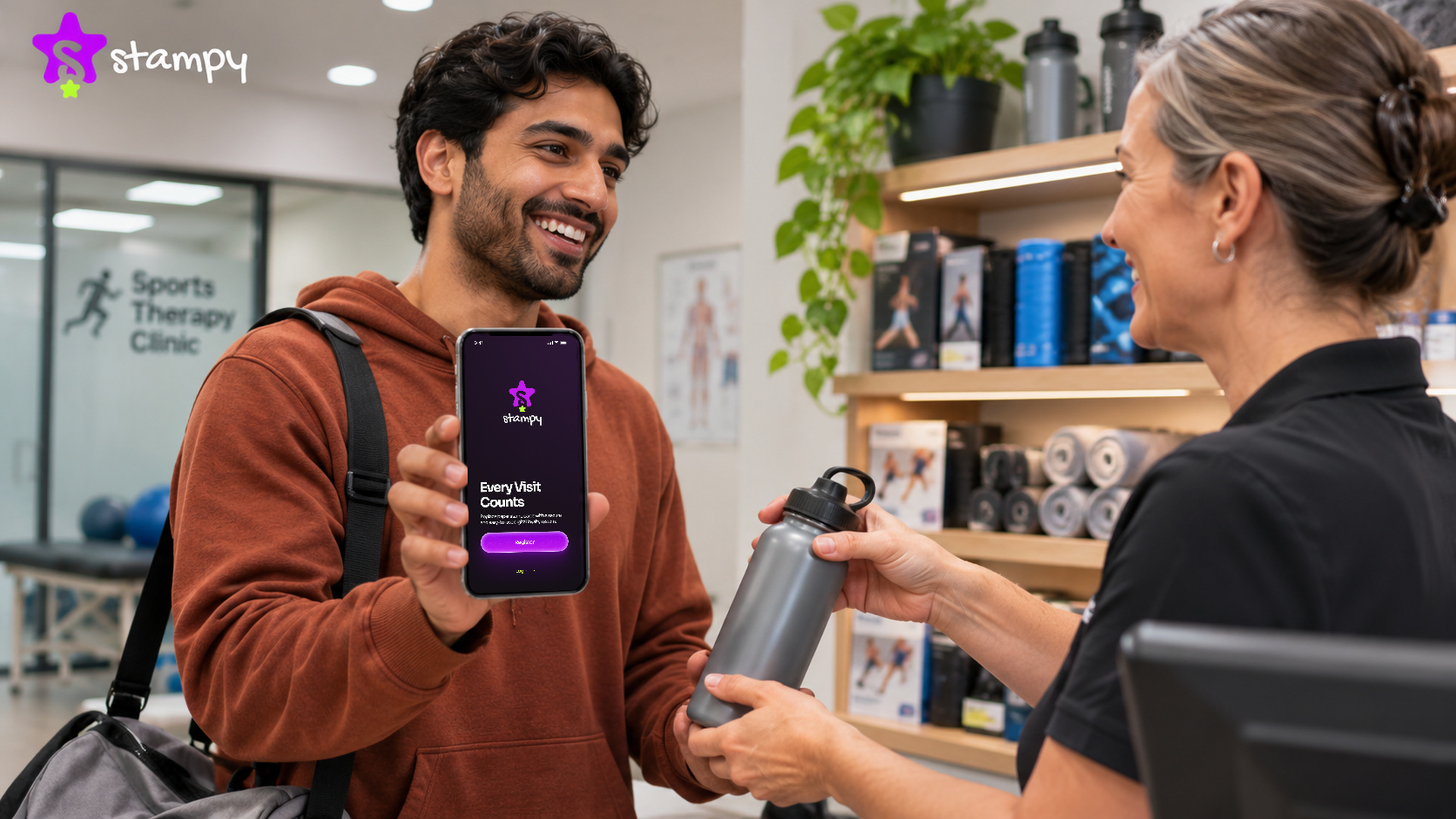
A digital stamp card moves that process onto a phone.
The process generally follows these steps:
- The clinic sets up a loyalty campaign and decides which purchases qualify.
- The customer opens their unique QR code in the customer app.
- A staff member scans the code using the partner app.
- The digital stamp is added when the purchase meets the campaign conditions.
- The customer can check their progress and see when a reward is available.
For instance, a clinic that sells sports accessories could offer a reward after a certain number of qualifying purchases. The campaign would apply to those retail transactions, not to the number of physiotherapy appointments someone attends.
If you are considering a programme, how to launch a loyalty programme covers some of the decisions involved in getting started.
5. Stay Connected With Clients Between Appointments
A useful update from time to time can keep people informed, even when they are not currently receiving treatment.
The key is to send something worth reading. Depending on the clinic's services and audience, this could be:
- General sports wellness advice.
- Updates around marathon or sporting seasons.
- Announcements about clinic services.
- Invitations to educational workshops.
- Information about seasonal campaigns.
- Updates on eligible loyalty rewards.
Digital platforms can help businesses organise campaign notifications and reward updates. Customers should receive marketing messages in line with their preferences and consent.
It is also important to keep promotional communication separate from clinical communication. Injury details, diagnoses and other confidential treatment information should not appear in marketing notifications.
6. Build Relationships That Continue Beyond Injury Recovery
Some clinics build these relationships by sharing educational content, supporting local clubs or taking part in community events. Others organise general workshops or provide useful information for people involved in particular sports.
For example, a clinic could arrange a session for a local running club about training preparation and general movement. Runners who attend get useful information, and the clinic gets an opportunity to meet people in the community.

7. Find Out Why Clients Are Unhappy Before You Lose Them
Not everyone who has a bad experience will complain. Some clients will quietly stop booking and find another provider instead.
A short survey, feedback form or direct conversation can bring problems to the clinic's attention before they become regular issues.
Pay attention to repeated comments about:
- Treatment costs that were not explained clearly.
- Long waits before appointments.
- Difficulty getting a response from the clinic.
- Problems with the reception experience.
- An uncomfortable or poorly maintained environment.
Imagine several clients mention that appointments regularly start late. Rather than treating each comment as a separate complaint, the owner can review the schedule.
Clients should also receive an appropriate response when they raise a concern. Feedback should be handled with care, particularly when it includes details about someone's treatment.
For more ideas, take a look at how to keep loyal customers happy.
8. Turn Satisfied Clients Into Long-Term Clinic Advocates
A client who has had a good experience may tell a friend, family member or training partner about the clinic. These recommendations can introduce the business to people who are already looking for a provider.
A clinic could:
- Invite clients to leave an honest Google review.
- Build professional relationships with local gyms.
- Connect with running clubs and cycling groups.
- Take part in local sports events.
- Share useful information within sporting communities.
Clients can also be invited to share their experience online. The request should be for an honest review, not a guaranteed positive one.
9. Use Customer Insights to Understand Who Is Returning
As the clinic becomes busier, it gets harder to keep track of customer activity through memory or informal notes.
Useful figures may include:
- New and returning loyalty members.
- Frequency of eligible retail purchases.
- Customers who have become inactive in the loyalty programme.
- Participation in different campaigns.
- Reward redemption activity.
- Activity across different clinic locations.
These numbers can help owners see whether customers are using the programme and which rewards are attracting interest.
Someone who has completed rehabilitation and no longer needs appointments should not automatically be labelled an inactive customer.
For this reason, clinic owners should review appointment and treatment information separately from loyalty programme activity. Clinical records belong in appropriate practice management systems.
You can find further ideas in how to win back inactive and lapsed customers.
Which Loyalty Rewards Work Best for Sports Therapy Clinics?
There is no single reward that will suit every sports therapy clinic. It depends on what the business offers, what its customers are interested in and what the relevant professional rules allow.
Some possibilities include:
Target audience | Potential loyalty benefit |
Runners | A reward on an eligible running accessory |
Gym members | A benefit on eligible fitness products |
Cyclists | A sports water bottle reward |
Amateur athletes | An invitation to a general sports wellness workshop |
Regular retail customers | Digital stamps towards an eligible product |
Long-term loyalty members | A non-clinical customer appreciation gift |
Before choosing a reward, owners should work out what it will cost and whether it fits the business's margins. Customers need to know which purchases qualify, how stamps are collected, when they can redeem a reward and whether restrictions apply.
Most importantly, a reward should not depend on unnecessary treatment sessions or clinical referrals.
If you are planning a programme, loyalty reward redemption rules can help you think through the conditions customers should understand.

How Stampy Helps Sports Therapy Clinics Build Stronger Client Relationships
Paper loyalty cards and manual records can become difficult to manage as a business grows. Customers may forget their cards, staff have to keep track of stamps and campaign updates can end up scattered across different channels.
Stampy provides digital loyalty and customer engagement features that support these activities.
Clinic challenge | Available platform solution |
Customers forgetting paper loyalty cards | QR-based digital stamp cards |
Keeping customers updated about campaigns | Personalised push notifications |
Managing different reward offers | Custom campaigns and rewards |
Understanding loyalty activity | Customer insights and analytics |
Handling more than one location | Multi-location management |
Adding stamps manually | QR-code scanning through the partner app |
How the Platform Works
The process starts with the business setting up a campaign. It decides which purchases qualify, how customers collect stamps and what reward they can receive.
After that, customers can open their unique QR code in the app. Staff scan it through the Stampy Partner app, and a stamp is added when the purchase meets the campaign conditions. Customers can then check their progress and see when a reward is ready to redeem.
Businesses do not need dedicated stamping hardware. Staff can use a smartphone with the partner application to manage eligible transactions.
You can explore the platform's features to learn more about its digital loyalty and customer engagement tools.
Build Client Trust That Lasts Beyond Recovery
Finishing treatment does not have to mean the end of a good relationship. A client may not need another appointment, but they will still remember how the clinic treated them.
Was it easy to book? Did the practitioner explain what was happening? Were their concerns taken seriously? These are the kinds of details that influence whether someone feels comfortable recommending the business or returning when another need arises.
Conclusion
A sports therapy clinic should not measure every relationship by how often a client books another appointment. If someone completes treatment and returns to their normal activities, that may be exactly the outcome everyone wanted.
Clear explanations, convenient booking, honest communication and a willingness to listen all contribute to that experience.
For businesses that sell eligible products, a well-planned loyalty programme can add another way to recognise customers. Digital tools can make the process easier to manage, as long as rewards remain separate from clinical decisions.
Frequently Asked Questions
1. How to improve client retention in sports therapy clinics?
Explain treatment plans clearly, make appointments easy to arrange and take feedback seriously. Once treatment is complete, occasional relevant updates can help former clients stay familiar with the clinic.
2. Why do physiotherapy patients stop coming back?
Some patients stop because they have recovered or completed their recommended treatment. Others may struggle with costs or appointment times. Poor communication and unsatisfactory experiences can also lead people to choose another provider.
3. How to get sports massage clients to return?
Consistent service, clear pricing and convenient booking make it easier for clients to choose the same business again.
4. How to reduce cancellations in a sports therapy clinic?
Appointment reminders can help people remember their bookings. Clear cancellation policies, straightforward rescheduling and appointment times that suit clients can also reduce avoidable cancellations.
5. Are loyalty programmes suitable for physiotherapy clinics?
They may be suitable when designed around appropriate non-clinical activities, such as eligible retail purchases. The programme must follow applicable professional regulations and should never influence treatment recommendations or encourage unnecessary appointments.
6. Can Stampy help sports therapy clinics manage client loyalty?
Stampy offers digital stamp cards, QR-based reward collection, custom campaigns, push notifications and customer activity insights. Sports therapy clinics can use these tools to organise suitable non-clinical loyalty activities and communicate with participating customers.